
Container Gardens
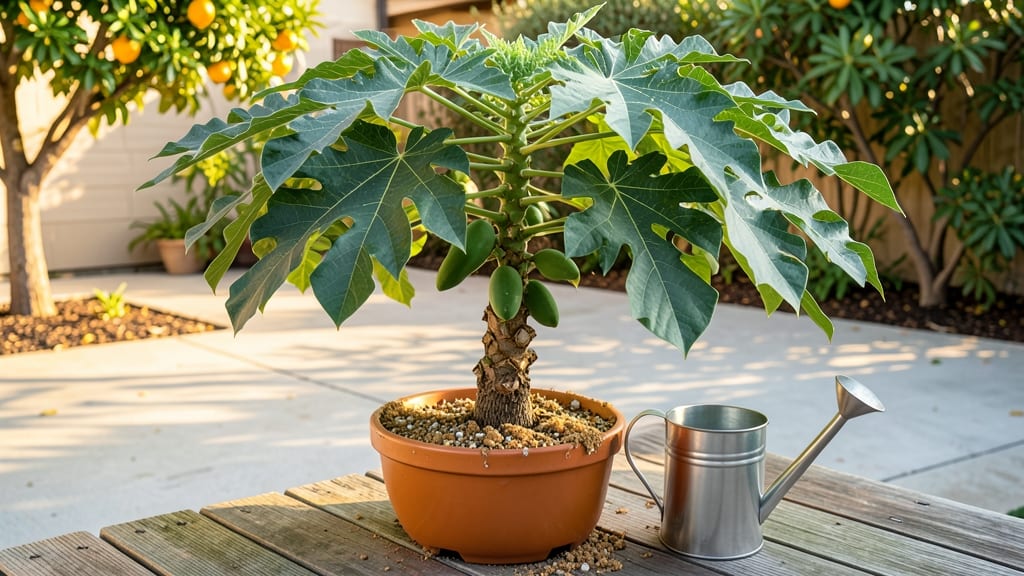
You can grow a papaya tree in pots using compact varieties like 'SunUp' or 'Tahitian,' which thrive in large containers (at least 15-20 gallons) with well-draining soil. Provide full sun exposure, consistent moisture, and seasonal protection for successful container cultivation.
Container gardening works well for papaya trees when you choose the right dwarf varieties—these stay under 8–10 feet tall and produce fruit in 12–18 months. 🌱 The key is replicating their tropical needs: deep containers prevent root binding, while a sandy loam mix with perlite mimics their natural soil.
I’ve had the most success with 18-inch diameter pots and a 3:1 soil-to-perlite ratio, which keeps moisture balanced without waterlogging. Just remember: these tropical plants need 6+ hours of direct sunlight daily and winter protection if temperatures dip below 50°F.
For best results, I recommend starting with rooted cuttings or young plants from a nursery, as they adapt more easily to container life. Regular foliar feeding with diluted fish emulsion every 4–6 weeks gives them the nutrients they crave without overwhelming the roots.
And don’t forget: papayas are self-pollinating, so you’ll get fruit even in small spaces!
💡 In This Article
- Choosing the Right Papaya Varieties for Container Gardening
- Container Size, Soil, and Care Tips for Potted Papaya Trees
Choosing the right papaya varieties for container gardening
Not all papaya varieties thrive in pots—standard types like 'Solo' can grow over 20 feet tall and require massive space, making them impractical for container culture.
The key is selecting dwarf or semi-dwarf cultivars bred for compact growth, such as 'SunUp' (reaching 6–8 feet) or 'Tahitian' (typically 8–10 feet). These varieties prioritize bushier growth over height, producing fruit within 12–18 months instead of the 3–5 years required by larger types. 🌿 The trade-off?
Slightly smaller fruit (about 1–2 pounds vs. 3–5 pounds for standard varieties), but the convenience of container gardening makes it worthwhile.
What sets these dwarf varieties apart is their root system adaptation. Unlike their wild counterparts, which develop extensive root networks to spread in tropical forests, container-friendly papayas concentrate their roots into a shallow but dense structure—ideal for pots.
For example, 'SunUp' develops a root ball that fits comfortably in a 15–20 gallon container, while 'Tahitian' may need 20–30 gallons to support its slightly larger frame.
The secret lies in their determinate growth habit: they allocate energy to fruit production rather than vertical expansion, making them far more efficient in limited spaces.
If you're eyeing fruit size, consider 'Red Maradol'—a hybrid that produces 3–4 pound fruits on a 10–12 foot tree, but requires 25+ gallons of soil volume. This variety bridges the gap between dwarf and standard types, offering a balance of manageable height and substantial harvests.
For true miniaturization, 'Golden' papayas (like 'Kapoho Solo') stay under 6 feet and produce 1–1.5 pound fruits, perfect for small patios or balconies. The choice ultimately depends on your space and patience: dwarf varieties fruit faster but yield smaller fruit, while hybrids offer a middle ground.
One critical factor often overlooked is pollination efficiency. Container-grown papayas rely entirely on self-pollination since wind and insects are limited in pots. Dwarf varieties like 'SunUp' have evolved to handle this, with flowers that open sequentially to maximize self-pollination rates.
In contrast, larger varieties often require manual assistance (gentle shaking or a soft brush) to transfer pollen. This makes dwarf papayas 30–50% more reliable for fruit set in containers, reducing the risk of empty flowers—a common frustration for beginners. 🌸
For those in cooler climates, 'Carica papaya 'Solo' hybrids' (like 'Pemba') are worth considering—they tolerate slightly lower temperatures (55–60°F) and produce fruit year-round in tropical zones. However, even these need winter protection (moving indoors or using frost cloth) if nighttime temps drop below 50°F.
The trade-off? Slower growth and smaller fruit in less-than-ideal conditions, but the ability to extend your growing season significantly. Always check the specific variety’s cold tolerance before committing to a pot setup.
Pro tip: Look for grafted papaya seedlings when shopping for container varieties. Grafting onto a dwarf rootstock (like 'Formosa') combines the best of both worlds—compact growth from the rootstock and the fruiting characteristics of the desired variety.
This technique is becoming more popular among urban gardeners and can boost fruit production by 20–30% in limited spaces. Just ensure the graft union stays above soil level to prevent rot.