
How To
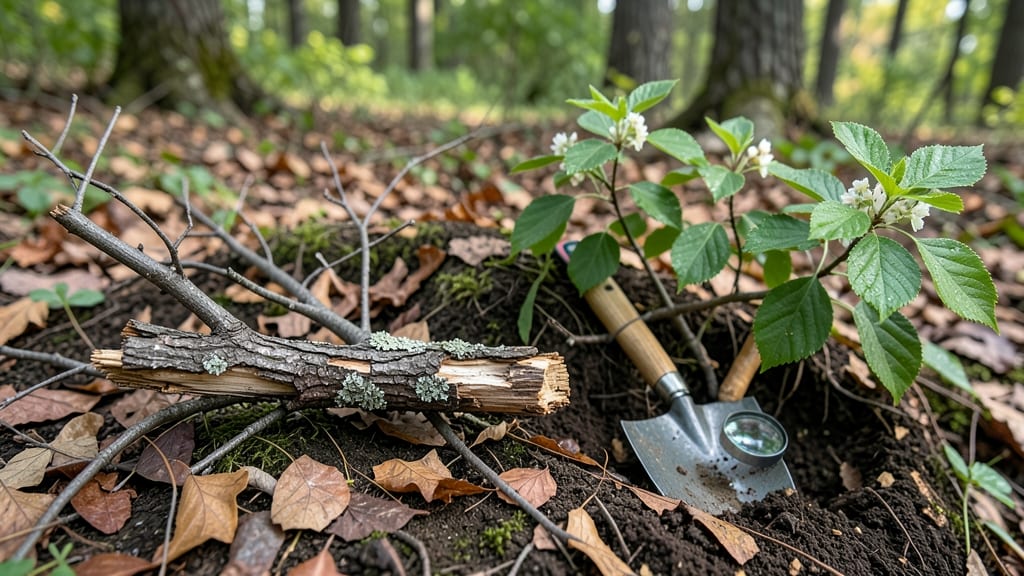
Can dead tree branches come back to life? Fully desiccated branches won't revive, but branches that appear dormant or only partially damaged might recover with the right care. Check for green buds or cracked bark—clear signs of potential recovery—then prune dead sections and use balanced fertilizer to stimulate regrowth if the tree's root system remains healthy.
Whether a tree branch can recover depends on how severe the damage is. 🌱 Branches that are simply dormant—like those in winter—often bounce back when conditions improve. However, if the bark is completely dry and crumbly or the branch snaps easily, it's likely dead.
The key is acting quickly: prune the damaged parts cleanly with sharp tools, then apply a slow-release fertilizer to support the tree's recovery. I've seen oak and maple branches revive surprisingly well when the core wood still has moisture and the roots are healthy.
Season matters too—spring is the best time to assess branches, as new growth signals viability. If you're unsure, do a scratch test: scrape a small section of bark.
Green underneath means life remains; brown means it's gone. For stubborn cases, consider a root stimulant or even grafting new branches if the tree's structure is still sound.
💡 In This Article
- How to Identify If a Tree Branch Is Truly Dead or Dormant
- Step-by-Step Guide to Reviving Damaged Tree Branches
How to identify if a tree branch is truly dead or dormant
The difference between a dead branch and one that's merely dormant comes down to cellular activity. A dormant branch has living cells that remain inactive during cold seasons but can reactivate when conditions improve.
Look for green buds along the branch—these contain meristematic cells capable of growing into new leaves or shoots. Healthy buds feel firm and plump, while dead ones are shriveled or blackened.
Bark texture also matters: live bark is smooth or slightly rough but intact, while dead bark often peels away easily or has a powdery, crumbly surface.
Seasonal variations play a huge role in diagnosis. In winter, many trees appear "dead" because they've entered dormancy, but their roots remain active underground. 🌿 To test viability, perform a scratch test: scrape a small section of bark with a knife or your fingernail.
If green tissue or moist wood appears beneath, the branch is alive. If it reveals dry, brown layers, it's dead. Another trick is the bend test—gently bend a small branch. Live branches bend slightly and snap back, while dead ones break easily with a brittle sound.
Sap flow is another clue: cut a small section and check for oozing sap or moisture.
Understanding these signs helps you avoid over-pruning healthy branches. For example, many homeowners mistakenly cut live branches in late fall, thinking they're dead. The key is timing: assess branches in early spring when new growth should be visible.
If you find a branch with 50% or more dead sections, it's best to remove it entirely to prevent disease from spreading to healthy parts. However, if only the tips are damaged but the base shows signs of life, targeted pruning can save it.
Some trees have unique recovery patterns. For instance, willow trees can regenerate from stumps, while oak trees are slower to show signs of life but can recover if the root system is intact. The age of the branch matters too—younger branches are more likely to revive than older, thicker ones.
Even if a branch appears dead, its roots may still be alive, capable of producing new shoots from the base. This is why it's crucial to examine the entire tree, not just individual branches.
Environmental factors also influence recovery. Branches in full sun often dry out faster than those in partial shade, while those near salt-sprayed roads may suffer from chemical damage.
If you notice yellowing leaves or stunted growth on nearby branches, it could indicate nutrient deficiencies or pests—both of which can be addressed with targeted treatments like balanced fertilizer or insecticidal soap. The goal is to mimic the tree's natural conditions as closely as possible.
Don't overlook the role of moisture. A branch that appears dead might simply be dehydrated. Water the tree's base thoroughly and monitor for changes over 2-4 weeks. If new buds emerge or the bark firmness improves, the branch was likely dormant rather than dead.
For stubborn cases, consider using a root stimulant like mycorrhizal fungi, which can enhance water and nutrient uptake. This approach has helped revive seemingly hopeless branches in maple and birch trees during drought years.
When in doubt, consult a certified arborist. They can perform advanced tests like electrical resistance meters, which measure the conductivity of wood—live wood conducts electricity slightly better than dead wood.
This method is especially useful for large trees where visual inspection isn't enough. Remember, patience is key: some trees take 6-12 months to show signs of recovery after damage. 🌳