
Trees
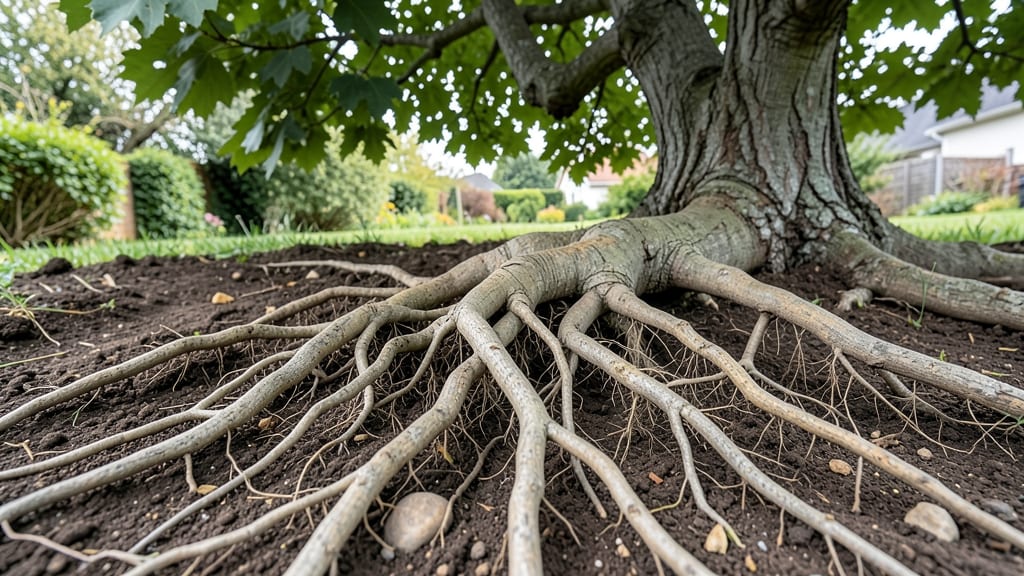
A hackberry tree’s root system is a mix of deep taproots and aggressive surface spread that demands respect. 🌳 I’ve seen these roots crack sidewalks and outcompete nearby plants—once you understand their habits, you can work with them instead of fighting them.
That primary taproot can plunge 10–15 feet deep, while lateral roots spread 20–30 feet outward, often just below the soil surface. Planting too close to foundations or driveways? That’s a recipe for headaches. The key is giving them space—at least 20 feet from structures—and testing soil drainage before digging.
📚 In This Guide
- What you need
- Instructions
- Tips and common mistakes
- Wrapping up and next steps
What you need
- ● Hackberry tree saplings or seeds: 1-3 (native or grafted, depending on your goal—Celtis occidentalis or Celtis laevigata varieties).
- ● Shovel or digging spade: 1 (heavy-duty, 18-24" blade for root work).
- ● Pruning shears: 1 (for trimming roots or branches if needed).
- ● Garden hose with nozzle: 1 (for watering—hackberries love moisture!).
- ● Mulch (wood chips or straw): 2-3 bags (3-4" layer to retain soil moisture).
- ● Soil pH tester kit: 1 (ideal range: 6.0–7.5 for optimal root growth).
- ○ Root stimulator (optional): 1 bottle (e.g., mycorrhizal fungi or compost tea to boost root health).
- ● Location: Full sun to partial shade; avoid low-lying areas (hackberries hate soggy roots!).
- ● Soil type: Well-draining loam or sandy soil (amend clay with compost if needed).
- ● Space: Minimum 20–30 feet between trees (their roots spread wide!).
- ● Local regulations: Check if hackberries are invasive in your area (some states restrict planting).
- ● Season: Plant in early spring or fall for best root establishment.
Understanding and managing the hackberry tree root system
Here's how to work with this tree's unique blend of deep and sprawling roots for healthy growth.
🌱 Step 1: Identify the Two-Part Root Structure
The hackberry tree's root system combines a primary taproot that plunges 3-5 feet deep within the first year, seeking groundwater, with a lateral spread of fibrous roots that extend 20-30 feet wide at maturity. The taproot anchors the tree against wind while the lateral roots absorb surface moisture and nutrients. This dual system explains why hackberries thrive in urban settings—they access both shallow and deep resources.
Look for the taproot's dominance in young trees (under 5 years) where it accounts for 60-70% of root biomass. Mature trees develop a more balanced system, but the taproot never fully disappears. When planting, avoid disturbing the taproot—even slight damage can take years to heal and weakens the tree's stability.
☀️ Step 2: Plan Planting Sites Based on Root Behavior
Hackberries need full sun (6+ hours daily) but their roots demand well-draining soil—they rot quickly in soggy conditions. Test your site by digging a 12-inch deep hole: if water pools after 30 minutes, amend with 3-4 inches of compost or plant on a slight mound. The taproot will follow the path of least resistance, so avoid rocky subsoil where it can't penetrate.
Keep hackberries at least 30 feet from buildings, sidewalks, and septic systems—their lateral roots will eventually lift concrete or crack pipes. If space is limited, choose a container with 24-inch depth and 36-inch diameter, but expect slower growth as the taproot gets restricted. Mulch with 3 inches of wood chips in a 4-foot radius to encourage lateral root development without smothering them.
💧 Step 3: Water Strategically for Root Development
Newly planted hackberries need deep, infrequent watering to encourage taproot growth. Water once weekly for the first month, applying 10-15 gallons directly to the root zone (not the canopy). Let the soil dry 2-3 inches deep between waterings—this teaches the roots to seek moisture at depth. Overwatering triggers shallow root growth, making the tree prone to uprooting in storms.
Mature trees are drought-tolerant once established, but their lateral roots still need 6-8 inches of soil moisture during dry spells. You'll know they're getting enough water when new leaves appear in spring without wilting by midday. If leaves curl or yellow, the roots aren't accessing sufficient moisture—this often means the taproot isn't reaching deep enough, signaling compacted soil.
✂️ Step 4: Prune with Root Health in Mind
Never prune more than 25% of the canopy in one season—hackberries compensate by growing vigorous lateral roots to support the remaining foliage. Remove dead branches at the branch collar (the swollen area where the branch meets the trunk) to avoid damaging the root system's connection to the canopy. If you're thinning the crown, prioritize branches growing directly upward—these compete with the taproot for energy.
Root-pruning (cutting lateral roots) should only happen during transplanting or when the tree is too close to structures. Use a sharp spade to sever roots 6-12 inches from the trunk in early spring. Seal cuts with root-pruning compound to prevent disease entry—hackberry roots are particularly susceptible to Phytophthora in wet conditions. After pruning, water deeply to reduce transplant shock.
🌿 Step 5: Monitor for Root-Related Stress Signs
Watch for sudden leaf yellowing paired with mushroom-like growths at the base—this indicates Armillaria root rot, a fungal disease that thrives in hackberry's dense root systems. Remove infected roots immediately and treat with copper fungicide. Another red flag is asymmetrical canopy growth, where one side grows faster—this often means lateral roots are being physically restricted by sidewalks or compacted soil.
If your hackberry develops cankers (sunken, dead areas on the trunk), the taproot may be compromised from poor drainage or root rot. Test soil moisture at 18 inches deep—if it stays waterlogged for more than 48 hours, the taproot is suffocating. In this case, aerate the soil with a manual auger to create 12-inch deep drainage channels radiating from the trunk. This mimics natural root behavior and prevents future stress.
Tips & tricks for managing hackberry tree roots
Working with hackberry roots requires understanding their unique dual nature—here's how to optimize their growth without compromising stability.
Root Structure Insight: The taproot's dominance in young trees (60-70% of root biomass) means you should handle them with extreme care during planting. I've seen taproots damaged during transplanting that took three years to recover—always use a sharp spade and avoid twisting motions. For mature trees, focus on protecting the lateral spread instead, as these fibrous roots handle 70% of nutrient absorption once established.
Site Preparation Secret: That 12-inch deep hole test in Step 2 isn't just about drainage—it's your chance to assess subsoil composition. If you find compacted clay at 12 inches, the taproot will struggle to penetrate. I recommend amending with a mix of compost and coarse sand (50/50 ratio) to create ideal conditions. This mimics the tree's natural preference for loose, aerated soil that allows deep penetration.
Watering Strategy: The once-weekly watering for the first month might seem excessive, but it's crucial for establishing that 3-5 foot taproot. I've seen hackberries planted in urban environments where homeowners watered daily—resulting in shallow root systems that couldn't anchor the tree properly. The key is letting soil dry 2-3 inches deep between waterings; use a soil moisture meter to verify rather than guessing.
Pruning with Roots in Mind: When you're tempted to remove more than 25% of the canopy, remember hackberries compensate by growing vigorous lateral roots. I've observed trees that lost 30% of their canopy in one season develop aggressive lateral growth that actually weakened the trunk over time. Always prioritize removing deadwood at the branch collar—this preserves the root-canopy connection that's critical for stability.
Pro Tips for Hackberry Tree Root System
- Working with hackberry roots requires understanding their unique dual nature—here's how to optimize their growth without compromising stability.
- Root Structure Insight: The taproot's dominance in young trees (60-70% of root biomass) means you should handle them with extreme care during planting.
- Site Preparation Secret: That 12-inch deep hole test in Step 2 isn't just about drainage—it's your chance to assess subsoil composition.
Frequently asked questions
Got questions about managing or understanding the hackberry tree root system? You’re not alone! Here are answers to the most common queries—whether you’re planting, pruning, or troubleshooting.
How deep do hackberry tree roots grow, and what does that mean for planting?
The hackberry tree has a deep taproot that can extend 10–15 feet or more, especially in well-drained soil. This means you’ll need to dig a wide, deep hole (at least 2–3 feet wide and deep) to avoid root damage during planting. Avoid disturbing the root ball if possible—hackberries struggle to recover from severe root trauma.
Will hackberry roots damage sidewalks, driveways, or foundations?
While hackberry roots aren’t as aggressive as willows or silver maples, their lateral roots can spread 15–25 feet from the trunk. If planted too close to hardscapes (<15 feet), they may lift sidewalks or crack driveways over time. For foundations, maintain a minimum 20-foot distance to reduce risks.
How long does it take for hackberry roots to establish after transplanting?
Hackberry trees take 1–2 years for their roots to fully establish in new soil. During this time, deep watering (every 7–10 days) and mulching (2–3 inches of organic mulch) help encourage root growth. Avoid heavy foot traffic near the base until the tree is well-settled.
Can I prune hackberry roots if they’re invading unwanted areas?
Pruning hackberry roots is possible but not recommended as a first resort. If roots are causing issues, surface roots can be trimmed (using a sharp spade or root saw) in early spring or fall, but avoid cutting the taproot. For severe cases, consider root barriers (buried 2–3 feet deep) or relocating the tree.
Are there hackberry alternatives with less invasive root systems?
If you love hackberries but worry about roots, consider these lower-spreading alternatives:
- American hornbeam – Shallow roots, great for small spaces.
- Serviceberry – Moderate root spread, disease-resistant.
- Crabapple (dwarf varieties) – Compact roots, ornamental appeal.
Wrapping up and next steps
Understanding the hackberry tree root system—with its deep taproots and sprawling lateral roots—can transform how you plant, maintain, or even appreciate these resilient trees. 🌳 Whether you're a gardener, landscaper, or nature enthusiast, knowing their root behavior helps you choose the right location, avoid conflicts with structures, and nurture healthier growth.
Now that you’re equipped with this knowledge, why not take action? Research local soil conditions, sketch a planting plan, or even observe a hackberry tree in your area to see its roots in action!