
Trees
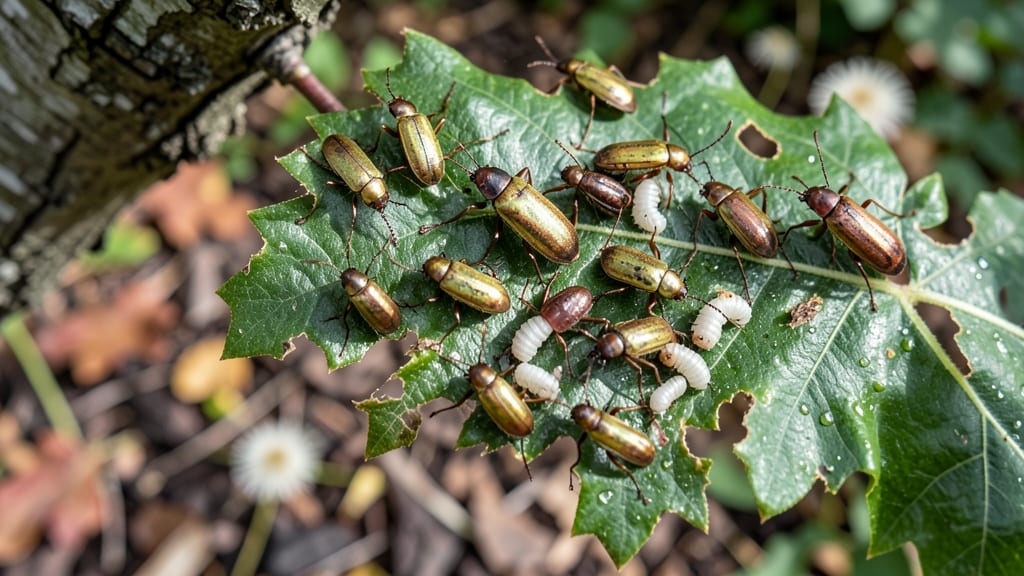
Bugs eating tree leaves can turn your lush canopy into skeleton branches overnight. 🌳 I’ve watched my shade trees go from vibrant green to sad and sparse—until I learned these simple, chemical-free fixes that actually work.
The worst offenders are usually caterpillars, beetles, or aphids, but the good news is most damage is preventable. Start by inspecting leaves for tiny holes, chewed edges, or sticky residue (that’s aphid alert!).
Prune affected branches in early morning when bugs are sluggish, and drop them in soapy water to break the life cycle. Within weeks, you’ll see fresh growth pushing through, and the tree will bounce back stronger. The key is acting fast—once damage spreads, recovery takes longer.
My oak now thrives because I caught the issue early with these methods. Works for any tree species, from maples to fruit trees. Here’s the step-by-step plan to reclaim your foliage without harsh sprays.
Root Causes of Leaf Munching
When you spot your tree’s leaves looking like Swiss cheese or covered in tiny holes, it’s not just bad luck—it’s a sign of an active pest party. Understanding why these critters target your tree is the first step to stopping them.
Below, we break down the most common reasons, backed by science, so you can outsmart the invaders.
Trees don’t grow in a vacuum, and neither do the bugs that feast on them. When pest populations explode—due to warm weather, lack of predators, or ideal growing conditions—they turn your tree into an all-you-can-eat buffet. Here’s why this happens:
- Mild Winters: Freezing temperatures naturally cull pest populations, but mild winters let more bugs survive and reproduce. 🌡️ Studies show that gypsy moths and tent caterpillars thrive in areas with fewer than 20 days below freezing.
- Lack of Natural Predators: Birds, parasitic wasps, and beneficial insects keep pest numbers in check. But if these predators are missing—due to pesticide use, habitat loss, or urbanization—the pests multiply unchecked. 🦉
- New Tree Plantings: Young, stressed, or weak trees are easier targets. Pests like Japanese beetles and aphids zero in on trees with tender, nutrient-rich leaves.
Actionable Fix: Encourage biodiversity in your yard by planting native flowers (like milkweed for monarchs) and avoiding broad-spectrum pesticides that harm beneficial insects.
Healthy trees are like fortress walls—strong enough to repel invaders. But when trees are stressed, they emit chemical signals that attract pests. Common stressors include:
| Stressor | How It Attracts Pests | Signs to Watch For |
|---|---|---|
| Drought | Water-stressed trees produce volatile organic compounds (VOCs) that pests detect as a "help yourself" sign. | Wilting leaves, dry soil, early leaf drop |
| Poor Soil | Nutrient-deficient trees (low nitrogen or phosphorus) grow thin, weak leaves—perfect for leaf miners and sawfly larvae. | Yellowing leaves, stunted growth, powdery mildew |
| Competition | Overcrowded trees (from roots or nearby plants) divert energy from defense mechanisms, making them easier prey. | Leaf discoloration, slow growth, root damage |
| Disease | Fungal or bacterial infections (like anthracnose) weaken leaves, making them more palatable to pests like Japanese beetles. | Spots, lesions, or unusual leaf patterns |
Actionable Fix: Improve tree health with deep watering (1 inch per week), mulching (2–4 inches of organic mulch), and balanced fertilizer (test soil first!). 💧
Pests don’t attack trees randomly—they follow precise life cycles tied to seasons. Knowing their schedules helps you intercept them before they cause damage:
- Spring Emergence: Many pests (like tent caterpillars) hatch in spring when new leaves are soft and nutrient-dense. 🌱 Pro Tip: Prune trees in late winter to remove egg-laying sites.
- Summer Feasting: Warmth speeds up metabolism, leading to explosive population growth. Gypsy moths and aphids peak in July-August. 🌞 Pro Tip: Monitor trees weekly during peak seasons.
- Fall Preparation: Some pests (like scale insects) lay eggs in fall for winter survival. Overwintering eggs on branches can hatch into a full-blown infestation next spring. 🍂 Pro Tip: Remove fallen leaves and debris where eggs may hide.
Actionable Fix: Use a seasonal pest calendar (like those from your local extension office) to time interventions—like applying horticultural oil in dormant seasons or Bt (Bacillus thuringiensis) in spring.
Sometimes, the reason pests target your tree is directly tied to human behavior. Here’s how we unintentionally invite the feast:
- Over-Fertilizing: Too much nitrogen makes leaves softer and more attractive to chewers like Japanese beetles. 🚫💥
- Monoculture Landscaping: Planting only one type of tree (e.g., oaks or maples) creates a pest buffet. Diverse trees disrupt pest life cycles.
- Ignoring Early Signs: Small holes or a few skeletonized leaves can escalate into a full-blown infestation if left unchecked. 🕵️♂️
- Firewood or Nursery Plants: Uninspected firewood or infected nursery stock can introduce pests like emerald ash borers to your yard.
Actionable Fix: Practice integrated pest management (IPM): start with cultural controls (like pruning and sanitation), then use mechanical (handpicking larvae) or biological (beneficial nematodes) methods before resorting to chemicals.
Natural Ways to Protect Your Trees
Now that you understand why bugs are munching on your tree leaves, let’s tackle the problem with practical, eco-friendly solutions. The key is to act quickly, combine methods for maximum effectiveness, and focus on prevention to keep your trees thriving.
Below are targeted fixes based on the most common culprits, along with easy-to-follow steps and long-term tips.
Signs: Skeletonized leaves, frass (tiny black droppings), or chewed edges.
🔥 Immediate Action: Handpick & Remove
- 👨🍳 Inspect early – Check leaves daily (especially in spring/summer) for eggs or small caterpillars.
- 🕷️ Drop them in soapy water – Use a bucket of water + a few drops of dish soap to drown collected bugs.
- 🌙 Do it at dawn/dusk – Bugs are sluggish and easier to spot when temperatures are cooler.
🌿 Long-Term Prevention:
- 💡 Plant companion plants like marigolds, basil, or dill near your trees—their strong scents repel moths.
- 🍃 Use neem oil spray (1 tsp neem oil + 1 tsp mild soap per quart of water).
Spray undersides of leaves where eggs are laid. - 🌡️ Install pheromone traps – Mimic female moth scents to lure males away from laying eggs (great for gypsy moths).
Signs: Sticky residue (honeydew), curled leaves, or tiny white/yellow bugs clustered on stems.
🚿 Quick Fix: Blast Them Off
- 💦 Spray with water – Use a strong hose nozzle to dislodge aphids from leaves and stems.
- 🍳 Make a soapy solution – Mix 1 tbsp castile soap + 1 quart water in a spray bottle.
Apply directly to infested areas. 3. 🐝 Attract predators – Ladybugs and lacewings love aphids. Plant dill, fennel, or yarrow to attract them.
🛡️ Prevention Tips:
- ✨ Prune infected branches – Remove heavily infested leaves and dispose of them in sealed bags.
- 🌿 Apply horticultural oil in early spring (before buds open) to smother scale insects.
- 🎯 Avoid over-fertilizing – Soft new growth attracts aphids. Use balanced, slow-release fertilizer.
Signs: Irregular holes in leaves, metallic green/gold bugs on foliage.
🔪 Trap & Trap Again
- 🕊️ Set up traps – Use commercial Japanese beetle traps far from your trees (they attract more beetles!).
- 🍎 Handpick into soapy water – Drop beetles into a bucket of soapy water to prevent re-infestation.
- 🌿 Cover young trees – Use lightweight row covers (like floating fabric) to block beetles during peak feeding (June–August).
🌱 Natural Deterrents:
- 💡 Plant milkweed – Beetles avoid it, and it attracts predatory wasps.
- 🥗 Sprinkle diatomaceous earth around the base of trees (reapply after rain).
- 🍃 Use kaolin clay – Mix with water and spray on leaves to create a barrier they dislike.
Signs: Silky webs, stripped branches, and clusters of hairy caterpillars.
🪒 Remove the Webs & Egg Masses
- 🧹 Scrape off egg sacs – Look for gray, fuzzy masses on branches in late winter/early spring. Destroy them immediately.
- 🕷️ Burn or submerge webs – If caterpillars are already active, remove webs and dispose of them (don’t compost!).
- 🌿 Prune infested branches – Cut and destroy heavily damaged sections before the caterpillars spread.
🛡️ Stop Future Outbreaks:
- 💡 Encourage woodpeckers – They eat tent caterpillar eggs. Install birdhouses or leave snags in your yard.
- 🌡️ Apply Bt (Bacillus thuringiensis) – A natural bacteria that kills caterpillars but is safe for other wildlife.
No matter the pest, healthy trees fight off damage better.
Try these all-around tips: - 💧 Water deeply but infrequently – Encourages strong root growth (1–2 inches of water per week). - 🍃 Mulch properly – Use 2–4 inches of organic mulch (wood chips, bark) to retain moisture and deter pests. - 🌿 Avoid broad-spectrum pesticides – They kill beneficial insects.
Opt for targeted, natural solutions. - 📊 Monitor regularly – Catch problems early with weekly leaf inspections (especially under leaves!).
💡 Pro Tip: If pests persist, consult a local arborist or extension service for tree-specific advice—some species (like oaks or elms) need extra care!
By combining these methods, you’ll not only save your tree’s leaves but also create a balanced ecosystem that keeps pests in check naturally. 🌿✨
Frequently asked questions
What are the most common bugs that eat tree leaves?
The worst offenders are usually caterpillars (like tent caterpillars or gypsy moth larvae), Japanese beetles, aphids, and leaf miners. Look for skeletonized leaves, tiny holes, or sticky residue (aphid honeydew) to identify them.
Can I use chemical pesticides to stop leaf-eating bugs?
While chemical pesticides work fast, they often harm beneficial insects and can create resistance over time. Start with natural methods like neem oil, soapy water, or handpicking. Only use targeted chemicals (like Bt for caterpillars) if pests are severe.
How do I know if my tree is stressed enough to attract bugs?
Check for signs like yellowing leaves, stunted growth, or early leaf drop. Stressed trees emit chemical signals that attract pests. Improve health with deep watering (1 inch/week), mulching (2-4 inches), and balanced fertilizer.
When is the best time to treat leaf-eating bugs?
Act in early spring (before eggs hatch) or late summer (when pests are active). For caterpillars, apply Bt in spring; for beetles, set traps in June-August. Always treat at dawn/dusk when bugs are sluggish.
Will my tree recover from heavy leaf damage?
Young trees may struggle, but mature trees often bounce back if 1/3 or fewer leaves are lost. Prune damaged branches to encourage new growth, and focus on tree health (water, mulch, fertilizer). Severe damage may require professional arborist help.