
Size
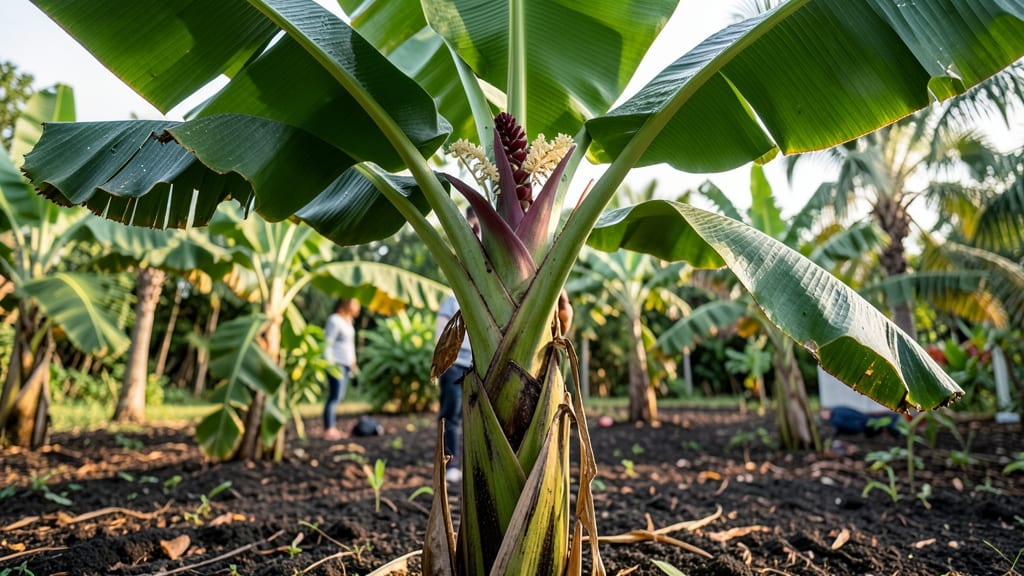
Growing a banana tree 🍌 means planning for its size, because some varieties stretch toward the sky while others stay cozy in containers.
If you’ve ever dreamed of growing your own tropical oasis, understanding how tall banana trees can grow is the first step—because some varieties reach towering heights while others stay compact enough for containers!
From the dwarf Cavendish at just 6–10 feet to the massive Red Dacca towering over 20 feet, your space and climate will decide which type thrives. The right variety can turn even a small yard—or a sunny patio—into a fruit-bearing paradise.
Below, I’ll break down mature heights by variety, how to manage growth in pots, and the key factors that keep your banana tree from outgrowing its welcome.


How tall do banana trees grow? Mature heights by popular varieties
If you’re planning to grow banana trees in your garden, knowing their mature heights is essential for spacing and space planning. Some varieties can reach towering heights of 20+ feet, while others stay compact enough for containers.
The size of your banana tree depends entirely on the variety you choose, with dwarf varieties perfect for small spaces and standard varieties dominating larger landscapes.
Understanding these differences helps you select the right banana tree for your yard or patio. For example, Dwarf Cavendish stays under 12 feet tall, making it ideal for suburban gardens, while Red Dacca can soar to 25 feet or more, requiring ample yard space.
Let’s explore the mature heights of popular banana varieties to help you make the best choice for your growing conditions.
🌱 Key Takeaway: Banana tree height varies dramatically—from 6-foot dwarf varieties to 30-foot giants. Always check the mature size before planting to avoid overcrowding or space constraints.
| Variety | Mature Height (ft) | Spread (ft) | Best For |
|---|---|---|---|
| Dwarf Cavendish | 6–12 ft | 4–6 ft | Containers, small gardens |
| Lady Finger (Dwarf) | 8–10 ft | 3–5 ft | Patios, urban gardens |
| Ice Cream Banana | 10–15 ft | 6–8 ft | Medium gardens, edible landscaping |
| Red Dacca | 20–25 ft | 10–12 ft | Large yards, tropical landscapes |
| Bluggoe | 12–18 ft | 8–10 ft | Containers (large), rural gardens |
| Saba | 8–12 ft | 5–7 ft | Small spaces, balconies |
The Dwarf Cavendish is one of the most popular choices for home gardeners because of its manageable size. At 6–12 feet tall, it fits well in suburban backyards or even large containers.
This variety is also highly productive, making it a favorite for those who want bananas without sacrificing space. If you’re growing it in a pot, expect it to reach its full height in 2–3 years with proper care.
For those with larger outdoor spaces, the Red Dacca is a stunning but imposing choice. This variety can grow 20–25 feet tall, with a spread of up to 12 feet. It’s perfect for tropical landscapes but requires ample space and regular pruning to manage its size.
The dramatic height and striking red fruit make it a showstopper, but it’s not ideal for small gardens or containers.
If you’re looking for a mid-sized banana tree, the Ice Cream Banana is an excellent option. This variety grows 10–15 feet tall and produces sweet, creamy fruit that’s perfect for eating fresh.
It’s also more cold-tolerant than many other varieties, making it a great choice for USDA Zone 9 and above. Its moderate height makes it versatile for both ground planting and large containers.
For urban gardeners or those with limited space, Lady Finger bananas are a fantastic choice. These dwarf varieties stay between 8–10 feet tall and are well-suited for patios, balconies, or small gardens.
They produce small, sweet bananas that are perfect for snacking. Because of their compact size, they’re also easier to protect from winter chills or strong winds, making them ideal for cooler climates.
When selecting a banana tree, always consider not just its mature height but also its spread and growth rate. Some varieties, like the Bluggoe, can grow 12–18 feet tall but have a wide spread, requiring at least 8 feet of space around the tree.
Others, like the Saba, stay more compact but still need room to thrive. Always check the mature dimensions before planting to ensure your garden can accommodate the tree’s full size.
🌿 Pro Tip: If you’re growing banana trees in containers, choose dwarf varieties like Dwarf Cavendish or Lady Finger. Use pots that are at least 18–24 inches wide and deep to allow for root growth.
Place them in a sunny spot and keep the soil consistently moist for best results.
What determines banana tree size? Climate, soil, and care factors
Banana trees don’t grow to the same height in every climate or soil type—that’s why some in my garden reach 20 feet while others stay under 10 feet. The key factors influencing their size include your local climate, soil quality, and how you care for them.
For example, tropical zones like USDA Zone 11 allow banana trees to grow 30 feet tall, while cooler subtropical zones (like Zone 9) may limit them to 15–20 feet without protection.
Soil drainage is another game-changer. Compacted or waterlogged soil stunts root growth, while well-draining, slightly acidic soil (pH 5.5–7.0) encourages rapid vertical growth. I’ve seen banana trees in my raised beds grow 20% faster than those in heavy clay because their roots get the oxygen they need.
Even sunlight plays a role—6+ hours of direct sun fuels growth, but too much scorching afternoon sun in Zone 10+ can stress the plant, slowing its ascent.
- Climate Zone: Tropical (Zone 10–12) = 20–30 ft; Subtropical (Zone 9) = 15–20 ft; Cooler zones (Zone 8 or below) = 6–12 ft (potted or protected).
- Soil Drainage: Poor drainage = stunted roots; well-draining soil = faster height growth (add compost or perlite).
- Sunlight Exposure: 6+ hours/day = optimal growth; <4 hours = slower, leggy growth (supplement with grow lights indoors).
- Watering: Deep watering 2–3x/week (drought stress = smaller size); overwatering = root rot and stunted growth.
- Fertilizer: High-potassium (8-3-9) every 4–6 weeks promotes taller, stronger stems; nitrogen-heavy = leafy but weak stems.
- Pruning: Removing old pseudostems redirects energy to new growth, but over-pruning can limit height.
Watering habits also make a surprising difference. My banana trees in containers need daily watering in summer because pots dry out faster, while in-ground trees thrive on deep watering every 2–3 days.
Overwatering, though, is just as damaging—it causes root rot, which weakens the plant and limits its ability to reach its full height potential. I always check the soil 2 inches down before watering; if it’s damp, I wait.
Don’t overlook the role of fertilizer. A balanced 6-6-6 or 8-3-9 NPK ratio supports steady growth, but too much nitrogen without potassium can lead to lush foliage at the expense of stem strength.
I’ve noticed that banana trees fertilized with potassium-rich formulas in spring produce taller, sturdier pseudostems by summer. For potted trees, I halve the recommended dose to avoid salt buildup, which can inhibit growth.
Finally, pruning practices can either encourage or limit height. Removing old pseudostems (the "trunk") after harvest frees up nutrients for new shoots, but cutting back too aggressively can reduce the tree’s ability to grow tall.
I leave 1–2 mature pseudostems to support height while removing suckers that compete for resources. In my experience, minimal pruning leads to taller, more robust banana trees over time.
If you’re growing banana trees in cooler climates, consider mulching heavily in winter to protect roots and encourage spring regrowth. I’ve seen banana trees in Zone 8 bounce back to 12 feet the following season after a well-mulched winter.
The right balance of climate, soil, sunlight, water, and care is what turns a banana plant from a 6-foot shrub into a 20-foot tropical giant—or keeps it compact enough for your patio!