
Pruning
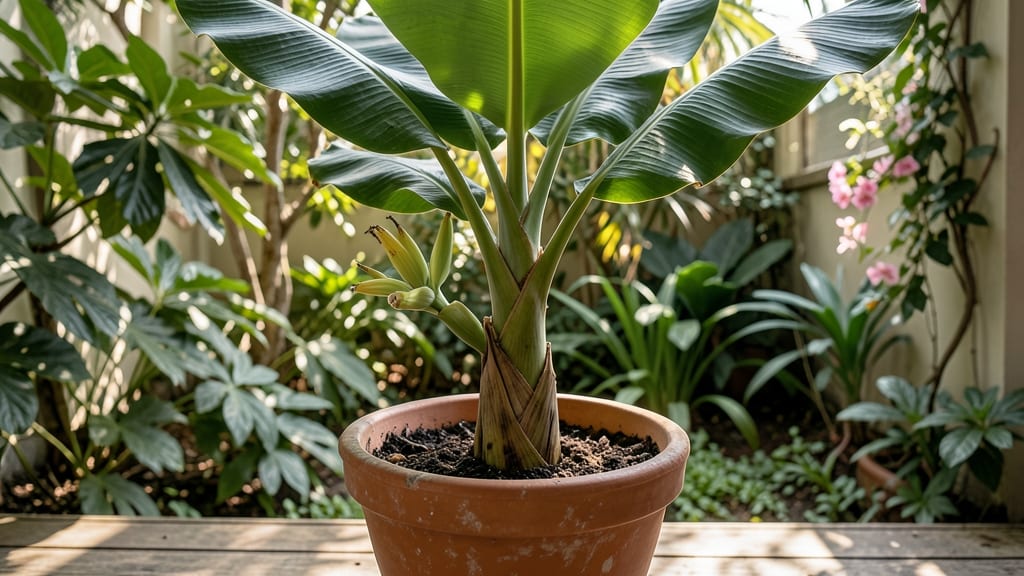
A Dwarf Cavendish banana tree’s height can reach 8 to 12 feet if left unchecked, turning your patio into a jungle faster than you’d expect.
Struggling to control its growth? Even the "dwarf" label doesn’t guarantee a compact plant—without the right pruning strategies, this tropical beauty can shoot up unexpectedly, especially in ideal Tropical/Subtropical conditions.
Here’s the good news: with 5 key pruning tricks, you can keep your 🍌 under control, whether you’re growing it in a container or a garden bed.
I’ll show you exactly when to trim, what tools to use, and how to avoid common mistakes that make your banana tree grow taller than intended.
Ready to reclaim your space? Let’s dive into the secrets of managing height without sacrificing fruit production or plant health.

How tall does a Dwarf Cavendish banana tree grow without pruning?
If you’ve ever wondered why your Dwarf Cavendish banana tree seems to reach for the sky despite its "compact" label, you’re not alone. Even the shortest banana varieties can grow surprisingly tall—often 8 to 12 feet—when left unpruned.
The key to managing its height lies in understanding its genetic growth patterns and how your local climate and care habits influence its vertical expansion.
Unlike its towering standard counterparts (which can soar to 15-25 feet), the Dwarf Cavendish is bred for smaller spaces, but its height isn’t fixed.
Without pruning, it will grow to its natural mature height, which is heavily influenced by factors like sunlight exposure, soil fertility, and watering consistency.
In ideal conditions, you might see it hit 10-12 feet within 2-3 years, while cooler climates or nutrient-poor soil can slow growth to 6-8 feet.
Here’s the catch: Dwarf Cavendish trees grow fastest during their first 18 months, adding 2-4 feet per year if conditions are perfect. After that, growth slows, but the tree will continue climbing unless you intervene.
The good news? With the right pruning techniques and growth management, you can keep it under 8 feet—perfect for patios or small gardens.
🌱
One of the biggest misconceptions about Dwarf Cavendish banana trees is that they stay small forever. In reality, their height is directly tied to how aggressively they produce new pseudostems (the "trunk" made of leaf sheaths). Without pruning, each new pseudostem can add 3-5 feet to the tree’s height.
For example, if your tree produces 3 pseudostems per year and each grows 4 feet tall, you’re looking at a 12-foot giant in just three years.
Your local climate zone plays a huge role too. In USDA Zones 10-12 (tropical/subtropical), Dwarf Cavendish trees grow fastest year-round, often hitting 10-12 feet by their third year. But in cooler microclimates (like Zone 9b with winter protection), growth slows dramatically, keeping heights under 8 feet.
Even a 5°F drop can stunt new pseudostem development, which is why many gardeners in these zones prune less aggressively.
Another critical factor is watering habits. While banana trees love moisture, overwatering can cause the pseudostem to grow too quickly, leading to weak, leggy stems that top out at 12+ feet.
On the flip side, underwatering stresses the plant, slowing height gain but often resulting in a bushier, less stable tree. The sweet spot? Deep watering every 2-3 days during peak growth (spring/summer) to encourage balanced, controlled growth.
🌿
Your Dwarf Cavendish banana tree can easily reach its 12-foot height limit if left unchecked, but with the right pruning techniques, you can maintain a more manageable size without stunting growth. The key is knowing when and how to trim the pseudostem, leaves, and flower stalks to encourage bushier, shorter growth. Let’s dive into my top 5 pruning tricks that work like magic for this tropical stunner. 🍌 Before grabbing your pruning shears, remember that timing is everything. Prune at the right moment, and your banana tree will reward you with compact growth and abundant fruit. Skip this step, and you might end up with a towering giant that’s hard to manage. Start by gathering your tools: sterilized pruners, sharp knives, gloves, and disinfectant to prevent disease spread. Now, let’s get to work! ✂️ Pro Tip: Always prune in mild weather (60-80°F) to reduce stress on the plant. ✂️🌿 One of the biggest mistakes I see is pruning too aggressively all at once. Your Dwarf Cavendish is resilient, but over-pruning can shock the plant and lead to stunted growth or even death. Instead, space out your pruning sessions every 4-6 weeks during the growing season. This gradual approach keeps the plant healthy and balanced while encouraging bushier growth. 🌱 Another trick I swear by is fertilizing after pruning. Since you’re removing parts of the plant, it needs extra nutrients to bounce back. Use a balanced fertilizer (10-10-10) to support new growth. Just be sure to water deeply before and after applying fertilizer to prevent root burn. Your banana tree will thank you with vibrant new leaves and controlled height. 💧 If you’re growing your Dwarf Cavendish in a container, height control becomes even more critical. Since pots limit root space, pruning helps manage the plant’s size and prevents it from becoming top-heavy and unstable. For container-grown trees, I recommend pruning more frequently—every 3-4 weeks—to keep the height in check. Always choose a pot with drainage holes and upgrade its size by 2-3 inches every few years to accommodate growth. 🪴5 Pruning tricks to keep your Dwarf Cavendish under 12 feet
Step-by-Step Pruning Guide for Dwarf Cavendish
Trim dry or yellowing leaves at the base of the pseudostem using sterilized shears. This redirects energy to new growth and keeps the plant tidy. Aim to remove 10-20% of leaves per pruning session.
If you want to prevent fruit production and focus on height control, remove flower stalks when they’re 6-12 inches tall. Use sharp pruners to cut just above a leaf node to encourage lateral growth.
To control height, cut the pseudostem at 1/3 of its height after the plant has fruited. This forces the tree to branch out and grow wider rather than taller. Always prune above a leaf node for best results.
If leaves are overlapping or blocking sunlight, selectively remove inner leaves to improve airflow and light penetration. Focus on older, non-productive leaves to avoid stressing the plant.
Once your bananas are harvested, trim the fruit stalk at its base and remove any damaged or diseased leaves. This stimulates new shoots and helps maintain a compact shape.