
Trees
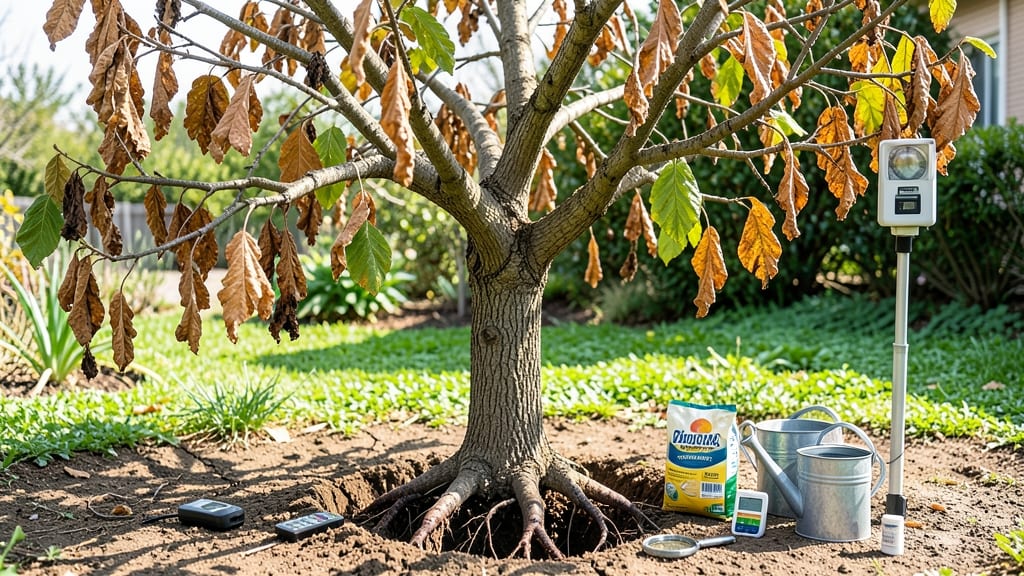
Your avocado tree not growing new leaves is usually a root health crisis in disguise. 🌱 I’ve nursed back three of these stubborn trees—each time, the problem boiled down to two things: either the roots were drowning in overwatered soil or starving for nutrients.
The good news? You can diagnose and fix it in a weekend, even if you’ve never dug near an avocado before.
The first step is simple: check the soil moisture by sticking your finger 2-3 inches deep. If it’s soggy, you’re overwatering—avocados hate wet feet. If it’s bone-dry, you’re underwatering (yes, really).
Then inspect the roots: healthy ones are firm and white, while rotten ones smell foul and turn mushy. Most people skip this step and miss the real issue entirely.
Once you know the problem, the fix is straightforward. For overwatered roots, let the soil dry completely between waterings and consider a drainage upgrade. For nutrient deficiencies, a balanced fertilizer (not just nitrogen) works wonders. Within 4-6 weeks, you’ll see fresh growth—if you act now, that is.
If the roots are beyond saving, don’t panic—you can propagate from a healthy branch. The key is catching issues early. Most home gardeners wait too long, but avocados respond fast when you give them the right care. Let’s get those leaves growing again.
Root Causes Of Stalled Leaf Growth
When your avocado tree refuses to sprout new leaves, it’s often a cry for help from its roots—or something equally critical. Understanding the why behind this stunted growth is the first step to revival. Here are the most common culprits, explained in simple, actionable terms.
Avocado trees are drought-tolerant but not drought-proof. Water stress—whether from overwatering or underwatering—disrupts nutrient uptake and photosynthesis, halting new leaf production.
- Underwatering: Dry soil cuts off water supply to roots, causing them to shrink and struggle to absorb nutrients. Symptoms: Wilting leaves, crispy edges, and a tree that feels light when tugged (root rot isn’t the issue here—it’s dehydration).
- Overwatering: Soggy soil suffocates roots, blocking oxygen and promoting Phytophthora (a fungal pathogen). Symptoms: Yellowing leaves, mushy stems at the base, and a foul, rotten smell near the trunk.
- Inconsistent watering: Avocados hate mood swings. Uneven moisture levels confuse the tree’s growth signals, leading to leaf drop and stalled regrowth.
💡 Pro Tip: Stick your finger 2 inches into the soil—if it’s dry, water deeply. If it’s soggy, hold off until the top 3 inches feel dry to the touch. Mulch (2–3 inches of organic matter) helps regulate moisture like a natural sponge.
Root rot—usually caused by Phytophthora or Fusarium fungi—is a death sentence for avocado roots if left unchecked. These pathogens thrive in waterlogged soil and block nutrient transport, starving the tree of the energy it needs to grow new leaves.
- How it starts: Poor drainage, compacted soil, or overwatering create the perfect breeding ground. Infected roots turn brown, mushy, and emit a rotten odor.
- Secondary damage: As roots die, the tree diverts energy to surviving leaves, leaving no reserves for new growth. Symptoms: Leaf yellowing (chlorosis), wilting even when watered, and a tree that feels unstable.
- Spread risk: Fungal spores linger in soil for years, so one infected tree can doom nearby plants.
🔥 Warning: If you suspect root rot, act now. Delaying treatment can kill the tree within weeks. We’ll cover fixes in the next section.
Avocado trees are heavy feeders, especially when recovering from stress. A lack of key nutrients—like nitrogen, potassium, or magnesium—directly stalls leaf production. Here’s what’s missing and why:
| Nutrient | Deficiency Signs | Why It Happens |
|---|---|---|
| Nitrogen (N) | Yellowing leaves (starting at the tips), stunted growth, and no new leaves. | Nitrogen fuels leaf production. Poor soil, over-pruning, or leaching (from heavy rain) depletes it fast. |
| Potassium (K) | Brown, crispy leaf edges; weak stems; and leaves that curl inward. | Potassium regulates water and disease resistance. Sandy or acidic soils lack it naturally. |
| Magnesium (Mg) | Yellow patches between leaf veins (interveinal chlorosis), especially on older leaves. | Magnesium is vital for chlorophyll. Over-fertilizing with nitrogen (without balancing Mg) locks it out. |
| Zinc (Zn) | Small, distorted new leaves (called "little leaf" syndrome) or leaves that fail to unfurl. | Zinc aids cell division. Calcareous (alkaline) soils bind zinc, making it unavailable. |
🌡️ Soil Test First: Before guessing, test your soil’s pH and nutrient levels (kits cost ~$20). Avocados thrive in slightly acidic soil (pH 6.0–7.0). If levels are off, amend with:
- Compost or well-rotted manure for organic matter.
- Epsom salt (for magnesium) or chelated iron (for chlorosis).
- Balanced fertilizer (e.g., 6-6-6 NPK) in spring and summer.
Avocado trees are tropical at heart and hate sudden changes. Cold snaps, heatwaves, or even drafts can shock the tree into growth mode, diverting energy away from leaves.
- Cold damage: Temperatures below 30°F (-1°C) can kill roots and leaves. Symptoms: Blackened leaf tips, bark splitting, or a tree that looks "frozen" mid-branch.
- Heat stress: Prolonged temps above 95°F (35°C) slows photosynthesis. Symptoms: Leaves curl upward to reduce water loss, and new growth aborts before emerging.
- Windburn: Constant wind desiccates leaves, forcing the tree to "conserve" energy instead of growing.
🎯 Solution: Protect your tree with:
- A windbreak (burlap or lattice screen) in exposed areas.
- Mulch to insulate roots (especially in winter).
- Drip irrigation to keep leaves hydrated during heatwaves.
Hidden pests or pathogens can drain your avocado’s energy, leaving no power for new leaves. The worst offenders:
- Root-knot nematodes: Microscopic worms that burrow into roots, creating galls that block nutrient flow. Symptoms: Stunted growth, yellowing leaves, and roots that look "knobby."
- Scale insects: Sap-sucking pests that coat stems/leaves with a waxy shell. Symptoms: Sticky residue (honeydew), black sooty mold, and no new leaf buds.
- Anthracnose fungus: Causes dark, sunken spots on leaves, which prevent the tree from photosynthesizing efficiently.
🔪 Act Fast: Inspect roots and leaves for pests. Treat with:
- Neem oil (for soft-bodied pests like scale).
- Beneficial nematodes (for nematodes—apply to soil).
- Fungicides (copper-based for anthracnose).
Revive Your Avocado Tree Now
---
If your avocado tree is struggling to grow new leaves, don’t panic—there’s still hope! 🌱 The key is identifying the root cause (literally and figuratively) and taking targeted action.
Below, we’ve mapped out practical, step-by-step solutions for the most common issues, along with prevention tips to keep your tree thriving long-term.
---
If your tree’s roots are drowning in soggy soil, they can’t absorb nutrients or oxygen, leading to leaf loss. Here’s how to save it:
#### 💦 Step 1: Check the Soil Moisture - Stick your finger 2–3 inches deep into the soil.
If it’s damp (not soaked but not dry either), hold off on watering. - Pro Tip: 🌡️ Use a moisture meter for accuracy—avocado trees prefer soil that’s dry to the touch at the top inch before watering again.
#### 🏗️ Step 2: Improve Drainage Immediately - Repot or amend the soil if it’s heavy clay or compacted.
Mix in: - 50% high-quality potting mix (well-draining) - 30% perlite or pumice (for aeration) - 20% compost or coconut coir (for nutrients) - For in-ground trees: Dig a 12-inch-deep trench around the base and fill it with gravel or coarse sand to encourage drainage.
#### 🚰 Step 3: Adjust Your Watering Routine - Water deeply but infrequently—once a week (or less in winter) is enough for mature trees. - Avoid overhead watering—use a soaker hose or drip irrigation to deliver water directly to the roots. - Prevention Tip: ✨ Never let the tree sit in standing water. Ensure pots have drainage holes, and elevate containers slightly.
---
Dry, crispy leaves or wilting branches? Your avocado tree might be thirsty—or overheated. Here’s how to bring it back to life:
#### 💧 Step 1: Water Deeply and Slowly - For potted trees: Water until it drains from the bottom (about 1–2 gallons per 5-gallon pot). - For in-ground trees: Water slowly for 20–30 minutes, ensuring moisture reaches 12–18 inches deep. - Morning watering is best—it reduces evaporation and fungal risks.
#### 🌿 Step 2: Provide Shade & Cool Relief - Move potted trees to a shadier spot (avocados hate direct midday sun in hot climates). - Mulch heavily (3–4 inches of wood chips or straw) to retain moisture and cool roots. - Mist leaves lightly in extreme heat (but avoid soggy foliage).
#### 💡 Prevention Tip: 🌡️ Monitor humidity—avocados love 50–70% humidity. Use a humidifier nearby or place the pot on a tray of pebbles with water (ensure the pot isn’t sitting in water).
---
Yellowing leaves, stunted growth, or weak stems? Your tree might be hungry. Avocados need specific nutrients to bounce back.
#### 🥗 Step 1: Test the Soil (Cheap & Easy) - Grab a DIY soil test kit (or send a sample to a local extension office). - Common deficiencies in avocados: - Nitrogen (N) → Pale yellow leaves - Potassium (K) → Brown leaf edges - Magnesium (Mg) → Yellow patches between veins - Zinc (Zn) → Small, distorted leaves
#### 🌱 Step 2: Fertilize Correctly - Use a balanced fertilizer (like 6-6-6 or 10-10-10) during spring and summer. - For deficiencies: - Nitrogen: Apply blood meal or fish emulsion (follow package rates). - Potassium: Use banana peel tea or potassium sulfate. - Magnesium: Sprinkle Epsom salt (1 tbsp per gallon of water) every 4–6 weeks. - Zinc: Apply zinc sulfate (1 tsp per gallon) as a foliar spray. - Prevention Tip: ✨ Fertilize lightly in winter—avocados rest then, and overfeeding can burn roots.
#### 🍎 Step 3: Boost with Organic Matter - Compost or worm castings (1–2 inches on topsoil) provide slow-release nutrients. - Avoid synthetic fertilizers if the soil is already too rich—they can cause salt buildup, harming roots.
---
If bugs or fungi are to blame, act fast before the problem spreads. Here’s how to spot and stop them:
#### 🐜 Step 1: Inspect for Pests - Common culprits: - Spider mites → Tiny webs on undersides of leaves - Scale insects → Sticky residue (honeydew) on leaves/stems - Root weevils → Chewed roots + wilting despite watering - Treatment: - Neem oil spray (1 tsp neem oil + 1 tsp mild soap per quart of water) every 5–7 days for 2–3 weeks. - For root weevils: Apply beneficial nematodes (like Steinernema carpocapsae) to the soil.
#### 🍄 Step 2: Fight Fungal Issues - Signs of fungus: Black spots, powdery mildew, or mushy stems. - Fix it: - Prune infected leaves (sterilize shears with rubbing alcohol). - Apply copper fungicide or baking soda spray (1 tbsp baking soda + 1 tsp oil + 1 quart water). - Prevention Tip: 🌿 Space plants for airflow and water at the base (not overhead).
---
Avocado trees hate cold drafts, sudden temperature drops, or windburn. If your tree is struggling in harsh conditions, adjust its environment:
#### 🏡 Step 1: Move Indoors (Temporarily) - For potted trees: Bring them inside near a sunny window (avoid AC vents or heaters). - For in-ground trees: Wrap the trunk with burlap or frost cloth if frost is forecasted.
#### 🌬️ Step 2: Shield from Wind & Cold - Place potted trees away from doors, windows, or fans. - Use a windbreak (like a bamboo screen or cardboard shield) if outdoor winds are strong. - Prevention Tip: ✨ Acclimate gradually if moving between indoor/outdoor—1–2 hours of sun per day, increasing slowly.
---
Follow this 5-step quick fix to jumpstart growth:
| Step | Action | Frequency |
|---|---|---|
| 1 | Check soil moisture & adjust watering | Weekly |
| 2 | Fertilize with balanced organic mix | Every 2 months (spring–fall) |
| 3 | Inspect for pests/disease & treat if found | Biweekly |
| 4 | Prune dead/damaged leaves | As needed |
| 5 | Mulch & ensure proper drainage | Once (then maintain) |