
Plants
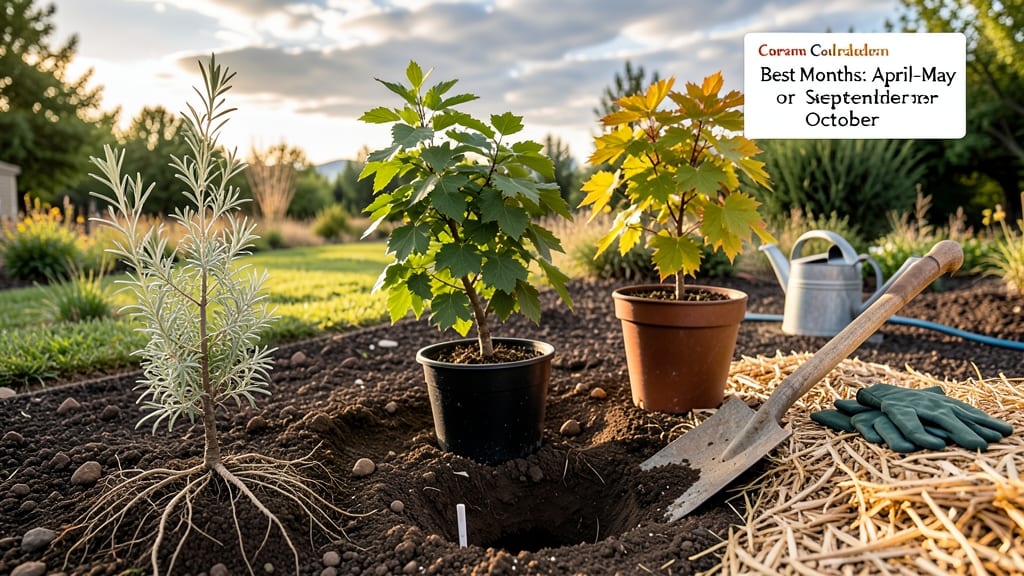
Planting a tree in Colorado at the right time ensures it thrives through the state’s freeze-thaw cycles and droughts, so timing is everything.
Picture this: you’ve just planted a 🌳 Colorado blue spruce in late May, only for a surprise frost to blacken its new needles by June. Or worse, you wait until November, and your tree struggles to root before winter sets in.
These mistakes happen more often than you’d think, especially with Colorado’s varied climate zones.
Whether you’re in the Front Range, the Western Slope, or the Eastern Plains, the best months to plant a tree hinge on frost dates, soil conditions, and even altitude.
Fall planting (September–October) is ideal for most regions, but spring (March–April) works for bare-root trees before buds break. The key? Avoid the hottest summer months and the deep freeze of winter.
Below, I break down the exact planting windows for your climate zone, soil prep tips, and the top tree species that handle Colorado’s extremes—so your tree grows strong, not just survives.
Best months to plant trees in Colorado by climate zone
Colorado’s diverse climate zones create unique planting windows for trees—getting the timing wrong can leave your sapling vulnerable to winter freezes or summer droughts.
The Front Range and Western Slope have different frost dates than the Eastern Plains or San Luis Valley, so I’ll break down the ideal months for each zone. Evergreens and deciduous trees also have distinct planting preferences, especially when dealing with Colorado’s high-altitude stress.
For most Colorado regions, fall planting (September-October) is ideal because cool soil temperatures reduce transplant shock, while spring planting (March-April) gives trees time to establish roots before summer heat.
However, bare-root trees must be planted in late winter (February-March) before buds swell. Container-grown trees offer more flexibility but still need proper timing to avoid stress.
Here’s how to match your tree to Colorado’s four key climate zones, including soil prep tips and species-specific advice:
| Climate Zone | Best Planting Window | Soil Prep Tip | Ideal Species | Avoid Planting |
|---|---|---|---|---|
| Front Range (Denver, Boulder, Fort Collins) | Sep 15–Oct 15 or Mar 1–Apr 15 | Amend clay soil with compost; test pH (6.0–7.5) | Colorado blue spruce, hackberry, serviceberry | June–August (heat stress) |
| Western Slope (Grand Junction, Aspen) | Sep 1–Oct 10 or Feb 15–Mar 15 | Add organic matter to sandy soils; mulch heavily | Ponderosa pine, quaking aspen, Russian olive | May–July (drought risk) |
| Eastern Plains (Lamar, Sterling) | Sep 10–Oct 30 or Mar 10–Apr 30 | Break up compacted soil; add gypsum if alkaline | American elm, cottonwood, chokecherry | April–June (windburn) |
| San Luis Valley (Alamosa, Monte Vista) | Aug 15–Sep 30 or Apr 1–May 15 | Use raised beds for poor drainage; add peat moss | Douglas fir, bristlecone pine, willow | November–January (frost heave) |
The Front Range (USDA Zones 5–7) has the most predictable frost dates, making September-October the safest window for deciduous trees like hackberry or serviceberry. Evergreens, such as Colorado blue spruce, can handle late fall planting but need winter watering if snow cover is light.
In Denver, aim to plant at least 6 weeks before first frost (usually mid-October).
On the Western Slope, where summers are hotter and drier, September planting gives trees time to establish roots before winter freezes arrive earlier (often by mid-October in Aspen). Ponderosa pines thrive here but need well-draining soil—amend sandy soils with compost to retain moisture.
Avoid planting in June or July when temperatures can exceed 90°F, causing transplant shock.
For the Eastern Plains, where winds are fierce and soils are alkaline, spring planting (March-April) is often better than fall. Cottonwoods and American elms love the high pH soils here but need staking to prevent wind damage.
If planting in fall, choose hardy species like chokecherry and water deeply before the first 20°F freeze, typically by mid-October in Lamar.
The San Luis Valley’s high elevation (7,500–8,500 ft) creates a unique microclimate. Here, August-September is ideal for planting Douglas fir or bristlecone pine, as cooler nights reduce stress. Soil is often poorly draining, so raise beds or amend with peat moss.
Avoid planting after September 30, as early snow can bury roots before they acclimate.
Regardless of zone, bare-root trees must go in the ground before buds swell—usually by mid-March in most areas. Container-grown trees offer more flexibility but still need 6–8 weeks of warm soil to establish.
Always dig a hole twice as wide as the root ball and backfill with a mix of native soil and compost to encourage root spread.
Pro tip: Use mycorrhizal fungi when planting in Colorado’s alkaline soils—it boosts root growth by 30–50% in drought-prone areas. Water deeply once a week for the first year, even in winter if there’s no snow cover. Mulch with 3
How to prepare soil and choose tree species for Colorado’s conditions
Colorado’s soil conditions vary dramatically from the Front Range to the Western Slope, so preparing your planting site is critical. Most native soils are clay-heavy or sandy, which can hinder root growth.
Start by testing your soil’s pH and nutrient levels—aim for a slightly acidic to neutral range (6.0-7.5) for most trees. If your soil is too alkaline, amend it with sulfur or compost to improve drainage and fertility.
Before planting, loosen the soil to a depth of 12-18 inches to encourage root penetration. Mix in 2-3 inches of compost or well-rotted manure to boost organic matter. For drought-prone areas, consider adding mycorrhizal fungi to help roots absorb water more efficiently.
This step is especially important for container-grown trees, which often have root-bound systems.
Colorado’s climate demands drought-resistant tree species that can handle low humidity and temperature swings. Native options like Colorado blue spruce (Picea pungens) and hackberry (Celtis occidentalis) thrive with minimal water once established.
For urban landscapes, serviceberry (Amelanchier) offers both shade and edible fruit while tolerating poor soil. Always choose species matched to your USDA hardiness zone (5-7) and local microclimate.
🌱 Soil Prep & Tree Selection: Pros & Cons
Compost, mycorrhizal fungi
- Improves drainage and fertility
- Encourages root growth
- Reduces water stress
- Over-amending can burn roots
- Requires regular maintenance
Colorado blue spruce, hackberry
- Drought-tolerant
- Supports local ecosystems
- Low maintenance needs
- Limited color variety
- May attract pests like pine beetles
Year-round planting
- Faster establishment
- Less transplant shock
- Available year-round
- More expensive
- Requires larger planting hole
When selecting a tree, prioritize species that match your site conditions. For high-altitude areas (7,000+ ft), opt for subalpine fir (Abies lasiocarpa) or quaking aspen (Populus tremuloides), which handle thin air and cold snaps.
In urban heat islands, London planetree (Platanus × acerifolia) provides shade while tolerating compacted soil and pollution. Always research a species’ mature size to avoid future conflicts with power lines or buildings.
After planting, mulch the base of your tree with 2-4 inches of organic mulch, keeping it 6 inches away from the trunk to prevent rot. Water deeply 2-3 times per week for the first year, then taper off as roots establish.
In drought years, supplement with drip irrigation to ensure consistent moisture. Remember, a well-prepared site and the right species will give your tree the best chance to thrive in Colorado’s challenging climate.
For container-grown trees, remove the pot and loosen any circling roots before planting. If you’re planting bare-root trees, soak the roots for 1-2 hours before placing them in the hole. Both methods require careful handling to minimize stress on the tree.
With proper soil prep and species selection, your new tree will establish strong roots and grow into a healthy, long-lived addition to your landscape.