
Companion Plants
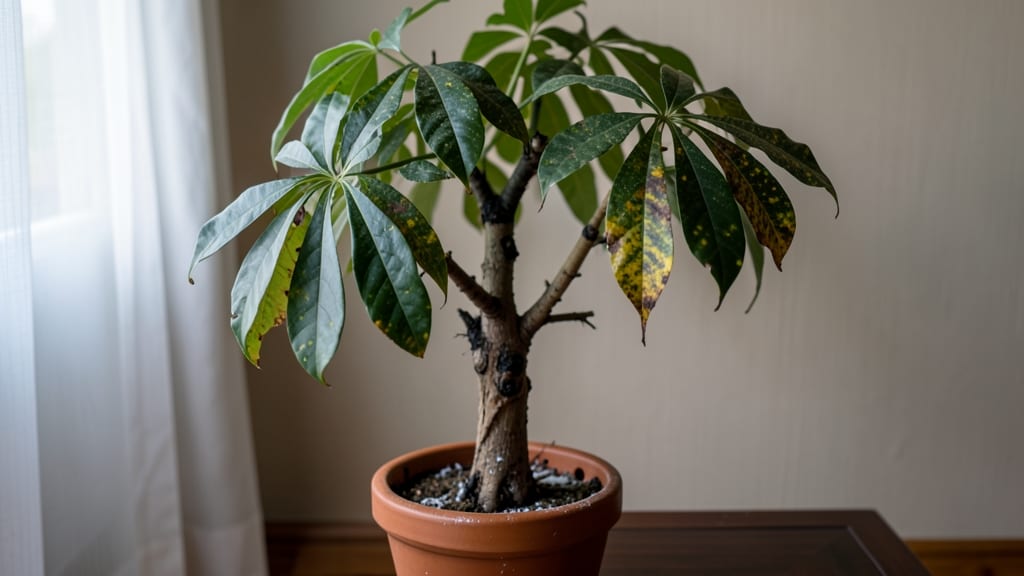
An overwatered money tree looks like a sad, soggy mess—droopy, yellow leaves with glossy spots that feel slimy to the touch. 🌿 I’ve seen this exact scene play out after "just one more drink" of water, and it’s a fast way to turn your lucky plant into a science experiment gone wrong.
The roots suffocate, the stems soften, and those signature braided stems lose their structure faster than you can say "root rot." The first warning sign is leaves that refuse to perk up, even after watering stops.
Yellow patches appear where cells drown, and the soil smells like a swamp—not fresh, not earthy, but that unmistakable stench of decay. Check the roots: healthy ones are firm and white, while overwatered roots turn mushy brown and crumble like wet cardboard.
You can still save it—stop watering immediately and let the soil dry completely between drinks. Snip off the worst yellow leaves to redirect energy, and repot in fresh, well-draining mix if the roots are beyond repair.
Within weeks, new growth will push through, proving even the most neglected money tree can bounce back. This happens most often in winter when plants slow down, or when folks confuse "water lightly" with "water daily." The fix is simple: patience and a finger in the soil.
If it’s damp an inch down, wait. If it’s bone-dry, water—but never soak the pot again.
Root Causes Of Overwatering
When your money tree (Pachira aquatica) starts showing signs of distress—like drooping leaves or yellow spots—it’s often a cry for help from its roots. Overwatering isn’t just about giving too much water; it’s a chain reaction triggered by poor drainage, environmental factors, or even human habits.
Let’s break down the real culprits behind this common issue, so you can fix the problem at its source.
Money trees thrive in well-draining soil, but if your pot lacks drainage holes or the soil retains too much moisture, roots suffocate. Here’s why it happens:
- Compacted soil: Heavy, clay-based soils or overly packed potting mixes trap water around roots, cutting off oxygen. Without airflow, roots can’t absorb nutrients or expel waste, leading to root rot—a fungal infection that turns roots mushy and black.
- No escape route: Pots without drainage holes force excess water to pool at the bottom. Even "self-watering" pots can backfire if not monitored, as stagnant water becomes a breeding ground for harmful pathogens.
- Over-potting: Using a pot that’s too large for your money tree’s size means more soil holds moisture longer than the roots can process. A general rule: Upgrade pot sizes only when roots outgrow the current one by 2–3 inches.
💡 Pro Tip: Test your soil’s drainage by filling a pot with water and timing how long it takes to drain completely. If it takes more than 10–15 minutes, your soil is too dense. Mix in perlite, orchid bark, or sand to improve aeration.
Even with perfect drainage, overwatering often boils down to human timing. Money trees are drought-tolerant natives of tropical wetlands, but they’re adapted to cyclical moisture—not constant sogginess. Here’s how habits backfire:
- Sticking to a schedule: Watering on a fixed day (e.g., every Monday) ignores the plant’s real needs. Soil moisture levels fluctuate based on temperature, humidity, and light. Instead, check the top 1–2 inches of soil—if it’s dry, water; if damp, wait.
- Ignoring seasonal changes: In winter, money trees enter a dormant-like state with slower metabolic activity. Watering as heavily as in summer forces roots to work overtime, leading to stress and rot.
- Overcompensating for dry spells: If your money tree wilts from underwatering, the urge to drown it in water is natural—but this can shock the plant. Always water gradually to rehydrate roots without overwhelming them.
⏰ Actionable Fix: Use the finger test daily: Insert your finger into the soil. If it feels dry up to your first knuckle, water thoroughly until it drains from the bottom. If it’s still damp, wait 2–3 more days.
Your money tree’s environment plays a huge role in how it processes water. When conditions are too extreme, even "correct" watering can lead to overhydration:
| Factor | How It Causes Overwatering | Solution |
|---|---|---|
| 🔥 High Heat | Hot air increases transpiration (water loss through leaves), but if roots can’t keep up, excess water lingers. Combined with poor airflow, this creates a greenhouse effect that traps moisture. | Move to a spot with bright, indirect light (e.g., 3–5 feet from a south-facing window). Use a fan to improve airflow. |
| 💧 High Humidity | Humid air slows evaporation from soil, keeping it wet longer. In tropical climates or bathrooms, this mimics a permanent rainforest—ideal for the plant’s origins but deadly if roots can’t dry out. | Reduce humidity around the pot by grouping plants with low water needs nearby or using a dehumidifier in the room. |
| ☀️ Low Light | Without enough light, photosynthesis slows, and the plant can’t regulate water intake. Roots become sluggish, and excess water pools instead of being absorbed. | Rotate the pot quarter-turns weekly for even light exposure. Supplement with a grow light if natural light is insufficient. |
🌡️ Ideal Conditions: Aim for 60–80% humidity, 65–80°F temperatures, and bright, indirect light (like a north or east-facing window). Avoid cold drafts or direct sun, which stress the plant.
Once roots start rotting, pathogens move in fast. Overwatering creates the perfect Petri dish for:
- Pyythium or Phytophthora fungi: These thrive in waterlogged soil, attacking root cells and blocking nutrient uptake. Infected roots turn brown, mushy, and emit a rotten smell.
- Bacterial soft rot: Caused by Erwinia or Pseudomonas, this bacteria enters through wounds (like overwatering damage) and liquefies root tissue. Leaves may develop water-soaked spots before wilting.
🔪 Emergency Action: If you suspect rot, remove the plant from its pot and rinse the roots gently with water. Trim away black/mushy roots with sterilized scissors, then repot in fresh, dry soil. Add a fungicide (like copper-based spray) to prevent reinfection.
Reviving Your Money Tree: Step-by-Step Fixes
Overwatering can turn your money tree (Pachira aquatica) into a sad, droopy mess—but don’t panic! With the right care, you can nurse it back to health. Below are practical, cause-specific solutions to save your plant, along with prevention tips to keep it thriving long-term.
Cause: Overwatering leads to root rot, where roots suffocate in soggy soil, turning brown and mushy.
How to Fix It:
- 🔥 Remove the Plant Gently
- Take the money tree out of its pot and inspect the roots. Healthy roots are firm and white; rotten roots are dark, slimy, or crumbly.
- 🍳 Trim the Damaged Roots
- Use sterilized scissors or pruning shears to cut away any mushy, discolored roots. Keep only the firm, healthy sections.
- 👨🍳 Repot in Fresh, Well-Draining Soil
- Choose a terracotta pot (helps wick away moisture) and fill it with a mix of:
- 50% well-draining potting soil
- 30% perlite or orchid bark (for aeration)
- 20% coarse sand or pumice (prevents compaction)
- Pro Tip: Add a layer of charcoal at the bottom to deter fungal growth. ✨
- Choose a terracotta pot (helps wick away moisture) and fill it with a mix of:
- ⏰ Let It Dry Out Before Watering Again
- Wait 7–10 days before watering to let roots recover. Stick your finger 2 inches deep into the soil—if it’s dry, water lightly.
Cause: Excess moisture causes leaf burn and fungal infections (like powdery mildew), making leaves look slick and unhealthy.
How to Fix It:
- 💡 Reduce Watering Frequency
- Water only when the top 1–2 inches of soil are bone-dry (test with your finger!).
- Rule of thumb: Water every 2–3 weeks in summer, every 4–6 weeks in winter.
- 🌡️ Improve Airflow & Humidity
- Move the plant to a bright, indirect light spot (no direct sun).
- Use a pebble tray with water or a humidifier to keep humidity at 40–60%.
- Pro Tip: Mist leaves 2–3 times a week (but avoid soggy soil!). 🌧️
- 🍄 Treat Fungal Issues (If Present)
- Wipe leaves with a 1:10 hydrogen peroxide-water mix (3%) to kill fungus.
- Spray with neem oil solution (1 tsp neem oil + 1 quart water) once a week for 2 weeks.
Cause: Overwatering + poor drainage or over-fertilizing leads to nutrient burn and leaf scorch.
How to Fix It:
- 🥗 Flush the Soil
- Place the pot in a sink and run water through the soil for 5–10 minutes to remove excess salts.
- 📊 Adjust Fertilizer Use
- Stop fertilizing for 2–3 months to let the plant recover.
- When you resume, use a balanced, water-soluble fertilizer (like 10-10-10) only every 6–8 weeks in spring/summer.
- 🔪 Prune Damaged Leaves
- Snip off brown, crispy leaves with clean scissors to redirect energy to new growth.
- 💡 Use the Right Pot: Terracotta or pots with drainage holes are a must!
- 🌡️ Monitor Soil Moisture: Invest in a moisture meter or do the finger test regularly.
- ✨ Avoid Overpotting: Choose a pot only 1–2 inches larger than the root ball.
- 🍃 Rotate for Even Growth: Turn the pot quarter-turn weekly for balanced sunlight exposure.
Final Thought: With these fixes, your money tree should bounce back in 4–8 weeks! Stay patient, adjust care based on its response, and soon you’ll have a lush, lucky green friend thriving in your space. 🌿💚
Frequently asked questions
How can I tell if my money tree has root rot from overwatering?
Check the roots by gently removing the plant from its pot. Healthy roots are firm and white, while overwatered roots turn brown, mushy, and smell foul. If you see black, slimy roots, it’s a clear sign of root rot caused by too much moisture. Trim away the damaged roots and repot in fresh, dry soil immediately.
Why do the leaves on my money tree turn yellow and feel squishy?
Yellow, squishy leaves are classic signs of overwatering. When roots can’t breathe, the plant struggles to absorb nutrients, causing leaves to yellow and feel soft or mushy. This often happens when soil stays damp for too long—always let the top 1–2 inches dry out completely before watering again.
Can I save my money tree if the stems feel soft and wobbly?
Yes, but act fast! Soft stems indicate severe overwatering and potential root rot. First, remove the plant and trim away any mushy roots. Repot in a well-draining mix with perlite or sand, then let the soil dry out completely before watering again. Keep it in bright, indirect light and avoid watering for at least 7–10 days.
How often should I water my money tree to prevent overwatering?
Money trees are drought-tolerant—water only when the top 1–2 inches of soil are completely dry. In summer, this might be every 2–3 weeks, while winter care often requires watering just once a month. Always use pots with drainage holes and avoid letting water sit in the saucer.