
Plants
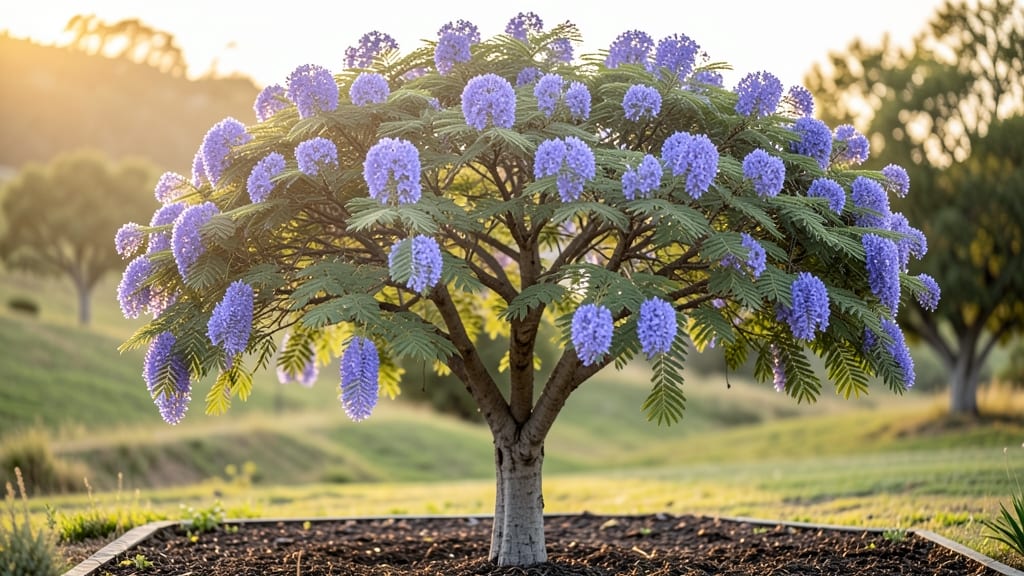
A jacaranda tree looks like a tropical showstopper with its delicate, fern-like leaves and cascading clusters of lavender-purple trumpet flowers that burst forth in spring, transforming the tree into a living purple waterfall. The smooth, grayish bark and wide-spreading branches complete its exotic appearance.
A jacaranda tree's most striking feature is its dramatic spring blooms, which can reach up to 12 inches long and create a stunning canopy. 🌸 The flowers grow in dense, drooping clusters that resemble grape-like bunches, often turning the tree into a vibrant focal point in landscapes.
Meanwhile, its compound leaves—made up of multiple small leaflets—give it a lacy, almost tropical appearance that sets it apart from other flowering trees.
What makes this tree especially recognizable is how its purple flowers contrast beautifully with the green foliage. The bark remains smooth and unassuming, allowing the flowers to truly shine. In ideal conditions, mature trees can grow up to 30-40 feet tall, making them a grand addition to any landscape.
💡 In This Article
- Identifying Jacaranda Tree Flowers and Foliage
- Best Locations and Care for Jacaranda Trees
Identifying jacaranda tree flowers and foliage
The jacaranda's flowers are its signature feature, with each bloom shaped like a delicate trumpet measuring about 1 inch long, clustered in drooping racemes that can stretch up to 12 inches.
These flowers grow in dense, grape-like bunches from the tree's branches, creating a cascading effect that's hard to miss.
The color varies from pale lavender to deep violet, though some varieties like Jacaranda mimosifolia produce the most vibrant purple hues. 💜 The petals are thin and slightly fuzzy, giving them a velvety texture when touched.
What sets jacaranda flowers apart from similar trees like royal poinciana (which has bright red blooms) is their lack of fragrance. Unlike lilacs or frangipani, jacarandas don't produce a noticeable scent, making them ideal for urban landscapes where fragrance might be undesirable.
The blooms appear in late spring, typically between March and May in warm climates, and last for about 2-3 weeks before falling to create a beautiful carpet of petals beneath the tree.
The foliage is equally distinctive, featuring pinnate compound leaves that resemble ferns. Each leaf contains 50-100 small leaflets arranged in pairs along a central stem, creating a feathery appearance. These leaves are 1-2 inches long and have a soft, slightly waxy texture that helps them conserve moisture in dry climates.
During summer, the tree may shed some leaves to conserve water, which is a natural adaptation to its native habitats in South America.
One key identification feature is how the jacaranda's leaves turn yellow before falling in autumn, unlike many other trees that change to red or orange. This yellowing is a subtle but important clue when distinguishing jacarandas from similar-looking species.
The tree's bark remains smooth and grayish-brown throughout its life, providing a neutral backdrop that makes the vibrant flowers stand out even more dramatically. 🌿
When comparing jacarandas to other flowering trees, their dramatic canopy effect is unmistakable. While royal poincianas have showy red flowers, jacarandas create a purple cloud effect when fully bloomed. The combination of their trumpet-shaped flowers and fern-like foliage makes them instantly recognizable to those familiar with tropical landscapes.
This unique combination of features is what gives jacarandas their iconic status in warm-climate gardens.
Interestingly, the jacaranda's flowers are not edible and contain mild toxins that can cause stomach upset if ingested. This is an important safety note for pet owners, as curious animals might try to nibble on the petals.
The tree's overall appearance, however, makes it a prized ornamental species that's often planted in parks, universities, and residential areas for its stunning visual impact. 🌸