
Pruning
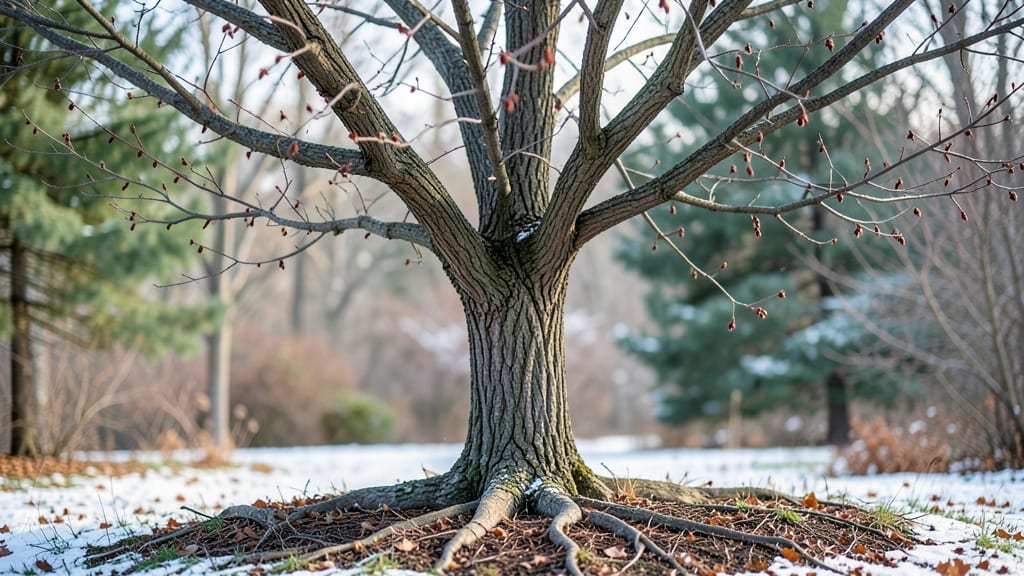
Winter reveals the sugar maple’s quiet strength—its bare branches etched against the sky, its sap waiting to flow. ✨ Pruning during dormancy isn’t just about shaping the tree; it’s about unlocking next year’s syrup potential and preventing weak branch breakage when storms hit.
I’ve learned the hard way that cutting at the wrong time can stress the tree or invite disease, but timing it right transforms winter’s dormancy into a growth advantage.
The best time to prune is late winter, when the ground is still frozen but before buds swell in early spring. You’ll need sharp pruners, a ladder for taller branches, and a clear day—maples bleed sap heavily when cut, but the flow slows in cold weather.
Focus on removing dead wood, crossing branches, and thinning the canopy by no more than 25% to avoid overstressing the tree. The goal isn’t perfection; it’s health.
What you’ll notice after pruning is a stronger structure come spring—fewer weak limbs, better air circulation, and even more vibrant fall color. The sap flow for syrup also improves, as the tree directs energy to healing clean cuts rather than fighting decay.
Plus, you’ll support wildlife by leaving some seed pods for birds and creating a safer branch network for squirrels.
Works for young saplings or mature giants, though larger trees may need professional help. The key is patience: winter pruning pays off in years of robust growth and golden foliage. Ready to give your sugar maple the care it deserves?
📚 In This Guide
- What you need
- Instructions
- Tips and common mistakes
- Wrapping up and next steps
What you need
- ● Pruning shears (bypass or anvil type) – Sharp, clean, and sized for small to medium branches (6–10 inches in diameter).
- ● Loppers – For branches 1–2 inches thick; choose a model with a bypass blade for clean cuts.
- ● Pruning saw – For thicker branches (2+ inches); opt for a curved or bow saw for precision.
- ● Extension pole saw – For high branches (10–20 feet); attachable to a saw or shears for safety.
- ● Work gloves – Heavy-duty, cut-resistant (e.g., mechanics or logging gloves) to protect hands.
- ● Safety glasses – ANSI-rated for debris protection.
- ○ Ladder or lift (optional but recommended) – Aluminum or fiberglass ladder (20–30 ft) or a cherry picker for tall trees.
- ○ Pruning sealant (optional) – For large cuts (>2 inches); use a latex-based product to prevent disease.
- ● Disinfectant (70% isopropyl alcohol or bleach solution) – To sterilize tools between cuts and avoid spreading bacteria.
- ● Heavy-duty trash bags – For collecting and disposing of pruned branches.
- ● Weather check – Prune on a dry, calm day (avoid frost or wind). Ideal temps: 40–60°F.
- ● Personal protective equipment (PPE) – Long sleeves, pants, and closed-toe shoes/boots.
- ● First-aid kit – In case of cuts or scrapes (include antiseptic wipes and bandages).
- ○ Tree map or diagram (optional) – Sketch the tree’s structure beforehand to plan cuts systematically.
- ● Water and snacks – Hydration breaks are key—pruning can be physically demanding!
- ● Invest in a folding pruning saw if you have multiple large branches—it’s a game-changer for clean cuts!
- ● Bring a small broom to sweep up debris and keep your workspace tidy.
- ● Label branches with twine if you’re unsure about which to remove—snap a quick photo for reference.
- ● Check local regulations—some areas require permits for tree pruning over a certain height.
How to prune a sugar maple in winter for stronger sap flow
Winter’s the perfect time to shape your sugar maple—here’s how to do it right for healthier trees and better syrup yields.
✂️ Step 1: Plan Your Cuts Based on Tree Structure
Start by examining the tree’s branches from all angles. Look for dead, diseased, or crossing branches—these are your top priorities. Dead wood is easy to spot: it’s gray, brittle, and doesn’t bend when you test it with your thumb. Crossing branches (where two limbs grow toward each other) create weak points and should be removed first to prevent future damage.
Use a sharp pruning saw or loppers for branches thicker than 2 inches. For thinner branches, hand pruners work best. I like to sketch a rough map of the cuts I’ll make—it helps visualize the final shape and avoids over-pruning. Never remove more than 25% of the tree’s canopy in one season, or you’ll stress the tree and reduce its sap production.
✂️ Step 2: Make Clean Cuts at the Right Angle
For branches thicker than 1 inch, cut in three steps to avoid tearing the bark. First, make an undercut on the underside of the branch about 1-2 feet from the trunk. This prevents the branch from tearing as you remove it. Next, cut through the top of the branch about ¼ inch outside the undercut. Finally, make a final cut just outside the branch collar (the swollen area where the branch meets the trunk).
For thinner branches, a single cut is fine—just angle it slightly away from the trunk to let water run off. Avoid leaving stubs, as they invite disease. If you’re unsure about a cut, take your time; a clean cut heals faster and looks better. I always wear gloves to avoid sap irritation, especially when working with maples.
✂️ Step 3: Prioritize Sap Flow with Strategic Pruning
Sap flow thrives in trees with an open center and good airflow. Remove any branches growing straight up or inward—they compete with the tree’s main structure and reduce sap production. Focus on keeping the lower branches healthy, as these are often the most productive for tapping. If a branch is too close to the trunk, prune it back to a lateral branch or the trunk itself.
Watch for water sprouts**—fast-growing, vertical shoots that drain energy from the tree. These are easy to spot in winter because they’re often bare and stick straight up. Cut them at the base with clean cuts. Avoid pruning during freezing temperatures (below 20°F), as the sap thickens and healing slows. Early winter (just after leaf drop) or late winter (before buds swell) are ideal.
✂️ Step 4: Clean Up and Protect the Tree
After pruning, collect all debris and dispose of it properly—don’t leave cut branches on the ground, as they can harbor pests. Sterilize your tools with rubbing alcohol or a 10% bleach solution to prevent spreading disease between cuts. If you notice any signs of infection (oozing sap, fungal growth), prune those areas last and disinfect your tools thoroughly afterward.
Apply a wound sealant only if the cut is large and jagged—most maples heal well without it. For small cuts, let the tree seal itself naturally. Water the base of the tree lightly if the ground isn’t frozen, but avoid overwatering. Mulch around the base with 2-3 inches of organic mulch (like wood chips) to protect roots from freezing and retain moisture.
⏰ Step 5: Monitor and Adjust for Future Seasons
Check your tree in early spring to ensure the cuts are healing properly. Healthy pruning wounds should start to callus over within a few weeks. If you notice any dieback or unusual growth, adjust your pruning plan for next winter. Sugar maples respond well to gradual pruning, so spread out major cuts over 2-3 years if needed.
Keep a record of your pruning—note which branches you removed and why. This helps track the tree’s health over time. If you’re tapping for syrup, avoid heavy pruning in years when you plan to harvest sap, as the tree needs energy for both growth and production. With careful pruning, your sugar maple will reward you with stronger sap flow and a healthier structure for decades.
Tips & tricks for perfect winter maple pruning
Winter pruning transforms your sugar maple—here’s how to avoid common mistakes and maximize sap flow.
Tool Selection: Sharpness matters more than brand. Test your pruners by cutting a piece of paper—if it tears, sharpen them first. A dull blade crushes fibers, causing long, slow-healing wounds that weaken the tree. For branches over 2 inches thick, loppers give you more leverage than hand pruners, reducing strain on your hands during long sessions. I keep a small file in my tool kit just for quick sharpening between cuts.
Timing Secret: The 20°F threshold isn't just about temperature—it's about sap consistency. Below this, sap becomes thick and sticky, making cuts heal slower. But don't wait until spring! Prune when days are above freezing but nights stay cold (30-40°F range). This balance gives you workable conditions while keeping the tree dormant. I schedule my pruning for mid-February when we typically see these conditions, right before buds start swelling.
Visual Cues for Healthy Cuts: In Step 2, when making your final cut just outside the branch collar, look for the natural swelling where the branch meets the trunk. This collar contains healing tissues that help seal the wound. If you cut too close to the trunk, you remove these tissues and create a larger wound that takes longer to heal. The ideal cut should leave a smooth, slightly concave surface—like a natural dimple in the trunk.
Sap Flow Strategy: The lower branches (under 6 feet) produce 60% of your sap flow, so protect them. When pruning higher branches, aim to create an open center that lets sunlight reach the lower canopy. This encourages more vigorous growth in the productive lower branches. I like to visualize the tree as an umbrella—you want air to circulate through the middle, not get trapped in the spokes.
Pro Tips for Sugar Maple Tree In Winter
- Winter pruning transforms your sugar maple—here’s how to avoid common mistakes and maximize sap flow.
- Tool Selection: Sharpness matters more than brand.
- Timing Secret: The 20°F threshold isn't just about temperature—it's about sap consistency.
Frequently asked questions
Got questions about caring for your sugar maple during winter’s dormant season? You’re not alone! Here are answers to the most common queries—from pruning timing to sap flow secrets.
When is the best time to prune a sugar maple in winter?
The ideal window is late winter (January–February), after the ground freezes but before buds swell. This minimizes stress and sap loss. Avoid pruning during extreme cold snaps (<10°F) or when snow covers the tree. Pro tip: Prune on a dry, calm day to reduce disease risk.
Can I prune a sugar maple in deep winter (December–March)?
Yes, but timing matters. Prune only when the tree is fully dormant (no leaves or sap flow). Deep winter (Dec–Jan) works if temps stay above freezing. However, avoid pruning during thaws—warm spells trigger sap flow, weakening the tree. Check local frost dates for precision.
Will pruning in winter affect next year’s sap collection?
No—done correctly, winter pruning boosts sap flow! Removing dead/diseased branches reduces competition, letting the tree focus energy on sap production. Just avoid heavy pruning (>25% of foliage) in one season. For maple syrup producers, prioritize small, strategic cuts to maintain vigor.
What if my sugar maple bleeds sap after winter pruning?
Sap bleeding is normal in early spring but not after proper dormant-season pruning. If it happens, you likely pruned too late (post-bud swell). To stop it: seal cuts with pruning sealant (optional) and avoid pruning until late winter next year. Heavy bleeding may indicate stress—check for pests or disease.
Are there alternatives to winter pruning for sugar maples?
Yes! Summer pruning (June–August) is an option, but it slows sap flow and increases disease risk. If you must prune outside winter, opt for light maintenance (removing only deadwood) in late summer. For syrup producers, stick to winter—it’s the gold standard for tree health and yield.
Still unsure? Drop your concerns below—we’re happy to help your sugar maple thrive!
Wrapping up and next steps
Winter is the perfect time to nurture your sugar maple tree—pruning now sets the stage for a bountiful sap flow and vibrant growth when spring arrives. 🌳 By following the right techniques, you’ll ensure your tree stays healthy, strong, and ready for tapping season.
Ready to take action? Grab your tools, step outside, and give your sugar maple the care it deserves—your future syrup harvest will thank you!
Next step: Mark your calendar for late winter (just before bud break) and start pruning—your tree’s health (and your pancakes!) will be sweeter for it. 🥞