
Pruning
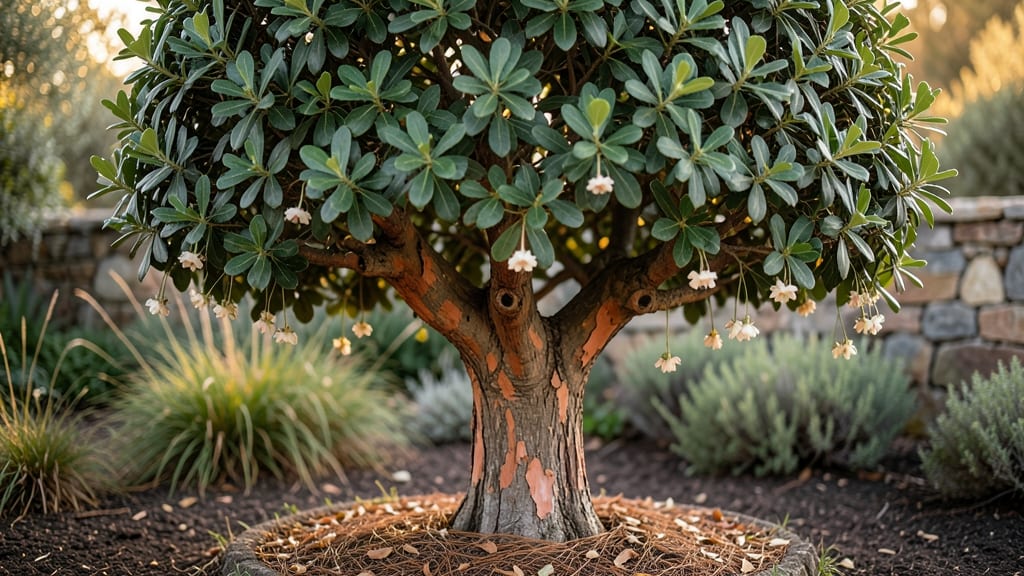
Your strawberry tree trunk needs strategic cuts to stay strong and healthy all year. ✂️ I’ve seen too many gardeners over-prune or ignore the trunk entirely, leading to weak growth, disease, or even plant collapse.
The right approach keeps your tree thriving while preventing common issues like fungal rot or pest damage.
Start by inspecting the trunk for cracks, soft spots, or signs of pests like borers. Healthy trunks should be firm with smooth bark—anything else signals trouble. Use sharp pruners to make clean cuts just above a bud or branch collar, never leaving stubs.
This simple step prevents infections and encourages strong new growth.
With proper pruning, your strawberry tree will reward you with vibrant foliage and abundant fruit for years. The key is timing: light pruning in late winter and more aggressive cuts after harvest. Mulch around the base to protect against rot and retain moisture, while staking helps support heavy branches.
Even experienced gardeners make mistakes—like pruning too late in the season or using dull tools. Stick to the basics, and your strawberry tree will stay sturdy, productive, and beautiful. Here’s how to do it right the first time.
📚 In This Guide
- What you need
- Instructions
- Tips and common mistakes
- Wrapping up and next steps
What you need
- ● Pruning shears – Bypass pruners (sharp, clean blades, 6–8" handle) for small branches.
- ● Loppers – Long-handled (24–36") for thicker branches (½"–1.5" diameter).
- ● Pruning saw – Heavy-duty, curved blade for branches >1.5" thick.
- ● Disinfectant – Rubbing alcohol (70%+) or household bleach (1:9 ratio with water) to sterilize tools.
- ○ Gloves – Heavy-duty, cut-resistant (optional but recommended for thorns!).
- ○ Pruning sealant – Optional (e.g., tree wound paint) for large cuts >2" in diameter.
- ● Weather check – Prune on a dry, calm day (avoid rain or wind).
- ● First-aid kit – Bandages, antiseptic wipes (just in case!).
- ● Ladder or step stool – Sturdy, non-slip (if tree is tall).
- ● Trash bags – Heavy-duty for collecting pruned branches.
- ● Sun protection – Hat, sunglasses, sunscreen (if pruning outdoors for long).
- ● Sharpen your tools! – Dull blades tear bark—use a file or sharpening stone beforehand. ✨
- ● Mark your cuts – Use a permanent marker to outline branches before pruning.
- ● Work with the grain – Cut at a 45° angle just outside the branch collar for clean healing.
How to prune a strawberry tree trunk for year-round health
Here's the simple method I use to keep my strawberry tree looking elegant while boosting fruit production.
✂️ Step 1: Assess the Trunk in Late Winter
Start your pruning in late winter when the tree is still dormant but just before new growth begins. This is the perfect time because you can see the entire structure clearly without leaves obscuring problem areas. Look for any dead, cracked, or peeling bark—these are your first targets for removal.
Run your hands along the trunk to feel for any rough or sunken spots that might indicate disease or insect damage. Healthy bark should feel smooth and slightly textured, not spongy or hollow. Mark these areas with a soft chalk or tape so you don’t miss them when you start cutting.
✂️ Step 2: Remove Dead or Damaged Wood
Use clean, sharp pruning shears to make your first cuts. Start at the base of any dead or damaged branches and cut back to the main trunk or a healthy lateral branch. Always cut at a 45-degree angle just outside the branch collar—the raised area where the branch meets the trunk—to prevent water from pooling and causing rot.
If you find larger dead sections, remove them completely down to the trunk. Don’t leave stubs—they can trap moisture and invite fungal infections. After each cut, wipe your shears with rubbing alcohol to keep them sterile and prevent spreading disease between cuts.
☀️ Step 3: Thin Out Overcrowded Branches
Now focus on the live branches that are growing too close together. Overcrowding reduces airflow and sunlight penetration, which weakens the tree and lowers fruit quality. Look for branches that cross each other or grow inward—these are the ones to remove.
Start with the smaller branches and work your way up. If two branches are competing for the same space, keep the one that’s healthier and better positioned for sunlight exposure. Cut back to the branch collar, and avoid leaving large wounds that could take years to heal.
✂️ Step 4: Shape for Balance and Airflow
Step back and assess the tree’s overall shape. The goal is to create an open, vase-like structure that allows sunlight to reach all parts of the trunk and branches. Remove any branches that grow straight upward—these are called "water sprouts" and waste energy that could go toward fruit production.
Focus on maintaining a balanced silhouette with branches evenly spaced around the trunk. You don’t need to be perfect—just aim for a natural, open look that lets air circulate freely. This reduces the risk of fungal diseases and makes future pruning easier.
🌿 Step 5: Clean Up and Protect the Trunk
After pruning, gather all the debris and remove it from the area to prevent pests and diseases from taking hold. If you notice any sawdust-like residue from your cuts, it’s a sign you’re dealing with diseased wood—sterilize your tools again and consider treating the area with a copper-based fungicide if needed.
Finally, apply a thin layer of tree sealant to any large cuts to protect them from moisture and pests. Avoid sealing small cuts—they’ll heal naturally with time. Water the base of the tree deeply to help it recover from the pruning stress and encourage new growth.
Tips & tricks for pruning a strawberry tree trunk
These simple insights will help you transform your pruning session from a guess into a confident, tree-friendly process.
Timing is Everything: Late winter is your golden window—right before buds swell but after the worst cold passes. I've seen gardeners rush this step and end up with new growth getting nipped by unexpected frost. If you miss this window, wait until early spring when the tree is still dormant but showing signs of waking up. This timing ensures you're not encouraging early growth that might not survive.
Tool Prep Makes All the Difference: Your pruning shears should be sharper than your focus on the task. Dull blades crush wood instead of cutting cleanly, which creates larger wounds that heal poorly. I keep a small file and rubbing alcohol in my toolkit—file the blades before starting, then wipe them down between cuts to prevent spreading any potential diseases from one branch to another. Sterilizing tools is especially important if you're working with multiple trees.
Visual Cues Over Guessing: When assessing branches in Step 1, trust your senses. Healthy bark should feel like fine sandpaper—not rough like a file or smooth like plastic. If you're unsure whether a branch is dead, scratch it with your fingernail. Dead wood won't have that green layer underneath. For tricky decisions, make a small test cut—if it's green inside, leave it; if it's brown, remove it. This simple test saves you from over-pruning healthy growth.
Shape Matters More Than Perfection: Aim for that open vase shape, but don't stress about symmetry. I've pruned trees that look more like abstract art than perfect vases, and they still produce amazing fruit. The key is sunlight access—step back occasionally during Step 4 to check if you're creating shadows where branches overlap. This airflow check is what truly prevents future disease problems. Think of it like creating a tree-shaped sun catcher!
Pro Tips for Strawberry Tree Trunk
- These simple insights will help you transform your pruning session from a guess into a confident, tree-friendly process.
- Timing is Everything: Late winter is your golden window—right before buds swell but after the worst cold passes.
- Tool Prep Makes All the Difference: Your pruning shears should be sharper than your focus on the task.
Frequently asked questions
Got questions about pruning your strawberry tree trunk? You’re not alone! Here are answers to the most common queries to keep your tree thriving and looking its best.
When is the best time to prune a strawberry tree trunk?
Prune your strawberry tree trunk in late winter or early spring (before new growth starts) for optimal results. Avoid heavy pruning in fall—it can stimulate tender growth that won’t survive winter. Light shaping in summer is fine, but focus on major cuts in dormant seasons.
How do I know if I’m over-pruning my strawberry tree trunk?
Over-pruning shows up as stunted growth, fewer flowers, or bare patches on the trunk. Never remove more than 25-30% of the foliage in one season. Strawberry trees are resilient, but drastic cuts stress the plant. If you’ve already overdone it, reduce future cuts and fertilize to recover.
Can I prune a strawberry tree trunk in summer?
Yes, but lightly! Summer pruning is best for removing dead or diseased branches or shaping. Avoid heavy cuts—it can shock the tree. If you must prune, do it on a cool, overcast day to minimize stress. Water well before and after to help recovery.
What should I do if my strawberry tree trunk has dead wood?
Dead wood must be removed to prevent disease and pests. Use sterilized tools to cut back to healthy green tissue or a side branch. Seal larger cuts (over ½ inch) with pruning sealant to protect the tree. If dead wood is extensive, check for root rot or fungal issues and treat accordingly.
Are there alternatives to pruning a strawberry tree trunk?
If pruning feels overwhelming, focus on regular maintenance instead:
- Remove only dead/diseased branches annually.
- Thin out crowded growth to improve airflow.
- Use support stakes for weak trunks.
Wrapping up and next steps
Pruning your strawberry tree trunk isn’t just about keeping it tidy—it’s about unlocking its full potential for vibrant blooms, luscious fruit, and long-term health. 🌿 By mastering the art of strategic cuts, you’ll create a tree that thrives year-round, whether you’re shaping its form or encouraging new growth.
Remember, patience and consistency are key!
Ready to transform your tree into a showstopper? Grab your pruners and start with small, confident cuts—your strawberry tree will thank you with bountiful rewards! For extra confidence, review the FAQs or sketch a quick plan before diving in.