
Pruning
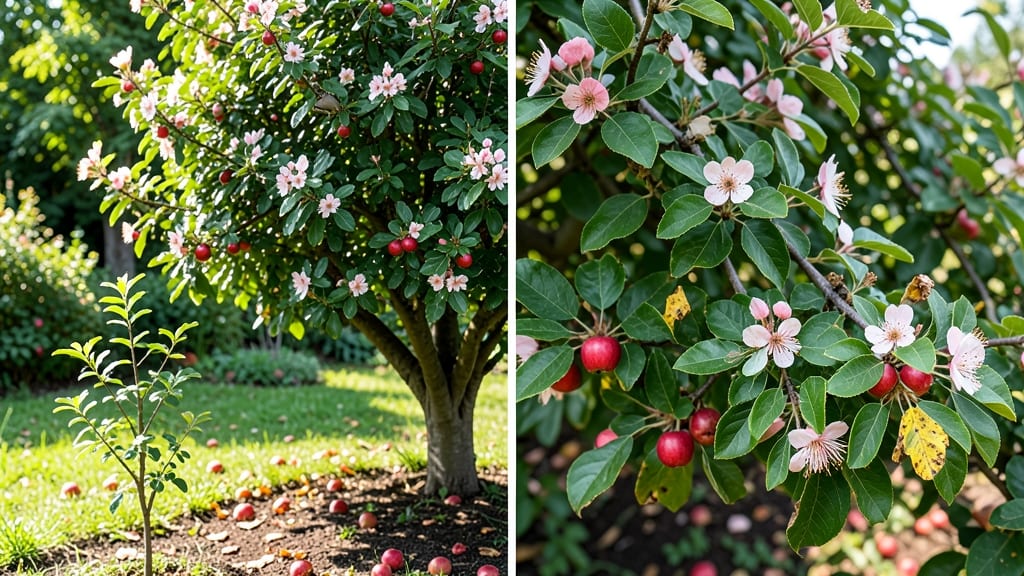
The Showtime crabapple tree: pros and cons bring four-season beauty to your yard—but choosing between dwarf and standard heights changes everything. 🌿 I’ve grown both in my front yard, and while the standard version makes a bold statement, the dwarf fits tight spaces without sacrificing impact.
The trade-offs aren’t just about size, though. Disease resistance, fruit mess, and wildlife appeal all shift depending on which you pick.
Here’s the real deal: the standard Showtime (15–20 feet tall) delivers dramatic spring blooms, glossy dark foliage, and showy red fruit that birds adore—but those berries will stain your driveway.
The dwarf (8–10 feet) skips the mess, stays compact, and still packs the same fragrant pink flowers and vibrant fall color. Both resist apple scab better than most crabapples, but neither is pest-proof.
For design, the standard works as a specimen tree or focal point, while the dwarf thrives in mixed borders or small yards. Plant it where you can enjoy the fragrance up close—just be ready to rake or net those berries if you go standard.
The dwarf’s cleaner habit wins for low-maintenance gardeners, but the standard’s height gives it star power.
Confession: I nearly swapped my dwarf for a standard after seeing neighbors’ showstopper trees—but the fruit cleanup made me reconsider. Your choice depends on whether you prioritize easy care or bold impact. Either way, you’ll get a tree that turns heads (and attracts pollinators) for decades.
📚 In This Guide
- What you need
- Instructions
- Tips and common mistakes
- Wrapping up and next steps
What you need
- ● Pruning shears: Bypass pruners (4–6-inch blades) for small branches (1/4–3/4 inch diameter).
- ● Loppers: 8–10-inch bypass loppers for medium branches (3/4–2 inches diameter).
- ● Pruning saw: Curved-tooth pruning saw for thick branches (2+ inches diameter).
- ● Disinfectant: 70% isopropyl alcohol or a 10% bleach solution (1 part bleach to 9 parts water) to sterilize tools between cuts.
- ● Heavy-duty gloves: Garden gloves with reinforced palms (water-resistant preferred).
- ● Safety goggles: ANSI-rated for eye protection from debris.
- ● Ladder or step stool: Sturdy, extendable ladder (for standard trees) or a 4–6 ft. stool (for dwarf varieties).
- ● Trash bags: Heavy-duty contractor bags (2–3) for pruning waste.
- ○ Pruning sealant (optional but recommended): Tree wound paint or pruning sealant (for cuts larger than 1/2 inch).
- ● Extension pole saw: For high branches in standard trees (16–20 ft. reach).
- ● Rope or harness: For securing yourself when working on tall ladders.
- ● Marking spray: Non-toxic paint or spray (e.g., white latex) to mark branches for removal.
- ● Work boots: With ankle support for stability on uneven ground.
- ● First-aid kit: In case of minor cuts or scrapes.
Weighing the Showtime crabapple tree: dwarf vs standard height breakdown
This isn't just a tree—it's a landscape game-changer. Here's how to decide between the compact Showtime dwarf and its full-size cousin.
🌿 Step 1: Assess Your Space Requirements
The standard Showtime crabapple reaches 20-25 feet tall with a 15-20 foot spread, making it a bold centerpiece for large yards or urban parks. If you have ample open space and want that classic crabapple silhouette, this is your tree. Its mature size creates a natural focal point that smaller varieties simply can't match.
In contrast, the dwarf Showtime tops out at 10-15 feet tall with a 6-8 foot spread, perfect for tight urban lots, patios, or foundation plantings. I've seen these thriving in 8x8 foot garden beds without crowding other plants. Measure your available space before choosing—this tree's mature dimensions are non-negotiable.
☀️ Step 2: Evaluate Sunlight and Maintenance Needs
Both varieties demand full sun (6+ hours daily) for optimal flowering and fruit production, but their maintenance scales differently. The standard tree requires regular pruning to maintain its shape and remove dead branches—expect 2-3 major pruning sessions annually as it matures. Its height also makes pruning more challenging without proper equipment.
The dwarf version is far more manageable. With its compact growth habit, you can easily reach all branches from the ground, reducing the need for ladders and specialized tools. I recommend light pruning in late winter to encourage dense branching and remove any crossing limbs. Both varieties produce abundant white spring blooms and small red fruit, but the dwarf's accessibility makes maintenance significantly easier.
🪴 Step 3: Consider Long-Term Growth Goals
If your goal is fruit production, both trees deliver—though the standard variety typically yields slightly more. The dwarf's smaller size means fewer apples, but they're still perfect for fresh eating or small-scale preserves. I've found the dwarf's fruit ripens slightly earlier in the season, which can be an advantage if you're eager for harvest.
For ornamental value, the standard tree's dramatic height creates vertical interest, while the dwarf excels in layered planting schemes. Consider whether you want a statement piece or a functional, multi-use plant. The dwarf's compact size also makes it ideal for container growing in large pots (minimum 24-inch diameter), though it will never match the standard's eventual grandeur.
✂️ Step 4: Factor in Climate and Soil Adaptability
Both Showtime varieties are hardy in USDA zones 4-8, making them versatile for most temperate climates. They tolerate a wide range of soil types but prefer well-draining soil—neither handles waterlogged roots well. In my experience, the dwarf adapts slightly better to urban environments with compacted soil, while the standard tree benefits from looser, deeper soil to support its extensive root system.
Neither variety is particularly drought-tolerant once established, but the dwarf's smaller root zone means it requires more frequent watering during dry spells. If you're in a region with hot summers, plan for deep watering 1-2 times weekly until the tree is fully established (typically 2-3 years). Both trees benefit from a 2-3 inch layer of mulch to retain moisture and regulate soil temperature.
🌱 Step 5: Weigh Aesthetic and Practical Tradeoffs
The standard Showtime crabapple offers classic crabapple beauty with its arching branches and abundant spring flowers, but its size demands space and long-term planning. If you envision a traditional landscape with mature trees, this is the choice. Its fall color (yellow to orange) adds seasonal interest that smaller varieties can't match.
The dwarf version brings all the benefits—fragrant blooms, attractive fruit, and seasonal color—in a scalable package. It's ideal for modern landscapes, small yards, or even large containers. Real talk: if you love the look of crabapples but hate the idea of dealing with a 25-foot tree, the dwarf is your best bet. Just be prepared to prune annually to maintain its shape and encourage flowering.
Tips & tricks for perfect Showtime crabapple selection
Choosing the right crabapple variety can transform your landscape—here's how to avoid common pitfalls and maximize your investment.
Space Planning: Before purchasing, sketch your yard with both mature dimensions marked: the standard Showtime's 20-25 feet height and 15-20 foot spread versus the dwarf's 10-15 feet height and 6-8 foot spread. I've seen homeowners regret their choice after realizing the standard tree outgrows its space within 5 years. Measure not just your current yard but also future construction plans—trees aren't easily relocated once established.
Sunlight Strategy: Both varieties need full sun (6+ hours daily), but their light requirements change as they mature. The standard tree develops a dense canopy that can create shade for surrounding plants—plan for this if you want an open lawn area. For the dwarf, consider its eventual 6-8 foot spread when placing near patios or walkways; you'll want to maintain that sunlight access for your home's exterior spaces too.
Pruning Pro Tips: The standard tree's 2-3 major pruning sessions annually are non-negotiable for maintaining its shape and preventing disease. Invest in a good pair of pruning shears and a sturdy ladder—this isn't a DIY job for most homeowners. For the dwarf, I recommend light pruning in late winter to remove crossing limbs and encourage dense branching. The key is to prune just before new growth begins; this timing maximizes flowering potential while keeping the tree manageable.
Container Considerations: If you're leaning toward the dwarf for container growing, choose a pot with a minimum 24-inch diameter—anything smaller will restrict root growth and stress the tree. Use a high-quality potting mix with excellent drainage, and always include a saucer to catch excess water. Remember that container-grown trees require more frequent watering than in-ground plants, especially during those critical 2-3 years of establishment.
Pro Tips for Showtime Crabapple Tree Pros And Cons
- Choosing the right crabapple variety can transform your landscape—here's how to avoid common pitfalls and maximize your investment.
- Space Planning: Before purchasing, sketch your yard with both mature dimensions marked: the standard Showtime's 20-25 feet height and 15-20 foot spread versus the dwarf's 10-15 feet height and 6-8 foot spread.
- Sunlight Strategy: Both varieties need full sun (6+ hours daily), but their light requirements change as they mature.
Frequently asked questions
Got questions about the Showtime crabapple tree? You’re not alone!
Here are some of the most common queries—plus clear, practical answers—to help you decide if this tree is the right fit for your landscape.
Is the Showtime crabapple tree truly disease-resistant?
The Showtime crabapple is bred for excellent disease resistance, especially against apple scab and fire blight—two common issues for crabapples. However, no tree is 100% immune. Regular pruning to improve airflow and removing infected branches early can further boost its resilience. Check out our pruning guide for best practices!
How long does it take for a Showtime crabapple to mature and produce fruit?
Patience pays off! A Showtime crabapple typically takes 3–5 years to mature and start producing its signature bright pink blossoms (spring) and small, edible fruit (fall). Dwarf varieties may flower slightly sooner, but expect full bloom and fruit in about the same timeframe. Pro tip: Plant in well-draining soil and full sun to speed up the process!
Can I grow a Showtime crabapple in a small yard or container?
The dwarf version (usually 12–15 feet tall) is perfect for small yards, patios, or even large containers (with a 20+ gallon pot). Just ensure the container has drainage holes and use high-quality potting mix. For standard sizes, opt for spaced planting (20–25 feet apart) to avoid overcrowding.
Are the fruits of the Showtime crabapple safe to eat?
Yes, but with a few caveats! The fruit is edible but tart—not ideal for fresh snacking but great for jams, jellies, or baking. Birds love them too, so expect some wildlife visitors! Harvest in fall when the fruit softens slightly. Warning: Avoid eating unripe fruit, as it can be bitter or slightly toxic.
How often should I prune a Showtime crabapple, and when is the best time?
Prune once a year in late winter or early spring (just before buds swell) to shape the tree, remove dead wood, and encourage airflow. Light trimming after flowering (summer) can also help manage size. Avoid heavy pruning in fall, as it may stimulate late-season growth vulnerable to frost. Pro tip: Use sterilized tools to prevent disease spread!
What are some alternatives if I want a low-maintenance, disease-resistant tree?
If the Showtime seems too high-maintenance, consider these low-maintenance, disease-resistant alternatives:
- Royal Raindrops Crabapple: Similar disease resistance, with weeping branches for a unique look.
- Adams Crabapple: Classic choice with durability and abundant flowers.
- Serviceberry (Amelanchier): Edible berries, fall color, and minimal pruning needs.
- Dwarf Korean Lilac: Fragrant blooms and compact size (great for small spaces).
Each has its own pros and cons, so weigh factors like height, fruit, and bloom time before deciding!
Wrapping up and next steps
The Showtime Crabapple Tree is a stunning choice for adding color and charm to your landscape—whether you opt for its compact dwarf variety or the classic standard-height version. With its vibrant blooms, disease resistance, and low-maintenance appeal, it’s a winner for many gardeners.
However, consider your space, climate, and long-term care needs before planting to ensure it thrives for years to come.
Ready to bring this beauty to your yard? Start by measuring your space and researching local planting guidelines to pick the perfect fit! 🌳✨