
Pruning
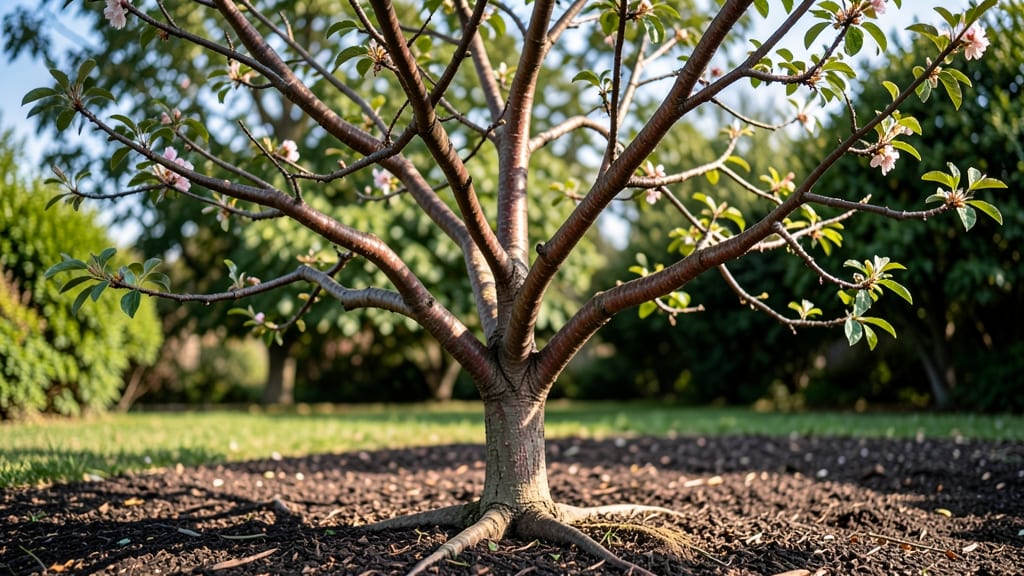
Peach tree branches need strategic pruning to prevent breakage, disease, and poor fruit production. I’ve learned the hard way—after a storm snapped off half my tree’s limbs—that weak branches aren’t just unsightly; they’re a ticking time bomb for your harvest.
The right cuts now mean fewer headaches (and fewer trips to the hardware store for replacements) later.
Start by removing dead, crossing, or diseased branches first—they’re the easiest to spot and the most urgent to cut. Use sharp pruners (not saws) to make clean slices just outside the branch collar, where the branch meets the trunk.
This prevents tears that invite pests and rot. For thicker branches, wait until late winter when the tree is dormant; you’ll see clearer signs of dead wood and avoid stressing the tree during active growth.
What you’ll end up with is a stronger framework that supports heavier fruit loads without snapping. Branches grow straighter, sunlight reaches the center of the tree, and air circulates better—meaning fewer fungal issues.
Even better? Your peaches will ripen more evenly, and you’ll spend less time propping up wobbly limbs come summer.
This method works year-round with seasonal adjustments: light pruning after harvest to shape the tree, and heavier cuts in late winter to prepare for spring. The key is consistency—just 15 minutes every few months keeps your tree healthy without overwhelming you. Let’s get those branches in shape!
📚 In This Guide
- What you need
- Instructions
- Tips and common mistakes
- Wrapping up and next steps
What you need
- ● Pruning shears: Bypass pruners (for clean cuts on branches up to ½ inch thick). Quantity: 1 pair (sharp, high-quality, like Felco or Fiskars).
- ● Loppers: For branches ½ to 1½ inches thick. Quantity: 1 pair (look for ratcheting or bypass models).
- ● Pruning saw: Curved-tooth saw for larger branches (1½+ inches). Quantity: 1 (Fiskars or Bahco brands recommended).
- ● Gloves: Heavy-duty, cut-resistant (to protect from thorns and splinters). Quantity: 1 pair.
- ● Disinfectant: 70% isopropyl alcohol or bleach solution (1 part bleach to 9 parts water) to sterilize tools between cuts. Quantity: Small spray bottle or wipe.
- ○ Pruning sealant: Optional but helpful for larger cuts (e.g., Tanglefoot Tree Wound Pruning Seal). Quantity: Small tube.
- ● Tarp or drop cloth: To catch debris and protect the ground. Quantity: 1 (4’x6’ or larger).
- ● Weather check: Prune on a dry, calm day (avoid wind or rain).
- ● Safety glasses: Protect your eyes from debris. Quantity: 1 pair.
- ● Sturdy ladder or step stool: For higher branches (ensure it’s rated for your weight). Quantity: 1 (if needed).
- ● First-aid kit: Just in case! Include bandages and antiseptic wipes.
- ● Notebook & pen: To jot down notes on cuts, growth patterns, or future pruning plans.
- ● Extension pole: For hard-to-reach branches (attach pruners or loppers).
- ● Tree pruning spray: Fungicide or copper-based spray to prevent disease (e.g., Bordeaux mixture).
- ● Marking twine or flags: To tag branches for removal or special attention.
- ● Garden hose: For rinsing tools and cleaning up sap.
Instructions for pruning peach tree branches for year-round health
Here’s how I keep my peach tree thriving through all seasons—simple cuts make a world of difference.
Prune Dormant Branches in Late Winter
Use sharp pruning shears to remove dead, diseased, or crossing branches first. These are the easiest to spot when the tree is bare—look for brown, brittle wood or limbs rubbing against each other. I always start with the 3 D’s: dead, dying, and diseased. Cut just outside the branch collar (the swollen area where the branch meets the trunk) to avoid leaving stubs.
Next, thin out overcrowded branches to improve airflow. Aim for an open center with sunlight reaching all the way to the trunk. Peach trees need good circulation to prevent fungal issues like brown rot. If you’re unsure which branches to keep, pick the ones growing outward rather than inward. Remember, you can always remove more later—never take too much at once.
Light Summer Pruning After Flowering
After the tree finishes blooming but before the fruit sets, do a light pruning to shape the tree and remove any water sprouts (fast-growing, vertical shoots). These compete with fruit production and weaken the tree. Cut them back to a lateral branch or bud. I like to do this in early to mid-summer when the tree has recovered from flowering but before new growth gets too vigorous.
Watch for suckers (shoots growing from the base or roots) and remove them immediately. They drain energy from the main tree. Use clean, sharp tools to make 45-degree cuts just above a bud or branch. Avoid tearing the bark—this invites pests and disease. If you’re pruning in hot weather, do it early in the morning or late afternoon to reduce stress on the tree.
Remove Damaged Branches After Heavy Fruit Set
Once the peaches start forming, inspect the tree for branches broken by wind, snow, or fruit weight. These need immediate removal to prevent further damage. Cut back to a healthy lateral branch or bud, making sure the cut is smooth and clean. Ragged edges can trap moisture and lead to rot.
If a branch is only partially damaged, you can sometimes save it by pruning back to healthy wood. However, if more than one-third of the branch is dead or diseased, it’s better to remove it entirely. Peach trees are resilient, but they won’t recover well from neglected damage. After pruning, sterilize your tools with rubbing alcohol to prevent spreading disease between cuts.
Final Light Pruning in Early Fall
In late summer or early fall, do a final light pruning to remove any weak, spindly growth that developed during the season. This helps the tree harden off before winter. Focus on branches that are thinner than a pencil—these won’t contribute much to next year’s fruit. Cut them back to a stronger lateral branch or outward-facing bud.
Also, look for branches growing straight upward (called "vertical leaders"). These are prone to breaking under snow or fruit weight. Prune them back to encourage a more horizontal, sturdy structure. Avoid heavy pruning now—you don’t want to stimulate new growth that won’t have time to harden before winter. A little maintenance now keeps the tree strong for next season.
Tips & tricks for pruning peach tree branches
Keeping your peach tree healthy through the seasons isn't just about cutting—it's about strategy. Here's what I've learned after years of pruning mistakes (and a few failed trees!).
Tool Prep is Non-Negotiable: Before you even touch the tree, sterilize your pruning shears with rubbing alcohol. I learned this the hard way after transferring brown rot between cuts—always clean between branches, especially when dealing with diseased wood. Sharp tools make clean cuts that heal faster, so take 5 minutes to hone your blades before starting. This isn't optional; it's the difference between a thriving tree and one struggling with infections.
Seasonal Timing Secrets: The instructions cover the right windows, but here's why they matter: Late winter pruning (Step 1) removes winter-killed branches while the tree is dormant, minimizing stress. Summer pruning (Step 2) after flowering prevents competing with fruit development, while fall pruning (Step 4) helps the tree prepare for winter dormancy. Never prune in extreme heat—wait until morning when temperatures are cooler to reduce tree stress.
Visual Cues for Healthy Cuts: When making cuts in Step 3, look for the branch collar—the swollen ridge where the branch meets the trunk. Your cut should be just outside this collar, leaving a smooth surface. If you leave a stub, it creates an entry point for disease. For vertical leaders in Step 4, aim to cut back to an outward-facing bud—this encourages horizontal growth that's more resistant to wind breakage. Think of it like sculpting: you're shaping the tree's future structure.
Sucker Control Strategy: Those pesky suckers (Step 2) can drain up to 30% of your tree's energy. I've found the best approach is to remove them as soon as they appear—don't wait for them to get thick. Use a sharp knife or shears to cut them at the base, being careful not to damage the main trunk. For established suckers, you can cut them back to ground level, but always sterilize your tools between cuts to prevent spreading any potential diseases.
Pro Tips for Peach Tree Branches
- Keeping your peach tree healthy through the seasons isn't just about cutting—it's about strategy.
- Tool Prep is Non-Negotiable: Before you even touch the tree, sterilize your pruning shears with rubbing alcohol.
- Seasonal Timing Secrets: The instructions cover the right windows, but here's why they matter: Late winter pruning (Step 1) removes winter-killed branches while the tree is dormant, minimizing stress.
Frequently asked questions
Got questions about peach tree branches and pruning? You’re not alone! Here are some of the most common concerns—plus straightforward answers to keep your tree thriving year-round.
When is the best time to prune peach tree branches?
The ideal time is late winter or early spring (before buds swell) to avoid spreading bacterial diseases like silver leaf. Avoid pruning in fall—this can invite pests and diseases. If you must prune in summer, do so early to minimize stress.
How do I know which branches to cut from a peach tree?
Remove:
- Dead, diseased, or crossing branches (rubbing creates wounds).
- Suckers (shoots growing from the base or trunk).
- Water sprouts (fast-growing vertical shoots).
- Branches growing inward to improve airflow and sunlight.
Why are my peach tree branches dying after pruning?
Common causes include:
- Over-pruning (never remove >25% of the canopy at once).
- Poor timing (pruning in wet or humid conditions spreads disease).
- Improper cuts (leave stubs or tear bark—use clean, sharp tools).
- Pests/disease (check for signs like oozing sap or holes).
Can I use peach tree branches for anything other than pruning?
Try these creative uses:
- Firewood (dry branches for kindling—peach wood burns hot!).
- Compost (chop small branches for nutrient-rich mulch).
- DIY trellises (bend flexible branches for garden supports).
- Art/crafts (carve, paint, or weave into rustic decor).
How do I prevent peach tree branches from breaking in storms?
Strengthen your tree with these steps:
- Prune regularly to reduce weight and improve structure.
- Thin out dense branches to prevent wind catch.
- Support weak limbs with stakes or ties if needed.
- Avoid over-fertilizing (rapid growth weakens wood).
Wrapping up and next steps
Caring for your peach tree branches isn’t just about aesthetics—it’s the key to a thriving, fruit-bearing tree that rewards you year after year! 🌿 By mastering strategic pruning, you’ll boost airflow, sunlight exposure, and fruit quality while keeping pests at bay.
Whether you’re a seasoned gardener or just starting, every snip is a step toward a healthier tree and a sweeter harvest.
Ready to roll up your sleeves? Start small—pick one branch this season, follow the steps you’ve learned, and watch your peach tree transform. Before you know it, you’ll be pruning like a pro, and your tree will thank you with bountiful, juicy peaches! 🍑✨