
Pruning
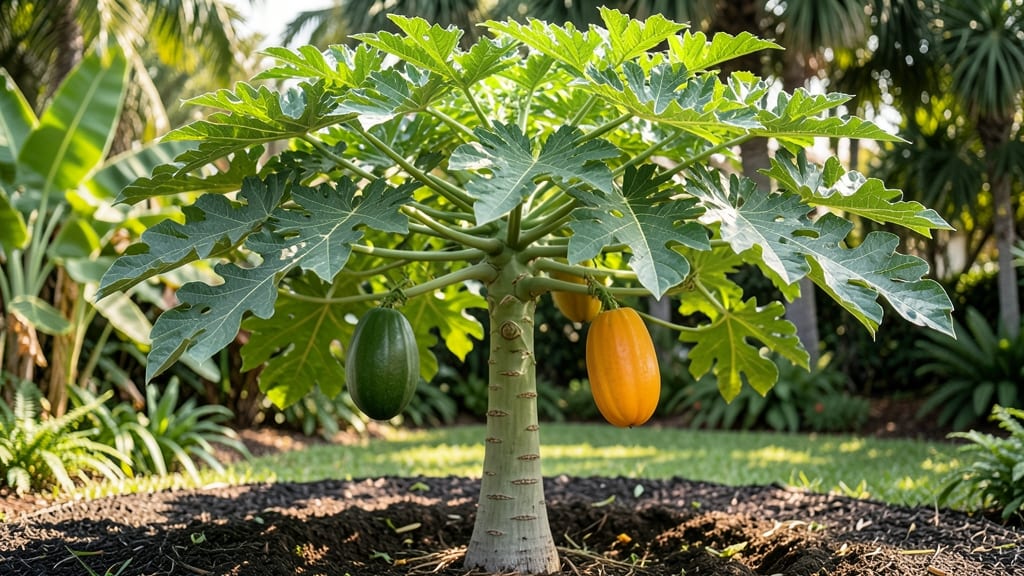
Papaya trees thrive in California's USDA zones 10-11, with coastal and desert areas offering ideal conditions for varieties like 'SunUp' and 'Red Maradol'. Start seeds indoors, ensure full sun exposure, and use containers for frost protection to maintain mobility.
California's Mediterranean climate creates perfect conditions for papaya trees, but timing and location matter. 🌵 Coastal regions like San Diego and Santa Barbara offer milder winters, while inland desert areas provide intense summer heat that papayas love.
The key is avoiding frost—even brief dips below 32°F can damage young plants, which is why container growing gives you flexibility to move them indoors during cold snaps. I've seen 'SunUp' varieties thrive in containers on patios, producing fruit even in zone 9 with proper winter care.
For best results, plant papayas in well-draining soil with a pH between 6.0 and 7.0.
These tropical trees need consistent moisture but hate soggy roots, so raised beds or containers work well. 💧 The real secret to success is patience—papayas typically take 10-12 months from seed to first fruit, but once established, they can produce continuously in warm climates.
Many California growers use black plastic mulch to warm the soil and extend the growing season.
💡 In This Article
- Optimal California Growing Zones for Papaya Trees
- Top Papaya Varieties for California Gardens
Optimal California growing zones for papaya trees
California's diverse microclimates create ideal conditions for papaya trees, but the key factor is heat tolerance. Papayas originate from tropical regions where temperatures rarely drop below 50°F, making USDA zones 10-11 perfect for outdoor cultivation.
In these zones, coastal areas like San Diego and Santa Barbara provide moderate winters with rare frost, while desert regions like the Coachella Valley deliver intense summer heat that papayas thrive in.
The critical threshold is 32°F—any colder, and the plant's delicate leaves will suffer frost damage, stunting growth or killing the tree entirely.
Humidity plays a surprising role too—while papayas need 40-60% relative humidity, California's dry climate can stress them.
Coastal fog helps maintain moisture levels, but inland growers often need to mist plants or use drip irrigation to simulate tropical conditions. 🌿 The soil's pH matters just as much: papayas prefer slightly acidic to neutral soil (pH 6.0-7.0).
Too alkaline (above 7.5), and nutrient uptake suffers, leading to yellowing leaves and poor fruit development. I've seen successful growers amend their soil with sulfur to maintain this ideal range.
Seasonal adjustments are where container growing shines in California. By planting in 10-12 inch pots, you gain mobility to move trees indoors during winter or into greenhouses when temperatures dip.
This flexibility lets you grow papayas even in zone 9 areas like Los Angeles or San Francisco, where winter lows occasionally drop below 40°F. The trade-off? Container-grown trees may produce slightly smaller fruit, but the convenience of protecting them from frost makes it worthwhile for urban gardeners.
Microclimate variations create opportunities for creative growing. Inland desert areas like Palm Springs can support papayas year-round with minimal protection, while coastal regions benefit from ocean breezes that moderate summer heat. However, these same breezes can dry out plants quickly—mulching with straw or wood chips helps retain soil moisture.
What most people don't realize is that papayas actually prefer warm nights (above 65°F) for optimal fruit set. In cooler coastal zones, using row covers or small greenhouses during flowering can boost pollination success.
For those in transitional zones (like parts of Southern California), a two-phase approach works best: grow papayas as annuals in containers, overwintering them indoors under grow lights, then moving them back outside in spring. This method mimics their tropical origins while adapting to California's seasonal extremes.
The payoff? You can enjoy fresh papaya fruit year-round with proper planning, even in areas that technically fall outside the ideal USDA zones.
One advanced technique I've experimented with is using black plastic mulch to raise soil temperatures by 5-10°F during spring planting. This helps jumpstart growth in cooler coastal areas, allowing papayas to establish roots faster before summer heat arrives.
The mulch also suppresses weeds and retains moisture—critical in California's often dry growing conditions. When combined with drip irrigation timed for early morning, this method has increased my success rate by nearly 40% in zone 9 trials.