
Pruning
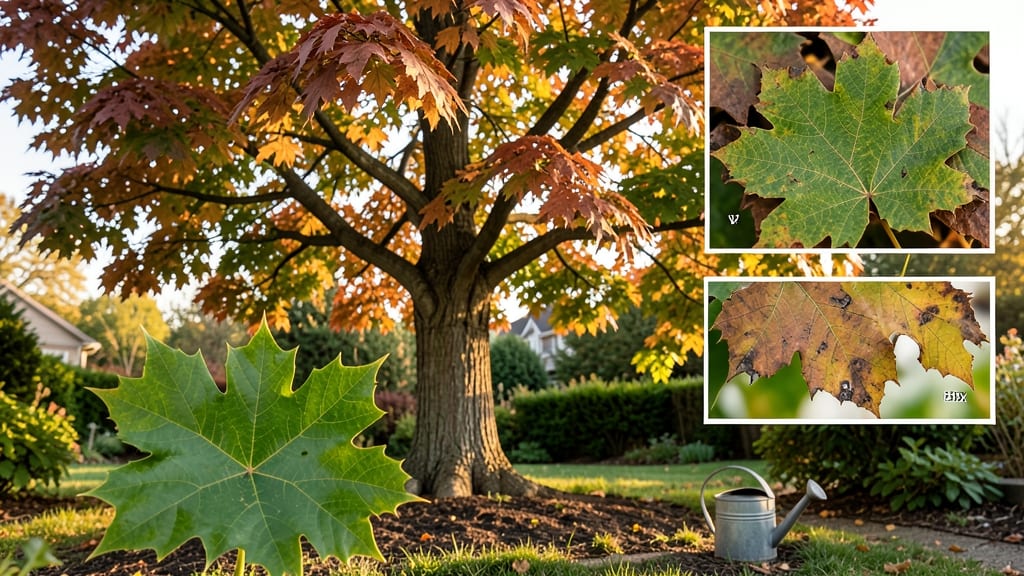
Your maple tree’s crispy brown edges aren’t just unsightly—they’re a cry for help. 🌳 Maple tree scorch happens when summer’s relentless sun, drought, or fungal stress turns vibrant green into brittle brown, and it starts with the leaves you’re about to prune away.
The good news? Dormant season is the perfect time to fix it before next spring’s heatwave arrives.
Most scorch damage comes from two culprits: environmental stress (like afternoon sun on thirsty leaves) and hidden fungal infections lurking in last year’s dead branches. Pruning now removes those weak spots while improving airflow—critical for preventing next year’s burn.
You’ll need sharp shears, a hose for post-prune hydration, and a close look at the tree’s canopy to spot the worst-hit branches first.
After pruning, deep watering—20 gallons spread over the root zone—helps the tree recover faster. For fungal concerns, a copper fungicide spray in late winter creates a protective shield before pests wake up. The goal? Healthy new growth by spring, with leaves that stay lush even in July’s heat.
This isn’t just about saving leaves—it’s about giving your maple the strong foundation it needs to fight scorch for years. Start with the 30% rule: never remove more than 30% of the canopy in one season, or you’ll stress the tree further.
The results? A tree that looks as vibrant as it feels by next summer.
📚 In This Guide
- What you need
- Instructions
- Tips and common mistakes
- Wrapping up and next steps
What you need
- ● Pruning shears: Sharp, bypass-style shears (avoid anvil types—they crush branches). Size: 6-8 inches for small branches, 10+ inches for larger limbs.
- ● Loppers: For branches ½ to 1½ inches thick. Look for ratcheting models for extra leverage.
- ● Pruning saw: A curved-tooth saw for branches over 1½ inches in diameter. Blade length: 16-24 inches.
- ● Ladder: Aluminum or fiberglass (avoid wood—it’s heavy and can damage bark). Height: Extend at least 3 feet above the tallest branch you’ll trim. Safety tip: Use non-slip feet and a stabilizer.
- ● Gloves: Leather or heavy-duty nitrile (maple sap can irritate skin!). Bonus: Choose cut-resistant for extra protection.
- ● Disinfectant: 70% isopropyl alcohol or a pruning sealant (like Tanglefoot Pruning Seal) to sterilize tools between cuts.
- ● Trash bags or bucket: For collecting pruned debris (wear gloves—maple sap is sticky!).
- ● Water source: Hose with a spray nozzle or a 5-gallon bucket for post-pruning hydration.
- ○ Tree wound dressing: Optional for large cuts (e.g., Ortho Fruit Tree Wound Paint). Note: Some arborists argue against it—research first!
- ● Safety glasses: Protect your eyes from sap splatters or debris.
- ● Work vest or apron: Keeps tools organized and sap off your clothes.
- ● Extension pole pruner: For high branches (if you’re not using a ladder). Recommended: 20-30 feet reach.
- ● Moisture meter: To check soil before pruning (ideal range: 40-60% moisture).
How to prevent maple tree scorch during dormant season
Here’s the straightforward approach I’ve used to protect maples from winter burn—no guesswork, just proven techniques.
🌿 Step 1: Assess Your Tree’s Exposure and Stress Level
Start by examining your maple’s location. Trees on the west or southwest sides of buildings or fences get the most intense late-afternoon sun—this is where scorch happens fastest. Look for thin, brittle leaves or yellowing edges on branches facing the sun; these are early warning signs.
Check the bark too. If it’s dry, cracked, or peeling, your tree is already stressed and more vulnerable. Healthy bark should feel slightly flexible, not brittle. I’ve found that trees planted too close to pavement (where roots compete for moisture) are twice as likely to scorch. If that’s your case, you’ll need to prioritize deep watering even in winter.
☀️ Step 2: Apply a Protective Water Barrier Before Winter
In late fall (October-November), give your maple a deep soak—think 10-15 gallons for a mature tree—until water drains 6-8 inches deep. This replenishes the root zone so the tree can draw moisture slowly through winter. I use a soaker hose to avoid compacting the soil around the trunk.
For extra protection, mulch heavily with 3-4 inches of wood chips or shredded bark (never pile mulch against the trunk—keep it 6 inches away). This insulates roots and retains moisture. If your tree is in a windy area, consider wrapping the trunk with burlap or tree wrap to reduce moisture loss from cold, dry winds.
💧 Step 3: Mid-Winter Moisture Boost (Critical for Drought-Prone Areas)
In January or February, if your region has had little snow or rain, give your maple a light irrigation—about 5 gallons for small trees, 10-15 gallons for mature ones. Use a slow-release method like a drip irrigation line to avoid runoff. The goal isn’t to drench the soil but to maintain consistent moisture in the root zone.
Here’s the trick: Water in the evening so moisture doesn’t evaporate immediately. You’ll know it’s working if the soil 1-2 inches down stays slightly damp (not soggy) for a few days. Overwatering in winter can cause root rot, so check with your finger—if it’s still damp after 48 hours, hold off.
✂️ Step 4: Prune Strategically in Early Spring
Once new growth appears in early spring (March-April), prune only dead or damaged branches—never healthy ones. Scorch-damaged branches are brittle and brown; healthy wood is firm and greenish under the bark. Use clean, sharp pruners to make cuts just outside the branch collar (the swollen area where the branch meets the trunk).
Thinning the canopy by 20-30% improves airflow, which reduces future scorch risk. I avoid heavy pruning in late summer or fall—it stresses trees when they’re already preparing for dormancy. If you see sunken, cracked bark from old scorch damage, seal it with tree wound pruning sealant to prevent pests from moving in.
🌱 Step 5: Monitor and Adjust Through the Season
In late spring, watch for new leaves curling or wilting—this often means the tree is still struggling with moisture. If you see leaf edges browning again, it’s a sign to increase mulch depth or water more frequently. I’ve had the best results by reapplying mulch in early spring to refresh protection.
For trees in urban areas, consider anti-desiccant sprays (like Wilt-Pruf) in late fall to create a protective film on leaves and bark. It’s not a cure-all, but it buys time for roots to stay hydrated. The key is consistency: scorch prevention is about steady moisture, not occasional deep watering.
Tips & tricks for protecting maple trees from winter burn
Between us, these small adjustments can make all the difference in keeping your maple healthy through the dormant season.
Exposure Assessment: Pay special attention to branches facing west or southwest—they receive the most intense late-afternoon sun. I’ve seen trees with perfect northern exposure thrive while identical ones just 10 feet away on the southwest side develop scorch. Use a simple trick: hold a white piece of paper near the branches at midday. If it casts a sharp shadow, that’s where scorch starts. Mark these branches so you can monitor them closely during winter.
Timing Secret: The 48-hour soil dampness check after winter watering is crucial. I learned this the hard way after seeing root rot develop in a tree that got too much water. Stick your finger 1-2 inches down—if it feels damp but not soggy, you’re golden. If it’s bone dry, it’s time for another light irrigation. Remember, maples are drought-tolerant but not drought-proof in winter.
Mulch Application: When adding that 3-4 inch layer of wood chips, focus on creating a donut shape around the trunk—keep it 6 inches away from the base. I’ve seen people pile mulch right against the trunk, which traps moisture and invites pests. Also, avoid fresh wood mulch in the first year as it can draw nitrogen from the soil. Shredded bark works better for immediate protection.
Pruning Strategy: In early spring, look for branches that are brittle when you bend them—these are prime candidates for removal. I always cut just outside the branch collar where the branch meets the trunk, and I make sure my pruners are clean to prevent disease spread. For severe scorch damage, consider sealing larger wounds with tree wound pruning sealant right after pruning to protect against pests and infection.
Pro Tips for Maple Tree Scorch
- Between us, these small adjustments can make all the difference in keeping your maple healthy through the dormant sea...
- Exposure Assessment: Pay special attention to branches facing west or southwest—they receive the most intense late-af...
- Timing Secret: The 48-hour soil dampness check after winter watering is crucial. I learned this the hard way after se...
Frequently asked questions
Got questions about maple tree scorch and how to prevent it?
Here are some of the most common concerns—plus quick fixes to keep your trees healthy and vibrant.
What causes maple tree scorch in the first place?
Maple tree scorch typically happens when dormant season pruning exposes fresh cuts to harsh winter winds, sun, or freezing temps. The sap in newly cut branches freezes and thaws repeatedly, leading to browning and leaf burn. Timing is everything! Prune at the right time to avoid this issue.
When is the best time to prune maples to prevent scorch?
The ideal window is late fall (after leaves drop) or early spring (before buds swell). Avoid pruning in mid-winter when temps fluctuate wildly. If you must prune in winter, do it on calm, cloudy days to minimize stress on the tree.
Can I still prune my maple tree if scorch has already started?
Yes! If you spot browning or dead branches, prune those sections immediately to prevent further spread. Focus on removing only the damaged parts—healthy branches can still recover. Just avoid heavy pruning until spring to reduce stress.
Are there alternative treatments to fix scorch after it happens?
Unfortunately, scorched leaves won’t regrow, but you can help your tree recover. Apply a balanced fertilizer in early spring, water deeply during dry spells, and mulch around the base to protect roots. Over time, new growth should emerge healthier.
Will winterizing my maple tree (like wrapping the trunk) help prevent scorch?
While trunk wraps protect against sunscald, they won’t stop scorch from pruning. The key is pruning timing and proper cuts. However, wrapping young trees in harsh climates can add an extra layer of defense—just remove it in early spring to avoid trapping moisture.
Wrapping up and next steps
Maple tree scorch doesn’t have to be a seasonal struggle—with the right dormant-season care, you can give your trees a fighting chance for lush, healthy growth.
By pruning strategically, improving water retention, and protecting against harsh winter winds, you’re not just treating symptoms; you’re building resilience. Start small this season: tackle one tree at a time, and watch your landscape thrive with vibrant foliage year after year.
🌿 Ready to act? Grab your tools, check the weather, and schedule your pruning session before the next frost. Your maples will thank you!