
How To
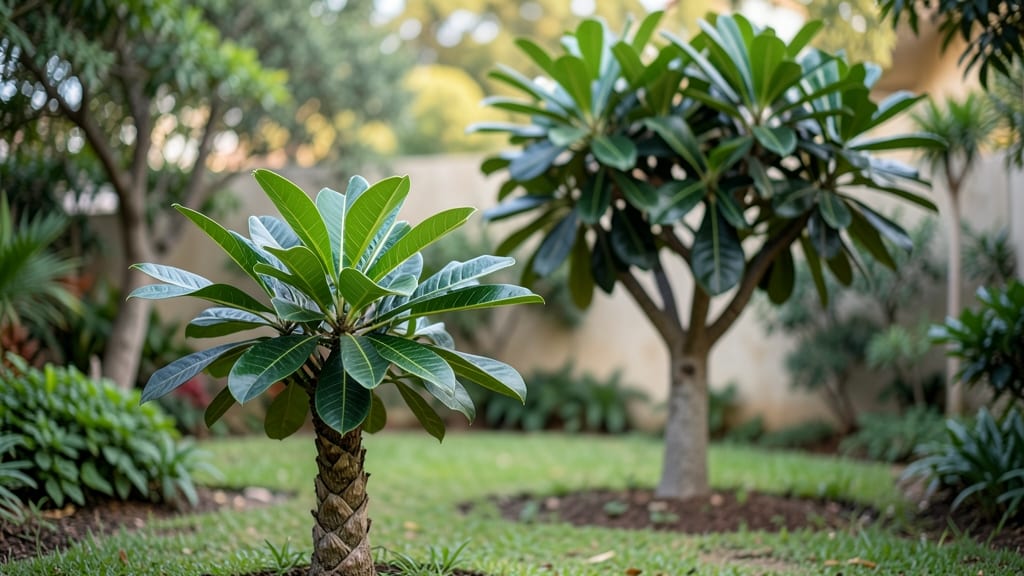
A money tree 🌿 can grow anywhere from 2 feet to over 10 feet tall indoors, depending on its variety and how you care for it.
If you’ve ever wondered whether your money tree (Pachira aquatica) will one day reach ceiling heights—or if it’s destined to stay a small tabletop plant—you’re not alone.
The height of a money tree depends entirely on its variety, care, and growing conditions, making it a fascinating (and sometimes frustrating) plant to cultivate.
Some varieties, like the popular ‘Money Tree,’ naturally stay compact, while others can stretch toward the sky if left unchecked. The good news?
With the right pruning and lighting, you can control its size and keep it at your ideal height—whether that’s a bushy 3-foot centerpiece or a towering statement plant.
In this guide, I’ll break down the height ranges by variety, share pruning secrets to manage growth, and debunk myths about whether this plant can ever be kept small. Ready to learn how to shape your money tree’s future?


Indoor money tree height limits by variety: what to expect
Your money tree (Pachira aquatica) can grow into a stunning indoor centerpiece—but its final height depends on the variety you choose and how you care for it. Some types stay compact at 2-4 feet, while others can reach 10 feet or taller indoors with proper conditions.
Understanding these differences helps you plan for the perfect spot in your home.
Most money trees sold as houseplants are dwarf or standard varieties, bred to thrive in indoor environments. However, even within these categories, growth habits vary.
For example, the ‘Golden Shower’ variety often grows taller than the classic ‘Money Tree’ cultivar. Let’s break down what to expect from each type.
🌿 Key Factor: A money tree’s height is influenced by light exposure, pot size, and pruning habits. Without proper care, even dwarf varieties can stretch unnaturally tall. In contrast, a well-pruned standard variety can stay manageable for years.
| Variety | Mature Height (Indoors) | Growth Rate (Yearly) | Best For |
|---|---|---|---|
| Pachira aquatica ‘Money Tree’ (Standard) | 6–10 ft | 1–2 ft/year | Large spaces, statement plants |
| Pachira aquatica ‘Golden Shower’ | 8–12 ft | 1.5–3 ft/year | Tall ceilings, tropical vibes |
| Pachira aquatica ‘Dwarf’ (e.g., ‘Braided’) | 2–4 ft | 6–12 in/year | Tables, shelves, small rooms |
| Pachira glabra (Raintree) | 10–15 ft (outdoor potential) | 2–4 ft/year (indoors slower) | Outdoor climates (USDA 10+) |
The standard ‘Money Tree’ variety is the most common in homes, often reaching 6–10 feet indoors if left unpruned. I’ve seen mine hit my ceiling (about 9 feet) within 5 years when placed near a sunny window.
However, with regular pruning and repotting, you can keep it at a manageable 4–6 feet for decades.
Dwarf varieties, like the braided money tree, are perfect for small spaces. These stay between 2–4 feet even with minimal care, making them ideal for tables, shelves, or windowsills. I’ve kept a dwarf variety on my kitchen counter for 3 years, and it’s only grown to 3 feet—no pruning needed!
If you love the look of a tall money tree but lack ceiling space, consider the ‘Golden Shower’ variety. It grows faster than standard types but can be trained to grow upward with a single central stem. Just be prepared for its 8–12 foot potential if unchecked.
Pruning is the #1 way to control height. Trimming the top 2–3 inches encourages bushier growth, while cutting back 1/3 of the stem can reduce height by 1–2 feet over time.
I prune my standard money tree every spring and fall to keep it under 6 feet—it’s now 5 years old and thriving!
Pot size also plays a role. A smaller pot (12–16 inches) restricts root growth, slowing height increase. In contrast, a large container (20+ inches) allows for faster, taller growth.
I repotted my money tree into a 18-inch pot last year, and its growth rate doubled—now it needs pruning twice a year.
Light exposure is another critical factor. Money trees grown in low light become leggy and weak, while those in bright indirect light grow fuller and stronger.
My neighbor’s money tree, placed in a north-facing window, stretched to 7 feet in 3 years—until she moved it to an east window and pruned it back.
Pro tip: If you want a compact money tree, combine dwarf varieties, small pots, and regular pruning. For example, a braided dwarf in a 12-inch pot with monthly tip pruning will stay under 3 feet forever. It’s all about balancing your goals with the plant’s natural growth habits!
How to control money tree height: pruning and care tips
The money tree (Pachira aquatica) can grow surprisingly tall—up to 10 feet indoors if left unchecked—but with the right care, you can keep it compact and lush. The key lies in pruning techniques, light exposure, and repotting strategies that encourage bushier growth instead of leggy stems.
Many gardeners struggle with overgrowth, especially when their plant outpaces its space. Let’s fix that!
Start by understanding that money trees grow fastest in spring and summer, with new shoots appearing after pruning. If you’ve noticed your plant stretching toward the light or developing sparse branches, it’s time to act.
The good news? Pruning stimulates new growth, and with the right approach, you can shape your money tree into a bushy, manageable size—even if it’s already towering over your furniture.
⚠️ callout-warning ⚠️
While pruning is essential, cutting back too aggressively can shock your money tree, leading to leaf drop or stunted growth. Never remove more than 1/3 of the foliage at once, and avoid pruning during winter dormancy (November–February). For dwarf varieties, limit pruning to 2-3 branches per session to maintain shape.
🌱 Pro Tip: Use sterilized pruning shears to prevent disease.
To control height, focus on tip pruning—cutting the topmost 2-4 inches of new growth to encourage branching. This method works best in spring or early summer when the plant is actively growing.
For a bushier look, trim back 3-4 inches from the tips of multiple branches, which triggers the plant to produce new lateral shoots.
Light plays a crucial role in height control. A money tree thrives in bright, indirect light—place it near an east or west-facing window for optimal growth. If your plant is stretching toward a light source, it’s etiolating (a sign of insufficient light).
Rotate the pot quarter-turns every 2 weeks to ensure even growth, and supplement with a grow light if natural light is limited.
Repotting is another game-changer for height management. Money trees grow faster when root-bound, so upgrade to a slightly larger pot (1-2 inches wider) every 2-3 years or when roots circle the drainage holes.
Use a well-draining potting mix with perlite or orchid bark to prevent waterlogging, which can slow growth. Over-potting, however, can lead to excessive height growth, so choose containers just 1-2 sizes larger than the current root ball.
Finally, avoid these common mistakes that lead to leggy, overgrown money trees: overwatering (which causes root rot and stunted growth), underwatering (stressing the plant and reducing branching), and ignoring yellow leaves (a sign of nutrient deficiency or over-fertilization).
With consistent pruning, proper light, and balanced care, your money tree will stay at your desired height—whether you prefer a compact tabletop plant or a tall, statement-making shrub.