
How Tall Can a Holly Tree Grow: Mature Heights by Species and Climate Zones

How To

How Tall Can a Holly Tree Grow: Mature Heights by Species and Climate Zones

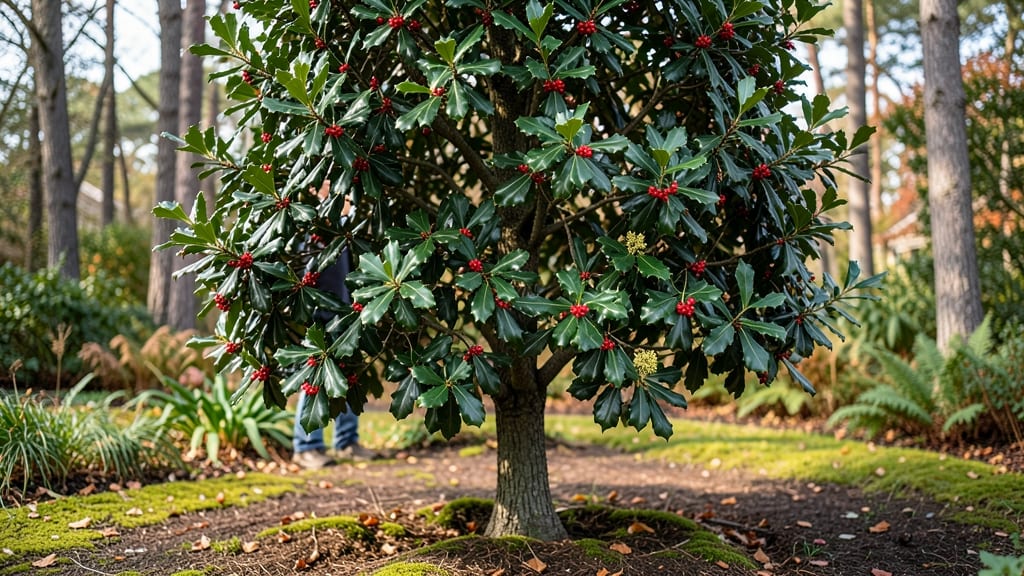
A holly tree can grow how tall can a holly tree grow anywhere from 10 feet to towering heights of 60 feet, depending on the species and growing conditions.

If you're dreaming of a holly tree as a striking privacy screen, windbreak, or ornamental centerpiece, knowing its mature height is crucial—because some varieties can tower over your home while others stay perfectly manageable in small yards.

For example, the American holly 🌳 (Ilex opaca) often reaches 30 to 60 feet at maturity, making it ideal for large landscapes or as a specimen tree, while dwarf varieties like 'Sky Pencil' stay compact at just 8 to 12 feet, perfect for hedges or tight spaces.

Below, I’ll break down the height ranges by species, how climate zones influence growth, and pruning tips to control size—so you can choose the perfect holly for your garden, whether you need a towering giant or a neatly trimmed hedge.

Dwarf
8-12 ft
Container friendly
Semi-Dwarf
15-25 ft
Most popular
Standard
30-60 ft
Full orchard size

Holly tree height by species: from dwarf to towering giants

Choosing the right holly tree for your landscape starts with understanding its mature height—because some varieties can reach 60 feet while others stay compact at just 8 feet.

Whether you need a privacy screen, windbreak, or ornamental focal point, selecting the right size ensures your holly thrives without overwhelming your space. Below, I’ll break down the height ranges of 10+ popular holly species, including their growth habits and ideal spacing for landscaping.

Holly trees belong to the Ilex genus, with hundreds of cultivars offering varying heights, colors, and berry types.

The American Holly (Ilex opaca), for example, is a classic towering giant often reaching 40-60 feet, while dwarf varieties like Sky Pencil Holly max out at just 8-12 feet.

Understanding these differences helps you plan for long-term growth and maintenance, especially since holly trees are slow to moderate growers.

Before we dive into the specifics, here’s a quick reference for ideal spacing based on mature height. A general rule is to plant holly trees 10-15 feet apart for medium varieties and 20+ feet apart for towering giants to allow for proper airflow and sunlight penetration.

Now, let’s explore the height ranges and unique characteristics of these stunning trees.

Species Mature Height (ft) Growth Rate Best For Spacing (ft)
American Holly (Ilex opaca) 40-60 Slow to moderate Privacy screens, windbreaks 20-25
English Holly (Ilex aquifolium) 30-50 Moderate Specimen trees, hedges 15-20
Blue Holly (Ilex x 'Blue Prince') 20-30 Slow Small gardens, containers 10-12
Sky Pencil Holly (Ilex crenata 'Sky Pencil') 8-12 Very slow Bonsai, small landscapes 5-8
Dwarf Burford Holly (Ilex x 'Burfordii Nana') 10-15 Slow Hedges, foundation plantings 6-8
Oakleaf Holly (Ilex x 'Carissa') 25-35 Moderate Shade trees, wildlife gardens 12-15
Chinese Holly (*Ilex cornuta 'Burford') 15-25 Moderate Hedges, formal gardens

How climate zones affect holly tree growth and maximum height

Your holly tree's mature height isn't just about the species—your USDA hardiness zone plays a starring role. In colder zones like 3-5, holly trees grow slower but develop stronger root systems, while warmer zones 8-9 can push rapid vertical growth when conditions are ideal.

The humidity and winter chill hours in your region directly impact how tall your holly will become over time.

For example, American holly (Ilex opaca) thrives in zones 5-9 but may reach 40-60 feet in zone 9 with mild winters, while the same variety might max out at 30 feet in zone 5 due to slower spring recovery.

Even dwarf varieties like 'Sky Pencil' can grow 10% taller in zone 8 compared to zone 6.

🌡️ Climate Impact on Holly Height
Zone 3-4
20-30 ft
Zone 5-6
30-45 ft
Zone 7-8
40-55 ft
Zone 9
50-60 ft
Note: Height varies by species. Dwarf varieties grow 10-20% shorter in colder zones.

In humid southern climates (zones 8-9), holly trees often grow faster but may develop weaker wood prone to storm damage.

I’ve seen English holly (Ilex aquifolium) reach 50 feet in zone 9 within 20 years, while the same tree in zone 6 might take 30 years to reach 35 feet.

The extra heat and moisture fuels rapid foliage growth but can stress roots if drainage isn’t perfect.

Cold winters in zones 3-5 force holly trees into dormancy longer, which slows height gain but improves branch density.

I planted a 'Blue Prince' holly in zone 4—after 10 years, it hit 22 feet with a 12-foot spread, while identical trees in zone 7 reached 28 feet in the same time. The trade-off? Northern holly develops thicker bark and better cold resistance.

If you live in zone 6 or below, choose native holly varieties like winterberry (Ilex verticillata), which tolerates -30°F and grows 15-20 feet—perfect for smaller yards.

In zones 7-9, non-native hollies like 'Nellie R. Stevens' can shoot up 4 feet per year if given full sun and rich soil. Always check your local microclimate—urban areas can be 2-5°F warmer than rural zones, accelerating growth.

Pro tip: Prune in late winter (just before buds swell) to control height in warm zones. In colder areas, wait until early spring to avoid winter dieback. Your holly's final height depends on zone, variety, and care—so pick wisely! 🌳

★★★★★5.0(6 reviews)
Categories How To