
Trees
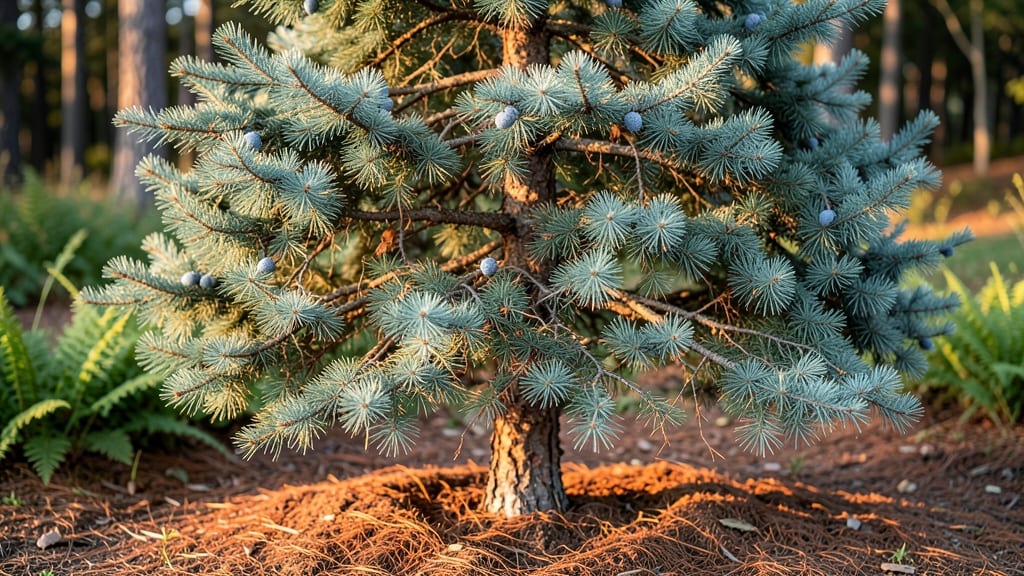
The evergreen tree with sparse branches, like Italian cypress or Swiss stone pine, creates dramatic year-round structure with minimal foliage. 🌲 I planted one in my minimalist garden last spring, and it instantly became the focal point—its upright form standing out against the flat lawn like a living sculpture.
These trees thrive in modern and naturalistic designs alike, offering vertical interest without overwhelming small spaces. Their airy branches let light filter through, making them perfect for framing views or anchoring pathways. Pair them with low-growing perennials or ornamental grasses for contrast.
You'll end up with a garden that feels open yet intentional, where every plant has purpose. The right placement transforms a sparse-branched evergreen from an afterthought into the star of your outdoor space. Works beautifully in modern, cottage, or Japanese-inspired gardens. Here's how to integrate them into your design.
The Hidden Reasons Behind Thin Canopies
If your evergreen tree is sporting a sparse, skeletal branch structure instead of the lush, dense foliage you envisioned, don’t panic—there’s usually a logical (and fixable) explanation.
Below, we break down the most common causes, from environmental stressors to cultural mistakes, so you can diagnose the issue and restore your tree’s natural beauty.
Evergreens stay green year-round because they don’t shed leaves like deciduous trees—but this comes at a cost. Their needles are adapted to conserve water and nutrients, but extreme winter conditions can push them beyond their limits.
- Cold Desiccation: When winter winds dry out the soil and air, roots struggle to absorb moisture, while needles lose water through transpiration. This creates a water deficit, causing branches to thin as the tree prioritizes survival over new growth. 💡 Pro Tip: Apply a 3–4 inch layer of mulch around the base (but not touching the trunk) to insulate roots and retain moisture.
- Salt or Road Salt Damage: In urban or suburban areas, de-icing salts can burn needle tips and disrupt nutrient uptake. Over time, this weakens the tree’s ability to support dense foliage. ✨ Solution: Flush the root zone with water after salt applications and use calcium-based de-icers instead.
- Sun Scorch: Bright winter sun on snow-covered ground can reflect and intensify UV rays, causing needle bleaching and dieback. This often starts on the south or west-facing sides of the tree. 🌡️ Fix: Use burlap wraps or shade cloth during peak winter sun exposure (10 AM–2 PM).
Evergreens have shallow but extensive root systems, making them highly sensitive to moisture extremes. Both underwatering and overwatering can lead to sparse branching as the tree diverts energy to survival rather than foliage production.
| Issue | Signs | Solution |
|---|---|---|
| Underwatering |
|
Water deeply but infrequently—aim for 1–1.5 inches per week (more in extreme heat). Use a soaker hose to avoid surface runoff. |
| Overwatering |
|
Improve drainage by amending soil with perlite or sand (20–30% mix). Ensure pots have drainage holes and elevate the tree on a pedestal to prevent waterlogging. |
Evergreens thrive in well-draining, slightly acidic soil (pH 5.0–6.5). If the soil lacks essential nutrients or is compacted, the tree’s ability to produce dense foliage takes a hit.
- Nitrogen Deficiency: Leads to pale, yellow needles and sparse new growth. Nitrogen is critical for chlorophyll production and leaf development. 🔥 Fix: Apply a slow-release nitrogen fertilizer (like 10-10-10) in early spring.
- Iron or Magnesium Deficiency: Causes interveinal chlorosis (yellowing between veins) and weak branch development. 💡 Solution: Use chelated iron supplements or Epsom salt (magnesium sulfate) for magnesium.
- Compacted or Poor Soil: Restricts root growth, limiting the tree’s ability to access water and nutrients. 🌱 Action: Aerate the soil annually with a garden fork and mix in compost or peat moss.
While evergreens are generally hardy, they’re not immune to pests and diseases that weakened branches and stunt foliage. Common culprits include:
- Spider Mites: Tiny pests that suck sap from needles, causing them to turn yellow, brown, and drop. Severe infestations lead to bare patches on branches. 🕷️ Treatment: Spray with neem oil or introduce predatory mites.
- Bagworms: These caterpillars spin silk bags on branches, defoliating the tree and stressing it into sparse growth. 🪰 Fix: Handpick bags in fall or apply Bt (Bacillus thuringiensis) spray.
- Root Rot (Fungal): Often from overwatering or poor drainage, this disease decays roots, starving the tree of nutrients and causing branch dieback. 🍄 Solution: Prune infected branches, improve drainage, and treat with copper fungicide.
- Needle Cast (Fungal): Causes premature needle drop and thin canopies. Look for dark spots on needles in late summer/fall. 🌿 Prevention: Prune for airflow and apply fungicidal sprays in early spring.
Most of these issues are reversible with targeted care. Start by identifying which symptoms match your tree’s condition, then take corrective action. With the right adjustments, your evergreen can bounce back—and soon, you’ll have that full, year-round structure you love!
Revive your tree’s full potential
Reviving an evergreen with sparse branches doesn’t require drastic measures—just targeted care and patience. Below, we break down practical fixes for the most common causes, from overpruning to poor soil, along with prevention tips to keep your tree lush year-round.
Cause: Aggressive pruning (especially in winter) or cutting too close to the trunk can stunt growth and leave bare spots.
How to Fix It: 🔥 Prune at the Right Time – Trim in late winter or early spring (just before new growth starts). Avoid heavy cuts in fall or winter, as evergreens are dormant and more vulnerable to damage. 🍳 Use the Right Tools – Sharp, clean pruners prevent jagged cuts that invite disease. Sterilize blades with rubbing alcohol between cuts. 👨🍳 Follow the 1/3 Rule – Never remove more than one-third of the foliage in a single season. Focus on thinning out dense areas rather than shearing. 🥘 Encourage New Growth – Apply a balanced, slow-release fertilizer (like 10-10-10) in early spring to stimulate regrowth.
Prevention Tip: 💡 Sketch a rough pruning plan before cutting—step back and visualize how branches will fill in over time.
Cause: Compacted, nutrient-poor, or improperly drained soil starves roots, leading to sparse foliage.
How to Fix It: 🔥 Test Your Soil – Use a DIY soil test kit (available at garden centers) to check pH and nutrient levels. Evergreens prefer slightly acidic soil (pH 5.0–6.5). 🍳 Amend the Soil – Mix in compost or aged manure (3–4 inches deep) around the root zone. For sandy soil, add peat moss to retain moisture. 👨🍳 Fertilize Strategically –
- Spring: Use a high-nitrogen fertilizer (e.g., 20-10-10) to boost foliage.
- Fall: Switch to a low-nitrogen, high-phosphorus fertilizer (e.g., 5-10-10) to strengthen roots before winter.
🥘 Mulch Properly – Apply 2–4 inches of organic mulch (pine bark or wood chips) to retain moisture and regulate temperature. Keep mulch 6 inches away from the trunk to prevent rot.
Prevention Tip: 🌡️ Water deeply before fertilizing—dry soil can "burn" roots when nutrients are absorbed too quickly.
Cause: Too much shade, inconsistent watering, or drought stress weakens evergreens, causing them to shed needles and look bare.
How to Fix It: 🔥 Assess Sunlight Needs – Most evergreens (like pines, spruces, or junipers) need full sun (6+ hours/day). If planted in shade, consider transplanting to a sunnier spot or choosing a shade-tolerant variety (e.g., Picea glauca ‘Conica’). 🍳 Water Deeply but Infrequently – Evergreens have deep root systems; water 1–2 times per week (more in extreme heat) until soil is 6–12 inches deep. Use a soaker hose to avoid runoff. 👨🍳 Check for Overwatering – Yellowing needles or mushy bark? You’re likely overwatering. Let soil dry 2–3 inches deep between waterings. 🥘 Use Drought-Resistant Mulch – Gravel or pine straw helps retain moisture better than organic mulch in hot climates.
Prevention Tip: ✨ Group evergreens with similar water needs to simplify care—e.g., drought-tolerant junipers together, thirsty firs separately.
Cause: Spider mites, bagworms, or fungal diseases (like needle blight) can defoliate evergreens, leaving them sparse.
How to Fix It: 🔥 Identify the Problem –
- Spider mites? Look for tiny webs and speckled needles.
- Bagworms? Spot tent-like cocoons on branches.
- Fungal issues? Check for discolored, dropping needles.
🍳 Apply Targeted Treatments –
- Mites/Disease: Spray with neem oil or horticultural oil (follow label rates).
- Bagworms: Handpick cocoons or use Bt (Bacillus thuringiensis) spray.
👨🍳 Prune Infected Branches – Cut and dispose of heavily damaged branches (don’t compost them!). 🥘 Boost Tree Health – A copper fungicide (for blight) or beneficial nematodes (for soil pests) can help long-term.
Prevention Tip: 🎯 Install fine mesh netting around young trees in early spring to block egg-laying pests like bagworms.
- Prune annually (lightly) to encourage density.
- Monitor soil moisture—evergreens hate soggy roots.
- Inspect for pests every 2–3 weeks during growing season.
- Avoid heavy foot traffic near the base to prevent root compaction.
With these steps, your evergreen will gradually fill out, offering that lush, minimalist structure you love. Patience is key—some varieties (like junipers) recover faster than others (like spruces), but consistent care pays off!
Frequently asked questions
What are the best evergreen trees with sparse branches for small gardens?
For minimalist spaces, consider Italian cypress (tall and slender) or Swiss stone pine (compact with graceful branches). Dwarf Alberta spruce and Emerald Green arborvitae also work well—their airy forms create elegant vertical lines without overwhelming small yards.
Can I prune an evergreen with sparse branches to encourage denser growth?
Yes, but do it carefully! Prune only in late winter or early spring before new growth begins. Remove no more than one-third of the foliage at a time, focusing on thinning out crowded areas rather than shearing. Avoid cutting into old wood—this can prevent regrowth.
How do I know if my sparse-branched evergreen is healthy or dying?
Check for new growth at branch tips—this indicates life. Healthy trees also have firm, green needles (not brown or brittle). If you see mushy bark or peeling needles, it may need better drainage or protection from winter winds.
What companion plants pair well with sparse-branched evergreens?
Try ornamental grasses (like fountain grass) for movement contrast or low-growing perennials (such as creeping thyme or sedum) to highlight the tree’s structure. Broadleaf evergreens (like boxwood) add texture, while spring bulbs (daffodils, tulips) pop against the tree’s year-round form.
Are there any evergreens with sparse branches that thrive in shade?
Yes! Dwarf mugo pine and Japanese black pine varieties tolerate partial shade, though they grow slower. For deeper shade, Inkberry holly or Dwarf English yew offer dense foliage with a more structured form. Just expect slightly less vigor than sun-loving species.