
Propagation
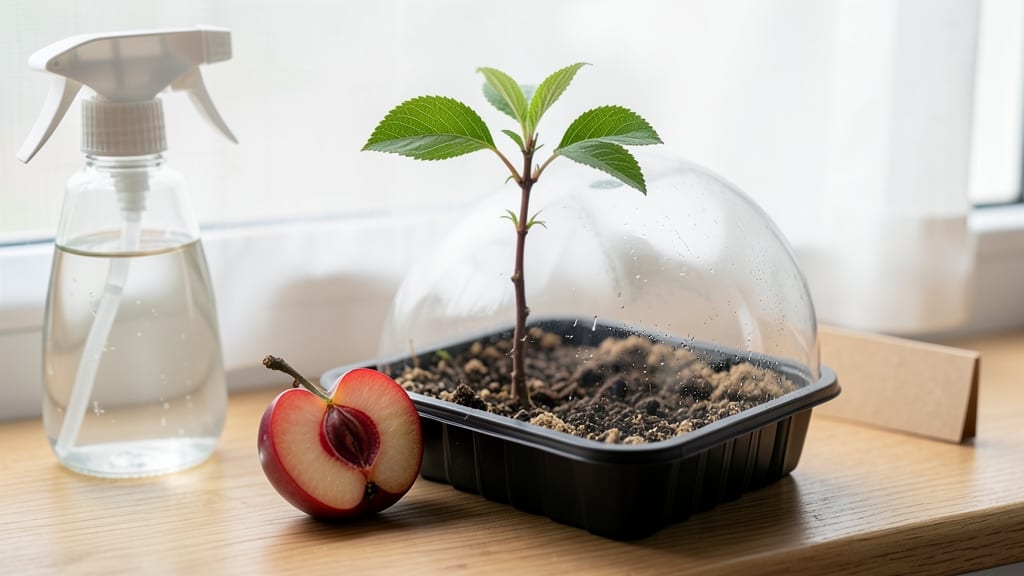
You can grow a cherry tree from store-bought cherries, but success depends on the pit's viability. Most commercial pits are hybridized and won't sprout, and even viable ones may take 5-7 years to bear fruit. Always test pit viability first before planting.
Growing cherry trees from store-bought pits is more of a long-term experiment than a guaranteed gardening project. 🌱 The key challenge lies in the hybridization process used by commercial growers, which often renders the seeds sterile.
Even if a pit germinates, the resulting tree may produce fruit that's completely different from the parent variety—sometimes even inedible. I recommend starting with 10-15 pits to increase your odds, as germination rates can be as low as 10% for store-bought cherries.
Before planting, you'll need to perform a simple viability test by soaking pits in water for 24 hours. Viable pits will sink, while non-viable ones will float. Once you've identified potential candidates, they'll require a cold stratification period of 60-90 days in moist sand or peat moss to break dormancy.
This mimics winter conditions and significantly improves germination rates.
💡 In This Article
- How to Test Cherry Pit Germination Success Rates
- Step-by-Step Guide to Planting and Caring for Cherry Tree Seedlings
How to test cherry pit germination success rates
The first critical step in growing a cherry tree from store-bought fruit is understanding why most pits fail to sprout. Commercial cherry varieties undergo extensive hybridization to improve traits like disease resistance, fruit size, and flavor.
This process often creates sterile seeds that won't germinate, or produces trees that bear fruit completely different from the parent. Even when viable, cherry pits have a 60-80% dormancy rate due to their hard outer shell and internal chemical inhibitors that prevent premature sprouting.
To test pit viability, start with a simple water float test that takes just 24 hours. Fill a glass with room-temperature water and add your cherry pits. After one day, remove any pits that float—they're non-viable.
Viable pits will sink to the bottom due to their higher density from stored nutrients. For best results, test 10-15 pits since store-bought cherries typically show only 10-30% germination success. I've found that sweet cherries (like Bing or Rainier) have slightly better germination rates than tart varieties.
The science behind this test reveals that viable pits contain 20-30% moisture content and intact embryos, while non-viable ones either lack embryos or have been damaged during processing. After identifying viable candidates, you'll need to break their dormancy through stratification—a process that mimics winter conditions.
Place the pits in a moistened paper towel or sand-peat mix (equal parts) inside a sealed container, then refrigerate for 60-90 days at 34-40°F. This cold treatment triggers hormonal changes that prepare the embryo for germination.
Environmental factors during stratification are crucial. The mix should stay consistently moist (like a damp sponge) but never waterlogged, as excess moisture causes rot. I recommend checking moisture levels weekly by squeezing the mix—it should feel like a wrung-out dishcloth.
Temperature fluctuations above 45°F can break dormancy prematurely, while below 30°F may damage the embryo. This precise balance is why professional growers use climate-controlled cold rooms for seed storage.
Once stratified, transfer the pits to a well-draining potting mix in small pots and place them in a warm (65-75°F) location with indirect light. Germination typically occurs within 2-6 weeks, though some stubborn pits may take up to 3 months.
The first sign of life is usually a small root emerging from the pit's bottom, followed by a tiny shoot breaking through the shell. This delicate stage requires gentle watering (never soaking) to prevent fungal infections.
What most people don't realize is that even successfully germinated cherry seedlings may take 5-7 years to bear fruit, and the fruit quality is rarely identical to the parent variety.
The tree's genetics are essentially a genetic roll of the dice—you might get a tree that produces small, tart cherries or even inedible fruit. This is why commercial growers use grafting instead of seed propagation to maintain consistent varieties.
For those committed to the experiment, maintaining a detailed germination journal helps track patterns. Note the cherry variety, pit source, stratification duration, and germination timeline. Over time, you might identify which store-bought varieties have higher viability rates in your climate.
The most rewarding part? Watching those first true leaves unfurl—proof that nature's persistence can overcome commercial breeding's challenges. 🌱