
Diseases
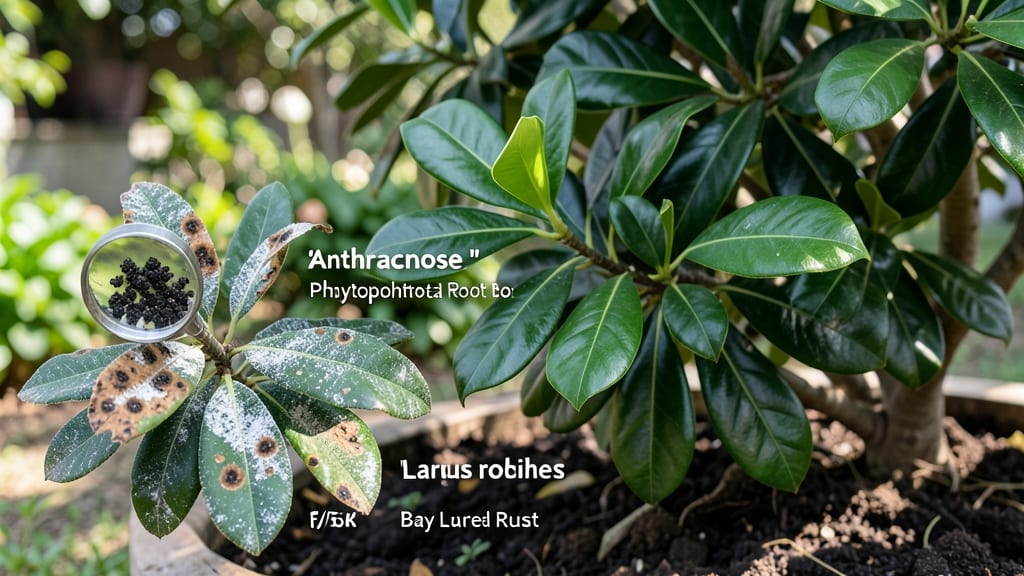
Bay tree diseases turn your fragrant evergreen into a sad, yellowing mess—unless you catch them early. I’ve nursed back more than a few struggling bay trees, and the key is spotting the right symptoms before they spiral.
Powdery mildew, leaf spot, and bacterial blight all have telltale signs: white fuzzy patches, brown spots, or oozing lesions that ruin the glossy leaves.
The real culprits? Too much humidity, poor airflow, or overwatering—classic rookie mistakes. My first bay tree nearly died from powdery mildew because I ignored the white dusting on the leaves until it covered every branch.
The good news? Organic remedies like neem oil, copper spray, or even a simple baking soda mix can turn things around if you act fast.
Once you identify the issue, treatment is straightforward: prune infected branches, improve airflow, and adjust watering. Within weeks, you’ll see fresh green leaves pushing out, and that signature bay scent returns stronger than ever.
The best part? Preventing future outbreaks is just about keeping your tree happy—sunlight, space, and occasional checks.
Whether you’re dealing with a young tree or a mature one, early action makes all the difference. Let’s get your bay tree back to its healthy, thriving self—no sad yellow leaves in sight.
Why it happens
Bay trees—whether the fragrant Laurus nobilis or ornamental varieties like Umbellularia californica—are resilient, but they’re not immune to stress. When diseases strike, it’s almost always a response to one or more underlying factors.
Let’s break down the why behind the most common bay tree ailments, so you can address the root issue and restore your tree’s health.
🌡️ Environmental Stress Factors
Bay trees thrive in Mediterranean climates, meaning they prefer warmth, humidity, and well-draining soil. When these conditions stray too far from their ideal range, the tree’s defenses weaken, making it vulnerable to pathogens. Here’s how:
- Extreme Temperature Swings: Bay trees dislike sudden cold snaps (<32°F/0°C) or scorching heat (>90°F/32°C). Cold stress can cause bacterial leaf spot (caused by Xanthomonas campestris), while heat stress leads to sunburn and powdery mildew (from Erysiphe alphitoides). Why? Cold weakens cell membranes, allowing bacteria to invade, while heat disrupts the waxy cuticle, inviting fungal spores.
- Poor Drainage or Waterlogging: Bay trees hate soggy roots. Overwatering or clay-heavy soil creates anaerobic conditions, where Phytophthora (a water mold) thrives. Science note: These pathogens release enzymes that break down root cell walls, leading to root rot and canker diseases.
- Low Humidity: While bay trees tolerate dry air, prolonged drought causes leaf scorch (brown, crispy edges) and weakens the tree’s ability to fight off anthracnose (a fungal disease causing dark, sunken lesions). Actionable fix: Mulch with organic matter (like wood chips) to retain moisture near roots.
🦠 Pathogen Invasion Opportunities
Diseases don’t just appear—they wait for an opening. Bay trees are often infected by fungi, bacteria, or viruses when their natural barriers (like bark, stomata, or cuticle) are compromised. Here’s how:
- Wounded Bark or Leaves: Pruning cuts, hail damage, or pest bites (like scale insects) create entry points for cytospora canker (a fungal disease causing oozing, dead branches). Key detail: Fungal spores land on wounds year-round but only germinate when moisture is present (e.g., after rain or overhead watering).
- Overcrowded Foliage: Dense growth traps humidity, creating the perfect environment for powdery mildew and rust diseases (e.g., Puccinia species). Scientific link: Poor air circulation slows evaporation, keeping leaf surfaces damp—ideal for spore germination.
- Contaminated Tools or Soil: Pruners, gloves, or potting mix can carry Pseudomonas bacteria (causing leaf spot) or Verticillium wilt spores. Pro tip: Sterilize tools with 70% isopropyl alcohol between uses, and avoid reusing soil from infected plants.
🍄 Nutritional Deficiencies or Imbalances
Bay trees are heavy feeders, and deficiencies—especially in micronutrients—can cripple their immune system. Here’s how poor nutrition opens the door to disease:
| Deficiency | Disease Risk | Why It Matters |
|---|---|---|
| Magnesium (Mg) | Fusarium wilt or leaf spot | Mg is critical for chlorophyll production and cell wall integrity. Low Mg = weakened leaves that can’t resist fungal penetration. |
| Iron (Fe) | Root rot (from Pythium) | Iron deficiency causes chlorosis (yellowing), but more importantly, it disrupts oxidative stress responses, making roots less resistant to water-borne pathogens. |
| Potassium (K) | Bacterial blight (Pseudomonas syringae) | Potassium regulates stomatal closure and osmotic balance. Low K = stomata stay open longer, allowing bacteria to enter leaf tissues. |
💡 Quick test: Send a leaf sample to a local extension office for a soil test. Bay trees often need chelated iron or Epsom salt (magnesium sulfate) sprays for quick fixes.
🐛 Pest Damage as a Gateway
Pests don’t just eat bay tree leaves—they create conditions that invite disease. For example:
- Scale Insects: These sap-suckers excrete honeydew, a sticky residue that fosters sooty mold (a fungal film that blocks sunlight). Science note: Sooty mold thrives on honeydew because it’s rich in sugars, providing energy for fungal growth.
- Aphids: Their feeding wounds create entry points for viruses (like Bay Laurel Virus) and bacterial leaf blight. Actionable link: Aphids also spread Xanthomonas bacteria directly via their mouthparts.
- Spider Mites: While they don’t transmit diseases, their webbing traps moisture, promoting powdery mildew and rust spores.
🎯 Prevention tip: Introduce ladybugs or lacewings to control pests naturally. Avoid broad-spectrum pesticides, which can kill beneficial insects that keep pests in check.
Fixing Bay Tree Ailments Naturally
Bay trees are tough, but even the hardiest can fall prey to diseases like bay anthracnose, powdery mildew, or root rot. The good news? Most issues can be resolved with organic, garden-friendly fixes—no harsh chemicals required.
Below, we’ve mapped out step-by-step solutions for each common problem, plus prevention tips to keep your bay tree thriving.
Cause: Fungal spores thrive in damp, humid conditions, causing dark spots and leaf drop.
How to Treat It:
- 🍳 Prune the Damage
- Use sterilized pruners (wipe with rubbing alcohol) to remove all infected leaves and stems.
- Destroy the clippings (don’t compost them!) to prevent reinfection.
- 👨🍳 Apply a Fungicide Spray
- Mix 1 tsp baking soda + 1 quart water + a few drops of dish soap (as a surfactant).
- Spray both sides of leaves thoroughly, focusing on undersides where spores hide.
- Reapply every 7–10 days until new growth appears.
- 🌡️ Boost Airflow & Sunlight
- Thin out nearby foliage to improve circulation.
- Move the tree to a sunnier spot (6+ hours of direct light daily).
💡 Prevention Tip:
- Water at the base (avoid overhead spraying).
- Space plants 3–4 feet apart to reduce humidity buildup.
Cause: White, powdery patches on leaves signal this fungal disease, often from poor airflow or high humidity.
How to Treat It:
- 🔪 Scrub Off the Fungus
- Dip a soft brush in neem oil solution (1 tbsp neem oil + 1 quart water) and gently brush off mildew.
- 🥘 DIY Fungicide Blend
- Combine 1 tbsp milk + 1 quart water (lactic acid fights fungi) or 1 tsp potassium bicarbonate + 1 tsp horticultural oil + 1 gallon water.
- Spray early morning or evening to avoid leaf burn.
- ⏰ Adjust Care Routine
- Water deeply but less frequently (let soil dry between waterings).
- Space mulch 2–3 inches away from the trunk to prevent moisture buildup.
💡 Prevention Tip:
- Prune for sunlight—remove dense branches blocking airflow.
- Rotate pruning shears between cuts to avoid spreading spores.
Cause: Overwatering or poor drainage leads to soft, discolored roots and wilting leaves.
How to Treat It:
- 🔥 Stop Watering Immediately
- Let the soil dry out completely before watering again.
- 🌱 Repot or Improve Drainage
- If in a pot, repot in fresh, well-draining soil (mix potting soil with perlite or sand).
- For in-ground trees, amend soil with compost and add a 1-inch layer of gravel at the base.
- 💪 Support Recovery
- Apply a balanced organic fertilizer (like 5-5-5) to help regrowth.
- Avoid watering from above—use a drip irrigation system instead.
💡 Prevention Tip:
- Use pots with drainage holes and terracotta (which dries faster).
- Test soil moisture with a finger—water only when the top 1–2 inches are dry.
For all bay tree diseases, these proactive steps strengthen resilience:
- 🌿 Feed with compost tea (rich in beneficial microbes) every 4–6 weeks.
- 🐞 Encourage predator insects (like ladybugs) to control pests that stress trees.
- 🌡️ Monitor humidity—bay trees prefer moderate moisture (40–60% ideal).
🎯 Key Takeaway: Most bay tree diseases respond to early action—prune, spray, and adjust care before symptoms worsen. With organic fixes and smart prevention, your bay tree can bounce back stronger than ever!
Frequently asked questions
What are the most common signs my bay tree has a fungal infection?
Look for white powdery coatings (powdery mildew), brown or black spots with yellow halos (leaf spot), or fuzzy gray patches (anthracnose). These appear most often on older leaves first. Check both leaf surfaces and stems—fungi love damp, shaded areas where airflow is poor.
Can I still use my bay tree leaves for cooking if it has a disease?
Only if the disease is cosmetic (like powdery mildew on outer leaves) and you remove all infected foliage. Never use leaves from trees with bacterial spots (oozing lesions) or root rot—these can harbor harmful pathogens. When in doubt, replace affected leaves with fresh ones from a healthy tree.
How often should I inspect my bay tree for early disease signs?
Check your tree every 2-3 weeks during growing season (spring-fall) and monthly in winter. Focus on new growth areas where symptoms often appear first. Morning inspections work best—dew can make early signs more visible before they dry out.
Will pruning help prevent bay tree diseases?
Prune to improve airflow (remove 20-30% of dense growth) and remove dead/diseased branches using sterilized tools. Always prune in dry weather and avoid overhead watering after pruning to prevent fungal spores from landing on fresh cuts.
What's the fastest way to tell if my bay tree has root rot?
Gently pull the tree from its pot—healthy roots are firm and light brown. If you see black, mushy roots with a foul smell, it's root rot. For potted trees, check for waterlogged soil that stays damp for days after watering. In-ground trees may show sudden wilting despite moist soil.