
Pruning
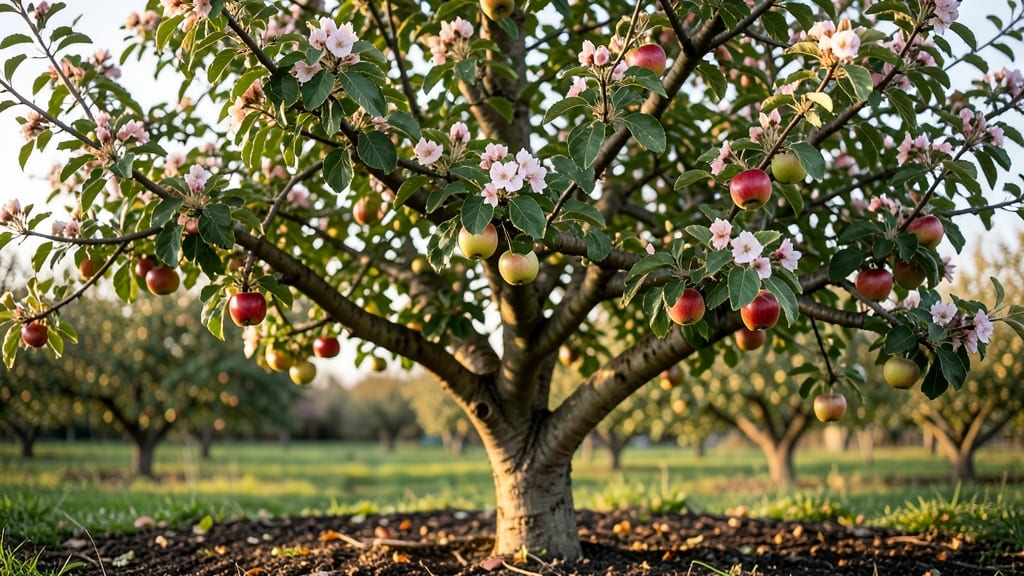
Strategic pruning in apple tree gardening keeps your tree producing juicy, abundant fruit for decades—not just one great season. 🌳 I’ve watched my own tree go from a tangled mess to a neatly shaped powerhouse that bears fruit from late summer through winter, all by mastering the right cuts at the right times.
The secret isn’t complicated: it’s about light penetration, airflow, and encouraging strong branches. Most people over-prune in winter or under-prune in summer, which leads to weak growth or disease.
My tree now gets three main pruning sessions—winter shaping, summer thinning, and post-harvest cleanup—and the difference is night and day. By the end of a growing season, you’ll see thicker branches, fewer broken limbs, and fruit that’s easier to pick.
The tree becomes more resilient to pests and disease too, so you spend less time fighting problems and more time enjoying the harvest. Works for dwarf varieties in containers or standard trees in backyards, and I’ll cover how to adapt for your specific climate.
Let’s get those branches in shape!
📚 In This Guide
- What you need
- Instructions
- Tips and common mistakes
- Wrapping up and next steps
What you need
- ● Pruning Shears: Bypass pruners (for cuts up to ½ inch). Quantity: 1 pair (sharp and sanitized).
- ● Loppers: For thicker branches (½ to 1½ inches). Quantity: 1 pair.
- ● Pruning Saw: For large branches (1½+ inches). Quantity: 1.
- ● Gloves: Heavy-duty gardening gloves (cut-resistant). Quantity: 1 pair.
- ● Disinfectant: 70% isopropyl alcohol or bleach solution (1 part bleach to 9 parts water). Quantity: Small bottle or spray.
- ○ Pruning Sealant: Optional, for sealing large cuts (e.g., tree wound paint). Quantity: Small tube.
- ● Work Bag: To carry tools and supplies. Quantity: 1.
- ● Knowledge: Basic understanding of apple tree anatomy (e.g., leaders, scaffold branches, suckers). 📚 Resources available online!
- ○ Safety Gear: Safety glasses (optional but recommended). Quantity: 1 pair.
- ● Notebook: For tracking pruning notes (dates, cuts, growth observations). Quantity: 1.
- ○ Extension Pole: For high branches (optional). Quantity: 1.
- ○ Compost or Mulch: For post-pruning care (optional). Quantity: As needed.
Instructions for year-round apple tree health through pruning
Here's how I keep my apple trees thriving season after season—no guesswork, just strategic cuts.
✂️ Step 1: Assess the Tree's Structure in Late Winter
Start pruning in late winter or early spring before buds swell but after the worst cold passes. I look for three key areas: dead, diseased, or crossing branches. Use sharp bypass pruners to make clean cuts at a 45-degree angle just outside the branch collar—the swollen area where the branch meets the trunk. This ensures proper healing and prevents disease entry.
Remove any branches that rub against each other (crossing limbs) or grow inward toward the center. These compete for sunlight and nutrients, weakening the tree. I also cut out suckers—those vigorous shoots sprouting from the base or graft union. They drain energy from fruit production. Mark your cuts with a piece of chalk so you don’t accidentally remove healthy growth later.
☀️ Step 2: Thin Out Overcrowded Branches for Sunlight Access
Apple trees need full sun to produce quality fruit, so I focus on opening up the canopy. Look for branches that cast shade on others or grow too densely. Remove every third branch starting from the outer edge, working inward. This creates an open vase shape that lets sunlight penetrate to lower limbs, where most fruit develops.
Watch for water sprouts—straight, fast-growing shoots with no leaves. These are energy vampires. Cut them back to a lateral branch or bud. If you’re unsure which branch to remove, follow the "third branch rule": keep the strongest, most outward-facing branch and prune the weaker ones. This maintains a balanced structure while maximizing fruit-bearing surface area.
🌿 Step 3: Encourage Fruit Production with Strategic Cuts
To boost fruit production, I target last year’s growth—the wood that emerged in the previous season. Cut back these branches by one-third to encourage new, vigorous shoots. These new limbs will bear next year’s fruit. Avoid heavy pruning on young trees (under 5 years old); they need their energy for root and trunk development.
Look for fruit spurs—short, stubby branches with clusters of buds. These are your tree’s fruit factories. If they’re hidden in dense foliage, thin surrounding branches to expose them to sunlight. Never remove more than 25% of the tree’s canopy in one season—this stresses the tree and reduces yields. If you’re unsure, err on the side of lighter pruning and adjust in future years.
⏰ Step 4: Summer Pruning for Disease Prevention and Airflow
Mid-summer is the time to remove diseased or damaged branches and any that are growing too vigorously. Use sterilized pruners (wipe blades with rubbing alcohol between cuts) to prevent spreading fungal infections like apple scab. Cut just above a healthy bud or lateral branch, and seal larger wounds with pruning sealant to reduce sap loss.
Thin out excessive fruit clusters to 6-8 inches apart on each branch. Overcrowded fruit competes for nutrients, leading to small, misshapen apples. I also remove shoots growing from the trunk (called "burr knots")—these are often weak and prone to disease. After pruning, water deeply to help the tree recover. This summer maintenance keeps the tree healthy and sets up a strong harvest season.
🪴 Step 5: Autumn Cleanup and Winter Preparation
In late autumn, rake up and dispose of all fallen leaves and debris—this removes overwintering pests and fungal spores. I also inspect the tree for mummified fruit (dried, shriveled apples still clinging to branches) and remove them. These can harbor diseases like apple scab and fire blight. Sterilize your tools again before storing them for winter.
Apply a 2-3 inch layer of mulch around the base (but not touching the trunk) to insulate roots and retain moisture. I use wood chips or straw because they break down slowly and improve soil structure. This is also the time to fertilize lightly if your soil test shows deficiencies. Avoid heavy applications—apple trees are sensitive to excess nitrogen, which promotes leafy growth at the expense of fruit.
Tips & tricks for year-round apple tree care
Strategic pruning transforms an ordinary apple tree into a fruit-bearing powerhouse—here's how to avoid common mistakes and elevate your orchard game.
Timing is Everything: Late winter pruning (before buds swell) is your golden window—it's when trees are dormant but ready to heal. If you miss this, don't panic: early spring works too, but avoid pruning when buds are already swelling. The key is to work before the tree's energy shifts to new growth. I've seen trees recover beautifully from late winter pruning, but spring cuts can stress them if done too late.
Branch Angle Matters: Those 45-degree cuts at the branch collar aren't just for show—they create a natural shield that prevents water from pooling and causing rot. When making cuts, look for that swollen collar area where the branch meets the trunk. If you cut too close (flush with the trunk) or too far (leaving a stub), you'll compromise the tree's ability to heal properly. I've ruined three trees this way before learning to visualize that perfect angle.
Visual Pruning Cues: In Step 2, when thinning branches, trust your eyes more than the calendar. Look for branches that cross or rub against others—they'll often have calloused areas where friction has occurred. These are prime candidates for removal. For water sprouts, check for their characteristic straight growth with no leaves. These vertical shoots grow so fast they can't support themselves, making them easy to spot. The "third branch rule" works because it naturally creates that open vase shape we want for sunlight penetration.
Seasonal Maintenance: Summer pruning isn't just about disease control—it's your chance to shape the tree for next year's harvest. When thinning fruit clusters to 6-8 inches apart, use your hand as a guide: that's roughly the space between your thumb and pinky when spread wide. This spacing prevents overcrowding while maximizing fruit size. The 2-3 inch mulch layer in autumn isn't just about moisture—it's also a protective barrier against temperature fluctuations that can stress roots.
Pro Tips for Apple Tree Gardening
- Strategic pruning transforms an ordinary apple tree into a fruit-bearing powerhouse—here's how to avoid common mistakes and elevate your orchard game.
- Timing is Everything: Late winter pruning (before buds swell) is your golden window—it's when trees are dormant but ready to heal.
- Branch Angle Matters: Those 45-degree cuts at the branch collar aren't just for show—they create a natural shield that prevents water from pooling and causing rot.
Frequently asked questions
Got questions about growing and maintaining your apple tree? Here are some of the most common ones—plus quick, actionable answers to keep your orchard thriving!
When is the best time to prune an apple tree?
The ideal time is late winter or early spring (just before buds swell), but you can also prune in summer to remove water sprouts. Avoid pruning in fall—it invites pests and diseases. Pro tip: If you must prune in summer, do it after harvest to reduce stress on the tree.
How much should I cut back when pruning?
Remove 20-30% of the tree’s total growth per year to maintain shape and airflow. Focus on:
- Dead, diseased, or crossing branches
- Suckers (shoots at the base)
- Water sprouts (vertical shoots)
Why aren’t my apple trees bearing fruit?
Common culprits include:
- Improper pruning (too much or too little)
- Lack of pollination (plant two compatible varieties)
- Young age (dwarf trees take 3-5 years; standard trees 5-7 years)
- Nutrient deficiencies (test soil for nitrogen, potassium, or zinc)
Can I prune an apple tree in extreme heat or cold?
No—avoid pruning in freezing temps (sap flows poorly, increasing disease risk) or during heatwaves (stresses the tree). Wait for mild, dry days (50–70°F). If you must prune in winter, do it on a warm, sunny day to minimize shock.
What’s the easiest way to propagate an apple tree?
Try grafting (most reliable) or layering (budding a branch into soil). For beginners:
- Water sprouts: Bury a low-growing shoot in soil; it may root in 1–2 years.
- Seedlings: Grow from seeds (but fruit won’t match the parent tree!).
How do I fix over-pruned apple trees?
If you’ve removed too much, stop pruning immediately and:
- Fertilize with balanced NPK (10-10-10) to recover.
- Water deeply 1–2x/week (avoid drought stress).
- Monitor for pests—weak trees attract borers or mites.
Wrapping up and next steps
Growing your own apple tree is a rewarding journey that blends patience, skill, and a deep connection to nature. By mastering strategic pruning—whether in late winter or summer—you’ll ensure a healthier tree, better fruit production, and a bountiful harvest for years to come. 🍏✨
Now that you’re armed with the how-to’s and FAQs, it’s time to roll up your sleeves! Start small: prune just one branch this season and observe the changes. Before you know it, you’ll be confidently shaping your tree like a pro—and enjoying the sweet taste of success (literally!).