
Pruning
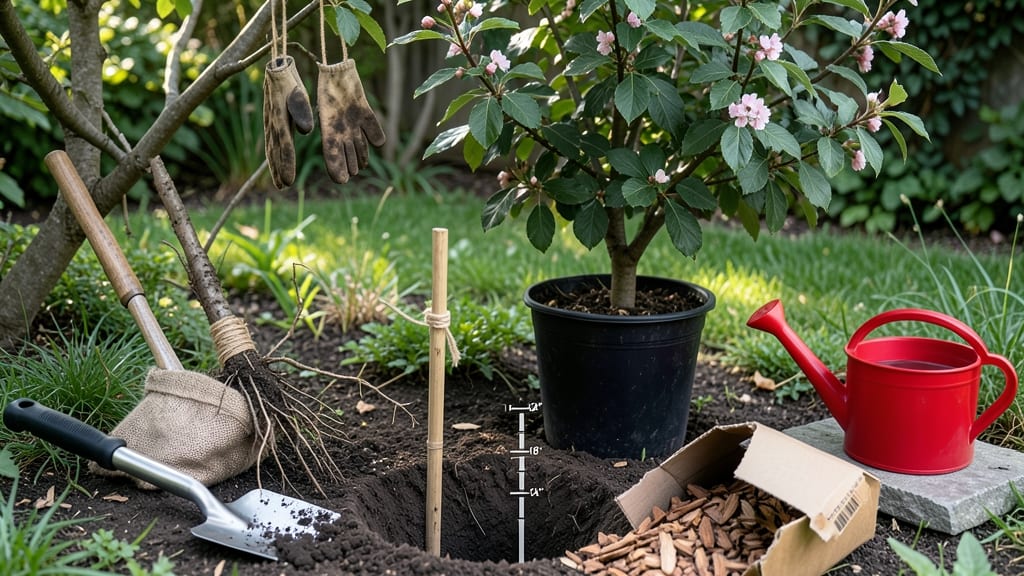
Planting a sour cherry tree in its dormant season gives it a head start on spring growth—my first tree thrived because I timed it right.
The key is choosing the perfect spot where it gets full sun and room to spread its branches wide, plus soil that drains well but holds moisture. I’ve seen too many trees struggle because they were planted too deep or in heavy clay.
You’ll need a shovel, compost, and mulch, plus either a bare-root sapling or container-grown tree. Dig a hole twice as wide as the root ball but no deeper—sour cherries hate sitting too low.
Mix in compost to give those roots a nutrient boost before backfilling, then water deeply to settle the soil. By late winter or early spring, your tree will be sending out fresh green leaves instead of struggling to catch up.
The secret is consistent watering the first year—about 1-2 inches per week—and keeping weeds at bay. A 3-inch layer of mulch helps retain moisture while protecting roots from temperature swings. Works best in USDA Zones 3-7, where cold winters prevent disease.
Bare-root trees plant in late fall or winter, while container-grown ones go in anytime dormant. Here’s how to nail it every time—no guesswork!
📚 In This Guide
- What you need
- Instructions
- Tips and common mistakes
- Wrapping up and next steps
What you need
- ● Sour cherry tree: 1–2 bare-root or container-grown saplings (1–3 years old, Prunus cerasus variety). Choose disease-resistant types like Montmorency or Balaton.
- ● Shovel or spade: 1 medium-sized (18–24" blade) for digging holes.
- ● Garden trowel: 1 for fine adjustments around roots.
- ● Compost or well-aged manure: 5–10 gallons to enrich the soil.
- ● Organic mulch (straw, wood chips, or pine needles): 2–3 inches (enough to cover a 3–4 ft radius around the base).
- ● Watering can or hose with a gentle nozzle: 5+ gallons of water for initial soaking.
- ● Pruning shears: 1 pair (sterilized with rubbing alcohol) for trimming damaged roots or branches.
- ● Planting hole: Twice as wide and just as deep as the root ball (or container size).
- ● Soil test kit: To check pH (ideal: 6.0–6.5) and adjust if needed (lime to raise pH, sulfur to lower).
- ● Root stimulator: 1 bottle (e.g., Mycorrhizal fungi or seaweed extract) to boost root growth.
- ● Tree guard or wire cage: 1 (4–6 ft tall) to protect young trees from critters.
- ● Slow-release fertilizer: 10–20-10 NPK ratio (1 lb) for post-planting nourishment.
- ● Garden twine & stakes: For temporary support if planting in windy areas.
Step-by-Step instructions for planting a sour cherry tree in dormant season
Planting in winter gives sour cherries a head start on root growth before spring's rush.
Choose and Prepare the Planting Site
Select a location with full sun exposure (at least 6-8 hours daily) and well-draining soil. Sour cherries thrive in slightly acidic to neutral soil with a pH between 6.0 and 7.0. Test your soil if possible—amending with compost or peat moss helps adjust pH if needed. Avoid low spots where water pools, as soggy soil suffocates roots.
Dig a hole twice as wide as the tree’s root ball but only as deep as the container’s bottom. Loosen the sides of the hole with a shovel to encourage root spread. If your soil is heavy clay, mix in 2-3 inches of compost into the bottom of the hole to improve drainage. This ensures roots won’t sit in compacted soil, which can strangle growth.
Remove the Tree from Its Container and Inspect Roots
Carefully slide the tree from its container, supporting the root ball with one hand to prevent breakage. Gently tease apart any circled or tangled roots at the edges—this encourages outward growth rather than a dense root mass. If roots are tightly bound, make 2-3 vertical cuts around the perimeter with pruning shears to loosen them without damaging the center.
Check for signs of disease or pests like mushy roots or webbing. Trim away any blackened or slimy roots with sterilized shears. Healthy roots should be firm and white or light tan. If the tree has been in its container for over a year, the roots may have wrapped around the bottom—this is common in nursery stock and requires extra loosening.
Position the Tree and Backfill the Hole
Place the tree in the hole so the top of the root ball sits 1-2 inches above ground level. This prevents soil from settling and burying the trunk, which can cause rot. Use a level to ensure the tree stands upright—tilting now can lead to uneven growth later. Fill the hole halfway with native soil, pressing gently to remove air pockets but not compacting too firmly.
Water the tree deeply to settle the soil around the roots. As you backfill the rest of the hole, add water in stages to avoid displacing the tree. Finish by mounding soil slightly higher around the base to create a small watering well. This helps direct irrigation straight to the roots. Avoid piling soil against the trunk—keep it at least 3 inches away to prevent moisture buildup.
Mulch and Protect the New Planting
Spread 2-3 inches of organic mulch (like wood chips or straw) over the soil surface, extending it outward 12 inches but stopping 3 inches from the trunk. Mulch conserves moisture and regulates soil temperature, which is especially helpful in dormant-season planting. Avoid plastic mulch—it traps heat and can scald roots in winter.
Stake the tree only if necessary—young sour cherries rarely need support unless in windy areas. If staking, use two stakes on opposite sides of the trunk, tied loosely with soft fabric (like an old T-shirt) to prevent trunk damage. Water the tree again to ensure the mulch settles evenly. In colder climates, wrap the trunk with tree guard or burlap to protect it from rodents and frost cracks.
Water and Monitor Through the First Growing Season
Water the tree deeply once a week during the first year, unless rainfall provides 1 inch of moisture. Overwatering is a common mistake—sour cherries prefer slightly dry conditions in winter. In spring, increase watering to every 5-7 days as new growth appears. You’ll know it’s time when the top 6 inches of soil feel dry to the touch.
Fertilize lightly in early spring with a balanced, slow-release fertilizer (10-10-10). Avoid heavy applications—too much nitrogen encourages leafy growth at the expense of fruit production. Prune only to remove dead or crossing branches in late winter before buds swell. By next summer, your tree should show vigorous new shoots, signaling strong root establishment.
Tips & tricks for planting a sour cherry tree in dormant season
Winter planting gives your sour cherry tree a real advantage—here’s how to make the most of it.
Site Selection Insight: The 6-8 hours of daily sun is non-negotiable, but don’t overlook soil temperature. In colder climates, plant on a slightly elevated spot where soil warms faster in spring. If your yard has heavy clay, mix that 2-3 inches of compost into the bottom of the hole—this creates a loose, root-friendly zone that makes all the difference in the first critical growing season.
Root Care Technique: When you’re teasing apart those circled roots in Step 2, think of it like untangling headphones—gentle pressure works better than brute force. For trees with roots wrapped around the container bottom, make those 2-3 vertical cuts strategically: focus on the outer perimeter where roots are most tightly bound. This prevents damage to the central root mass while encouraging outward growth. I’ve seen trees with roots so tightly bound they couldn’t spread at all—don’t let that be yours.
Watering Wisdom: That weekly watering schedule during the first year might seem strict, but remember: sour cherries hate soggy feet. The "6 inches of dry soil" test is your best friend—stick your finger in and check before watering. In winter, you can actually reduce to every 2-3 weeks if temperatures stay below freezing, as the tree’s water needs drop dramatically. The key is keeping roots moist but never waterlogged during dormancy.
Mulch Matters: The 2-3 inches of organic mulch isn’t just decoration—it’s insulation. In winter, mulch acts like a blanket, protecting roots from freeze-thaw cycles that can damage emerging growth. I’ve seen trees with mulch pulled back too close to the trunk develop frost cracks in their bark. That 3-inch clearance from the trunk is crucial—it prevents moisture buildup that leads to rot while still protecting the roots.
Pro Tips for Sour Cherry Tree Planting
- Winter planting gives your sour cherry tree a real advantage—here’s how to make the most of it.
- Site Selection Insight: The 6-8 hours of daily sun is non-negotiable, but don’t overlook soil temperature. In colder ...
- Root Care Technique: When you’re teasing apart those circled roots in Step 2, think of it like untangling headphones—...
Frequently asked questions
Got questions about planting sour cherry trees? You’re not alone—here are answers to the most common ones to help you grow a thriving orchard!
When is the best time to plant a sour cherry tree?
Plant your sour cherry tree in late fall or early winter (dormant season) for the best success. The soil is cooler, reducing stress on the roots, and the tree can establish itself before spring growth. Avoid planting in extreme heat or frost-prone periods.
How deep and wide should I dig the planting hole?
The hole should be twice as wide as the root ball but only as deep as the root system (not deeper). Loosen the sides of the hole to encourage root spread. If your soil is heavy clay, amend it with compost to improve drainage.
Can I plant a sour cherry tree in summer?
While possible, summer planting is riskier due to heat stress. If you must plant in summer, choose a cool, cloudy day and mulch heavily to retain moisture. Water deeply every 2–3 days until roots establish. Dormant-season planting is always preferred!
Do sour cherry trees need a pollinator?
Yes! Most sour cherry varieties are self-unfruitful and require a pollinator. Plant at least two compatible varieties (e.g., 'Montmorency' and 'Stella') within 50–100 feet of each other. Check labels for cross-pollination notes.
What pests should I watch for after planting?
Young sour cherry trees may attract aphids, borers, or Japanese beetles. Monitor leaves for holes or sticky residue. Use neem oil or insecticidal soap for mild infestations. Healthy soil and proper spacing reduce pest risks.
Pro Tip:
Mulch your newly planted tree with 3–4 inches of wood chips or straw, keeping it 6 inches away from the trunk. This locks in moisture, regulates soil temp, and deters weeds—giving your tree the best start!
Wrapping up and next steps
Planting a sour cherry tree during the dormant season is your secret weapon for stronger roots, better establishment, and a bountiful harvest down the road. 🌱 With the right soil, spacing, and care, you’re setting the stage for years of delicious fruit—so roll up your sleeves and get growing! Next up: mark your calendar for spring pruning to shape your tree and encourage even more vigorous growth.