
Pruning
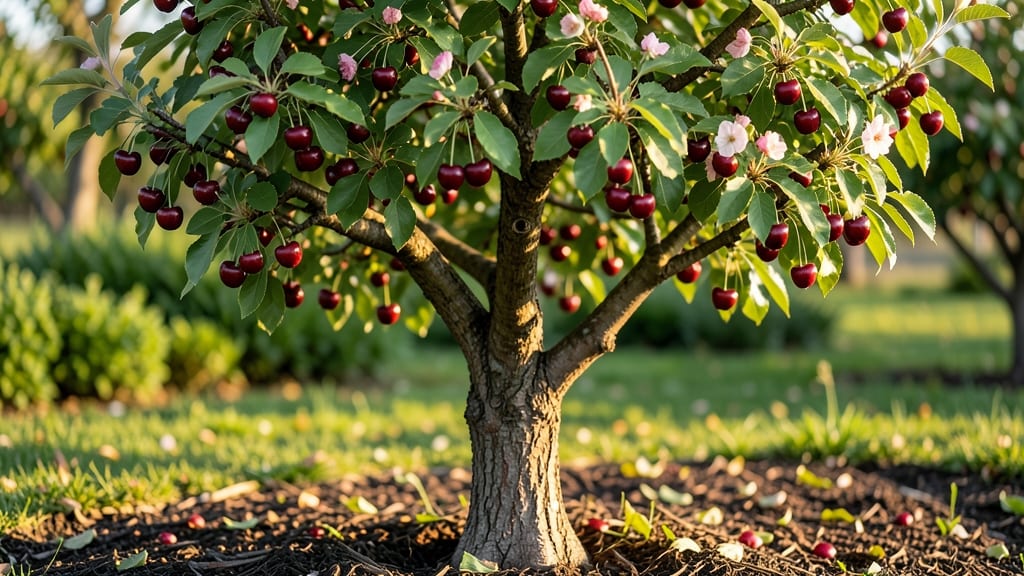
Rainier cherry trees aren't self-pollinating by nature, though certain grafted varieties like 'Stella' or 'Lapins' can produce fruit without cross-pollination. For reliable harvests, plant multiple trees or attract pollinators since bees still boost fruit development.
Most Rainier cherries depend on cross-pollination because their flowers need genetic diversity from other trees to set fruit properly. 🌸 The grafted varieties that claim self-pollination actually combine different cherry genetics onto one rootstock, creating a more stable fruit-producing system.
Even then, bees or wind still improve fruit size and quality—think of it like giving your tree a little extra help to maximize its potential.
If you're growing just one Rainier tree, consider planting a second variety within 50 feet to encourage natural cross-pollination. Some gardeners also use a small paintbrush to transfer pollen between flowers on cloudy days when bees are less active.
This method mimics nature while giving you more control over the process.
The key takeaway is that while some Rainiers can produce fruit alone, they'll almost always yield better with pollination assistance. This is why commercial orchards plant multiple varieties in close proximity—it's not just about self-pollination, but creating an optimal growing environment for maximum fruit production.
💡 In This Article
- Why Rainier Cherries Rarely Self-Pollinate Naturally
- Best Workarounds for Growing Rainier Cherries Without Cross-Pollination
Why Rainier cherries rarely self-pollinate naturally
Rainier cherry trees rely on cross-pollination because their flowers produce both male and female parts, but their genetic structure favors outbreeding. The pollen from one Rainier tree often lacks the necessary genetic diversity to trigger full fruit development.
This is why you'll see commercial orchards planting multiple varieties—each tree's pollen complements another's, leading to stronger fruit set. Without this cross-pollination, flowers may drop prematurely or produce small, underdeveloped cherries.
The process involves bees transferring pollen between flowers, but even wind plays a role in spreading it over short distances. What's fascinating is how temperature affects this: bees are most active between 65-85°F, so cooler mornings can delay pollination.
Rainier cherries bloom in late spring, when weather conditions are unpredictable, adding another layer of challenge for natural self-pollination. 🌿 The trees' reliance on external pollinators explains why grafted varieties like 'Stella' (which combines self-fruitful traits) are a game-changer for home growers.
Here's the botanical secret: grafted self-pollinating varieties contain multiple genetic strains in one tree, effectively mimicking cross-pollination. Imagine a single tree with flowers that can "talk" to each other genetically—this is what happens when different cherry cultivars are grafted together.
While these trees can produce fruit alone, they still benefit from bees because pollination improves fruit size, sweetness, and overall quality. Think of it like comparing a solo musician to a full orchestra—both can perform, but the ensemble creates richer results.
One common misconception is that self-pollinating means "no help needed." In reality, these grafted varieties are more resilient to pollination failures, but they'll always perform better with active pollinators.
For example, a single 'Lapins' tree might produce 50-70% fruit set on its own, but with bees, that jumps to 80-90%. The difference in yield and fruit quality becomes obvious when you taste the results—self-pollinated cherries tend to be smaller and less flavorful.
What most gardeners don't realize is how quickly pollen degrades. Cherry pollen remains viable for only 24-48 hours after release, which is why timing matters so much. If you're relying on wind pollination, planting trees within 50 feet of each other ensures pollen transfer happens before it loses potency.
This spatial requirement explains why single-tree plantings often struggle—there simply isn't enough pollen in the air to trigger consistent fruit development.
The science behind this involves a process called "incompatibility," where pollen from the same tree fails to fertilize ovules properly. This genetic barrier is what makes Rainier cherries so dependent on cross-pollination. Even grafted varieties work around this by including compatible genetic material within the same tree structure.
It's like having a built-in backup system that ensures some pollination will occur, even if conditions aren't perfect.