
Pruning
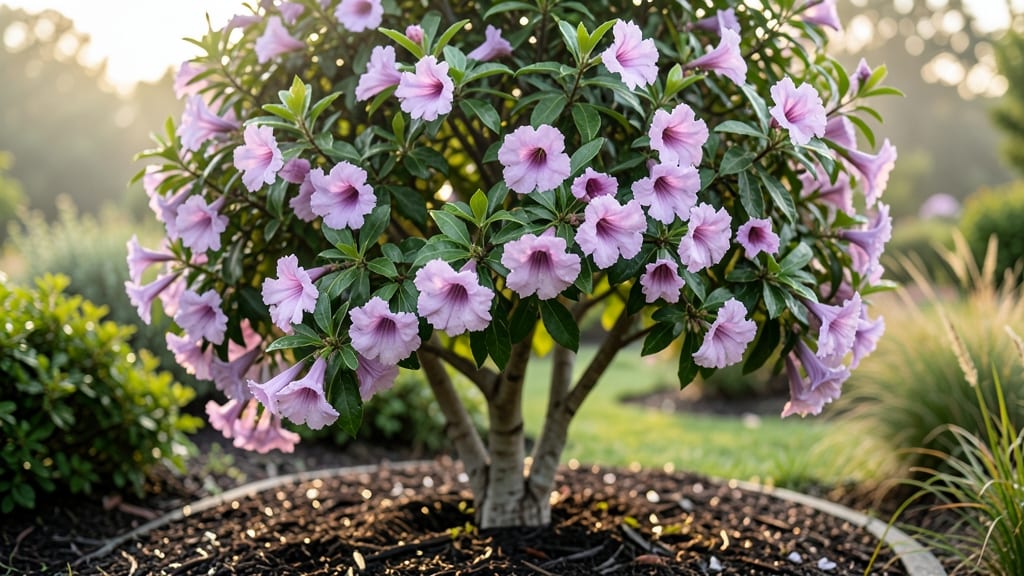
The lila tree in English is commonly called the lilac tree, derived from its genus Syringa, while its Latin name is Syringa vulgaris. Lilacs are prized for their fragrant spring blooms and belong to the olive family (Oleaceae).
When you hear "lila tree," you're actually talking about what English speakers call lilac trees. 🌸 These flowering shrubs have been beloved for centuries, with their name tracing back to the Persian word "lulak," which was later adopted into Arabic and European languages.
The genus Syringa includes over 25 species, but Syringa vulgaris—the common lilac—is the one you'll find in most gardens.
What makes lilacs so special isn't just their name but their versatile growing habits. They thrive in USDA zones 3-7, making them perfect for many North American climates.
The key to keeping them blooming beautifully is understanding their pruning needs—cutting back right after flowering encourages stronger growth for next year's fragrant display.
💡 In This Article
- Botanical Classification and Lilac Tree Origins
- Growing and Caring for Lilac Trees in Gardens
Botanical classification and lilac tree origins
The genus Syringa contains over 25 species of flowering shrubs, but Syringa vulgaris stands out as the most widely cultivated. This species originated in the Balkans and southeastern Europe, thriving in temperate climates with well-drained soils.
The name "lilac" itself evolved through linguistic layers: it comes from the Persian word "lulak," which described a type of fragrant flower, later adopted into Arabic as "al-laylak" before entering European languages.
What makes Syringa vulgaris unique is its four-petaled tubular flowers arranged in dense clusters, typically blooming in late spring (May-June).
These flowers produce a sweet, intoxicating fragrance that can be detected up to 30 feet away, thanks to volatile compounds like linalool and benzaldehyde. 🌸 The plant's leaves are opposite, simple, and ovate, with a slightly rough texture that contrasts with the smooth flower stems.
The olive family (Oleaceae) includes other well-known plants like olives, ash trees, and privet, but lilacs stand out for their ornamental value. Their flowers come in shades from pale lavender to deep purple, with some modern hybrids even producing white or pink blooms.
The wood of lilac trees is hard and dense, historically used for tool handles and small furniture pieces due to its durability.
Beyond Syringa vulgaris, other notable species include Syringa oblata (Japanese lilac) and Syringa chinensis, which offer different bloom times and fragrance intensities.
Japanese lilacs, for example, often flower 2-3 weeks earlier than common lilacs, making them popular for extending the garden's fragrance season. 💫 The name "lila" persists in some European languages (like German "Lilie" or French "lilas"), reflecting its ancient trade routes through the Mediterranean.
What most gardeners don't realize is that lilacs are deciduous shrubs that can live for 50-100 years with proper care. Their root systems spread widely but shallowly, making them drought-tolerant once established.
The plant's natural resilience is why it became a staple in 19th-century European gardens, where it symbolized both love and first kisses.
For those interested in the science, lilacs are insect-pollinated, primarily by bees that are drawn to their nectar-rich flowers. This pollination process creates seeds that, when planted, can produce new lilac plants—but these may not retain the parent's exact characteristics, leading gardeners to prefer grafting for consistent varieties.