
How To
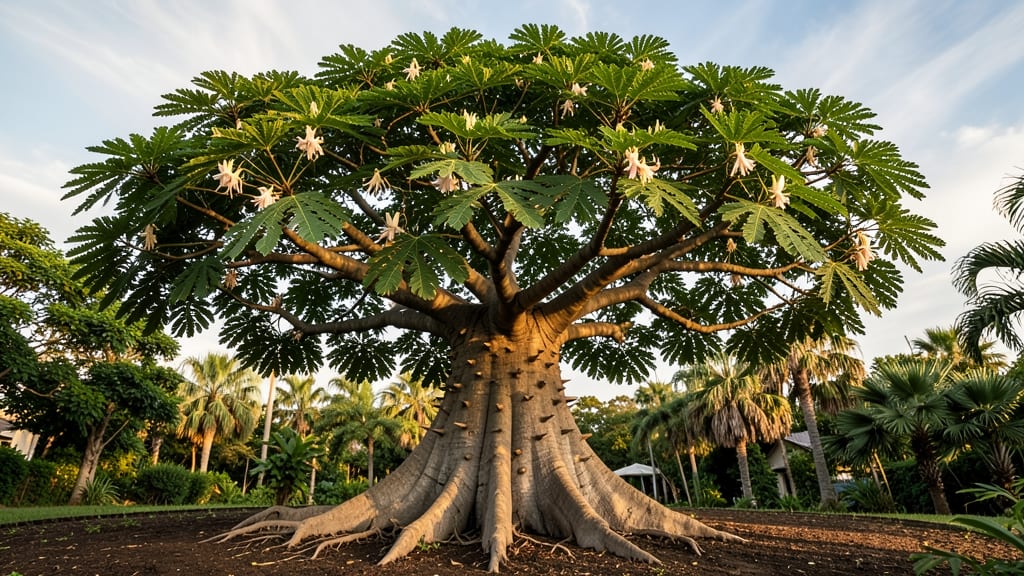
A kapok tree can grow how tall can a kapok tree grow to 200 feet or more 🌳—taller than a 15-story building—when given the right conditions, making it one of the world’s most impressive tropical giants.
Imagine a tree soaring above your backyard, its branches forming a canopy wider than a basketball court. That’s the kapok tree (Ceiba pentandra) in its natural habitat, where it thrives in the humid, sun-drenched climates of the Amazon, Southeast Asia, and West Africa.
But here’s the catch: its height isn’t just about genetics—soil quality, rainfall, and even pruning habits play a huge role. In the right environment, it grows 10 feet per year in its early years, while poor conditions can stunt it to a fraction of its potential.
If you’re dreaming of cultivating one, I’ll break down the key factors that determine whether your kapok tree will stretch toward the sky or stay stubbornly small—plus how to give it the best shot at reaching its full, breathtaking height.


Kapok tree height records: tallest known specimens by region
The kapok tree (Ceiba pentandra) holds the title of one of the world's tallest trees, with verified specimens reaching staggering heights. Its growth varies dramatically by region due to climate, soil quality, and environmental conditions.
In ideal tropical settings, these giants can surpass 200 feet, making them architectural marvels in any landscape. Understanding regional height records helps gardeners and landscapers set realistic expectations for cultivation.
Native to the tropical Americas, Southeast Asia, and West Africa, kapok trees exhibit distinct height variations. The Amazon Basin produces the tallest known specimens, while Southeast Asian varieties often reach slightly shorter but still impressive heights.
West African kapok trees tend to be more compact due to drier conditions. These differences highlight how climate and soil shape a kapok tree’s potential to become a true skyscraper of the plant world.
The Amazon Basin holds the record for the tallest kapok tree ever measured at an astonishing 220 feet. This specimen thrives in the region's high humidity and nutrient-rich soils, which provide ideal conditions for rapid vertical growth.
The tree’s massive buttress roots anchor it securely, allowing it to support its colossal height while resisting tropical storms.
In Southeast Asia, kapok trees typically reach 120-170 feet, with the tallest verified specimen at 180 feet. The monsoon climate here provides consistent moisture, though slightly acidic soil can limit growth compared to the Amazon.
Gardeners in this region often report slower initial growth but eventual impressive height gains once established.
West African kapok trees, while still impressive, rarely exceed 120 feet, with the tallest recorded at 140 feet. The drier savanna conditions and sandy soils create challenges for these trees, often resulting in shorter stature.
However, they compensate with remarkable drought tolerance, making them more adaptable to less-than-ideal conditions than their tropical counterparts.
For gardeners considering a kapok tree, the Amazon Basin record serves as an aspirational benchmark. While most home gardens won’t replicate these conditions, understanding regional variations helps set realistic expectations.
In subtropical climates like Florida or Hawaii, kapok trees can reach 80-100 feet with proper care, though they’ll never rival the giants of the Amazon.
One surprising factor in kapok tree height is pruning practices. Unlike many trees, kapok trees respond poorly to heavy pruning, which can stunt their growth.
Native populations grow unchecked, allowing them to reach their full potential. In cultivated settings, minimal pruning—limited to removing dead branches—is key to encouraging vertical growth.
The world’s tallest kapok tree wasn’t just lucky—it benefited from perfect storm of conditions: abundant rainfall, rich soil, and minimal human interference. Replicating these conditions in a home garden is nearly impossible, but even smaller kapok trees (60-80 feet) make striking focal points.
Their silk-cotton fluff and towering presence add drama to any landscape.
If you’re dreaming of a kapok tree in your yard, focus on mimicking tropical conditions: full sun, well-draining soil, and consistent moisture. While you may not grow a 200-foot giant, a well-cared-for kapok tree can still reach 60-80 feet—enough to create a natural skyline in your outdoor space.
Just remember: patience is key, as these trees grow 2-3 feet per year under ideal conditions.
For those fascinated by extreme heights, visiting a kapok tree in its native habitat—especially in the Amazon—is a humbling experience. Standing beneath a 200-foot kapok tree makes you feel like an ant in a forest cathedral.
Whether you’re a gardener or a nature enthusiast, understanding these height records puts the kapok tree’s grandeur into perspective.
Climate and soil factors that influence kapok tree growth height
The kapok tree (Ceiba pentandra) thrives in tropical climates, but its growth height depends heavily on environmental conditions. In ideal settings, these trees can reach 150-200 feet, but stunted growth is common when key factors aren't met.
Understanding these variables helps gardeners create optimal conditions for towering kapok trees.
First, temperature plays a critical role. Kapok trees require warm climates year-round, ideally between 75-95°F (24-35°C). Temperatures below 50°F (10°C) can stunt growth or even kill young trees. In cooler regions, growth slows dramatically, limiting a tree's potential height.
Rainfall is another game-changer. These trees need at least 60 inches of annual rainfall to reach their full height. In drier climates, growth rates plummet, and trees may only reach 60-80 feet instead of their full potential. Consistent moisture is key, especially during the growing season.
| Factor | Ideal Range | Effect on Height |
|---|---|---|
| Temperature | 75-95°F (24-35°C) | Full height potential (150-200 ft) |
| Rainfall | 60+ inches/year | Max growth; drought = stunted (60-80 ft) |
| Humidity | 70-90% | Optimal growth; low humidity = slower growth |
| Soil pH | 5.5-7.0 | Neutral-acidic = best growth; extreme pH = stunted |
| Drainage | Well-drained | Poor drainage = root rot; limits height |
Humidity also impacts growth, with ideal levels between 70-90%. In drier environments, kapok trees grow more slowly, often reaching only half their potential height. Even slight drops in humidity can reduce canopy development, which is crucial for supporting the tree's towering stature.
Soil conditions are equally critical. Kapok trees prefer well-draining, slightly acidic to neutral soil (pH 5.5-7.0). Poor drainage or compacted soil can stunt root growth, limiting the tree's ability to absorb nutrients and water. Amending soil with organic matter like compost can improve drainage and promote healthier, taller growth.
For gardeners aiming to cultivate a kapok tree, focus on replicating its native tropical environment. Combine warm temperatures, ample rainfall, high humidity, and fertile soil to maximize height potential.
With these conditions met, your kapok tree could reach its full majestic stature—a true skyscraper of the plant world 🌳.