
Pruning
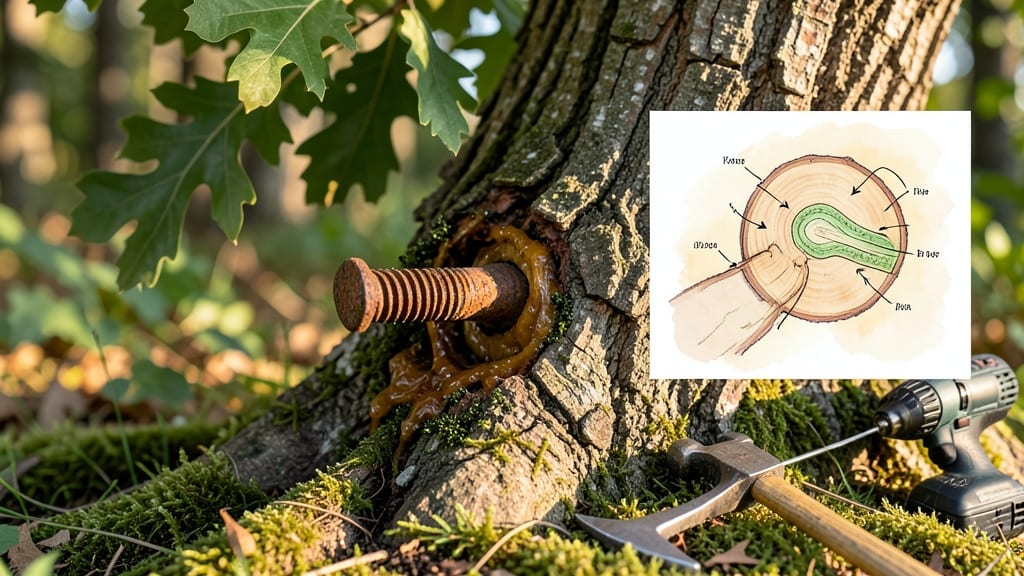
Screwing into a tree can damage it by disrupting sap flow, creating entry points for pests or disease, and weakening structural integrity—especially in younger or smaller trees. Use lag screws, proper spacing, and pre-drilling to minimize harm while ensuring secure attachments.
Screws puncture the cambium layer, the tree's growth engine, which can halt nutrient transport and leave it vulnerable to rot or fungal infections. 🌳 Younger trees are particularly at risk because their bark is thinner and less resilient.
Even if the attachment looks secure, improper screwing can cause long-term stress, leading to weakened branches or even tree death over time.
To protect your tree while securing attachments, always use lag screws (not deck screws) and pre-drill holes slightly smaller than the screw diameter. Space screws at least 12–18 inches apart and avoid high-traffic areas like the trunk's base.
For lightweight items like planters, consider tree straps or brackets instead—they distribute weight evenly without piercing the bark.
💡 In This Article
- How Tree Anatomy Affects Damage from Screws
- Safe Screwing Techniques for Tree Attachments
How tree anatomy affects damage from screws
The cambium layer—a thin, greenish band just beneath a tree's bark—is where all growth happens. When you drive a screw through it, you're essentially severing the tree's circulatory system, disrupting the flow of water, nutrients, and sugars.
This damage can create open wounds that expose the tree to pests like bark beetles or diseases such as canker. Younger trees, with their softer, thinner bark, are especially vulnerable—imagine stabbing a fresh apple versus a hardwood board. 🌿
Screw type matters too: Deck screws (common for wood) have sharp threads that tear through bark and cambium, while lag screws (designed for tougher materials) cut cleaner and cause less collateral damage.
The xylem—wood tissue responsible for water transport—can also get crushed if screws are too long or driven too deep, leading to internal rot.
For example, a ½-inch lag screw in a 3-inch oak trunk might only penetrate 1 inch without harm, but the same screw in a 2-inch maple trunk risks over-penetration.
Tree species play a role too. Hardwoods like oak or maple have thicker bark and can tolerate minor damage better than softwoods like pine.
A 1-inch diameter screw in a 4-inch pine trunk might cause more stress than the same screw in a 6-inch oak trunk. 🌳 Even healthy trees can suffer if screws are spaced too closely—each puncture creates a stress point that weakens structural integrity over time, especially during storms.
Age and health are critical factors. A 10-year-old oak with a 4-inch trunk might recover from a single screw, but repeated damage or poor placement can lead to branch dieback. Older trees with thicker bark can handle more, but their vascular system is already slower to heal.
Always check for signs of disease (discolored bark, oozing sap) before screwing—these trees are far more fragile.
Season also influences recovery. Screwing in late winter or early spring, when trees are dormant, minimizes stress. Summer installations risk overheating the cambium, while winter can make bark brittle. The key is timing: give the tree at least 6–12 months to heal before adding more attachments. 🌱
For a real-world example, consider a 50-pound planter hung from a 6-inch maple trunk. Using two ⅝-inch lag screws spaced 12 inches apart with pre-drilled holes reduces damage far more than four deck screws clustered near the trunk's base.
The difference? One scenario preserves the tree; the other invites decay.