
How To
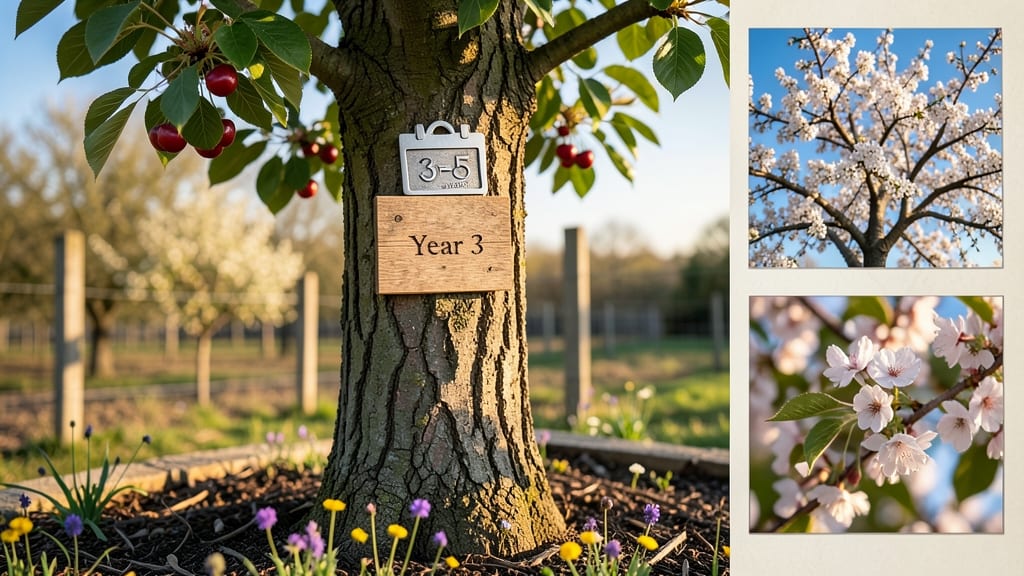
Fruiting cherry trees takes patience—most varieties need 3 to 7 years to produce their first harvest, but the right care can cut that wait in half.
If you’ve ever planted a cherry tree dreaming of juicy summer snacks, you’re probably wondering: How long until I get those sweet, ripe cherries? The answer depends on the variety, care, and patience—but the wait is worth it for homegrown fruit straight from your backyard.
Dwarf varieties like Stella® or North Star® can bear fruit in as little as 2 to 3 years, while standard trees like Bing or Rainier may take 5 to 7 years to reach maturity in Zone 6.
Even then, factors like soil health, sunlight exposure, and proper pruning play a bigger role than most gardeners realize.
Below, I’ll break down the exact timeline by variety, the critical factors that speed up fruiting, and the common mistakes that delay it—so you can enjoy that first basket of 🍒 sooner than you’d expect.
How long until cherry trees bear fruit by variety (fastest to slowest)
If you planted a cherry tree last spring, you’re probably counting the days until those first sweet or tart fruits appear. The truth is, cherry trees vary wildly in fruiting timelines—some dwarf varieties produce cherries in just 2-3 years, while standard trees can take 5-7 years or longer.
The variety you choose makes all the difference, along with your climate and care routine.
For impatient gardeners, dwarf and semi-dwarf varieties are the fastest options, often bearing fruit within 3 years of planting. These compact trees (like Stella® or Montmorency) are perfect for small yards or containers.
Meanwhile, standard sweet cherry trees (such as Bing or Rainier) typically need 5-7 years before producing meaningful harvests.
Here’s the key: Tart cherries (like Montmorency) often fruit faster than sweet cherries because they’re more cold-hardy and adapted to shorter growing seasons. But even within tart varieties, some—like Lapins®—can surprise you with early fruit in just 2-4 years.
Let’s break down the exact timelines by variety so you know what to expect.
🌱
As you can see, dwarf varieties like Stella® and North Star® are the clear winners for speed, producing fruit in as little as 2 years.
But don’t assume all cherries are created equal—sweet cherries (like Bing or Rainier) almost always take longer to mature because they demand more warmth and precise growing conditions.
If you’re in a cooler climate (Zone 4-6), tart cherries like Montmorency or Lapins® are your best bet for early harvests.
Your climate zone plays a huge role too. Trees in warmer zones (7-9) may fruit slightly faster because they don’t need as many winter chilling hours (typically 600-1,000 hours below 45°F).
In contrast, northern gardeners might see delayed fruiting if their winter chilling requirements aren’t met. For example, Bing cherries need 800+ chilling hours, while Stella® only needs 500-600.
Another game-changer? Proper pruning and pollination. If you skip pruning young trees to encourage an open center shape, you’re delaying fruit production. And if your tree isn’t pollinated (most cherries need two compatible varieties), those blossoms won’t turn into fruit.
Even with the fastest varieties, poor soil or over-fertilizing with nitrogen can push back fruiting by years.
🪴
To speed up the process, focus on these three high-impact strategies: 1. Plant two compatible varieties (e.g., Stella® + Bing) for cross-pollination. 2. Test and amend your soil to a pH of 6.0-6.5—cherries hate acidic soil.
3. Prune annually to remove water sprouts and dead wood, improving airflow and fruit set.
5 Critical factors that speed up (or delay) your cherry tree’s fruit production
Your cherry tree’s journey from sapling to fruit-bearing powerhouse isn’t just about time—it’s about the right conditions. While some varieties fruit in as little as 2-3 years, others take 5-7 years to produce.
The difference? Five key factors that either accelerate or stall fruit production. Let’s break down what truly makes the difference between a fruitful harvest and a leafy disappointment.
First, soil pH plays a starring role. Cherry trees thrive in slightly acidic soil with a pH between 6.0 and 6.5. If your soil is too alkaline or acidic, nutrient uptake suffers, and your tree may struggle to flower—or worse, fail to set fruit entirely.
Testing your soil’s pH is a simple step that can cut years off your tree’s fruiting timeline.
Next up: sunlight exposure. Cherry trees are sun worshippers, demanding 6-8 hours of full sun daily. Even partial shade can delay flowering and fruiting. If your tree is in a shady spot, consider relocating it or pruning nearby trees to open up its canopy.
Without enough light, your tree will focus on leaf growth over fruit production, leaving you waiting longer for those sweet cherries.
Watering might seem straightforward, but deep, infrequent watering is the gold standard for cherry trees. Shallow watering encourages surface roots, which struggle during droughts and can delay fruiting.
Instead, water deeply 1-2 times per week, providing 10-15 gallons per tree. This mimics natural rainfall and encourages a strong root system that supports fruit production.
Don’t overlook the importance of winter chilling hours. Most cherry varieties require 600-1,000 hours below 45°F to break dormancy and flower. If you live in a mild-winter climate, opt for low-chill varieties like Stella® or Lapins®.
Without enough chilling, your tree may produce fewer flowers—or none at all, leaving you without cherries.
Finally, pruning techniques can make or break your tree’s fruiting timeline. Prune in late winter to remove dead wood, suckers, and dense branches. This opens up the canopy, allowing more sunlight and airflow to reach the fruit.
Avoid heavy pruning in summer, as it stresses the tree and can delay flowering for the following year.
By mastering these five factors, you’ll give your cherry tree the best shot at producing fruit faster and more abundantly. Start with soil and sunlight, then fine-tune with watering, chilling, and pruning. Before you know it, you’ll be picking homegrown cherries straight from your backyard tree! 🍒